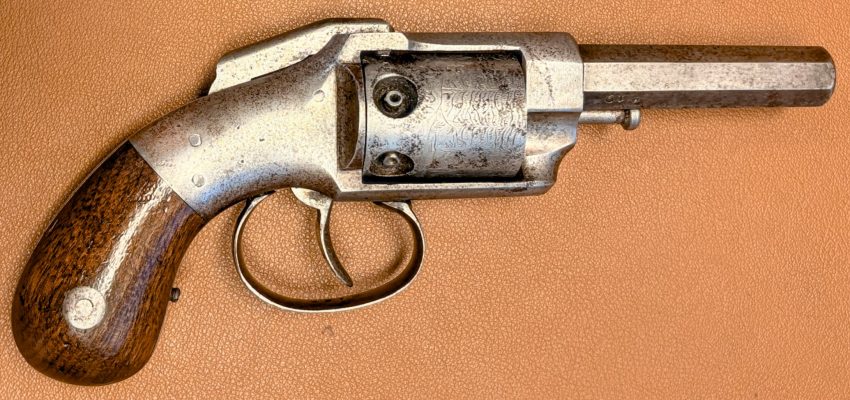
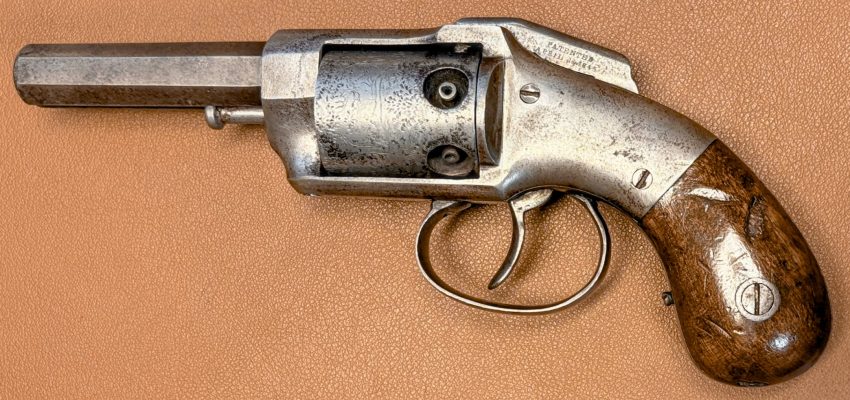
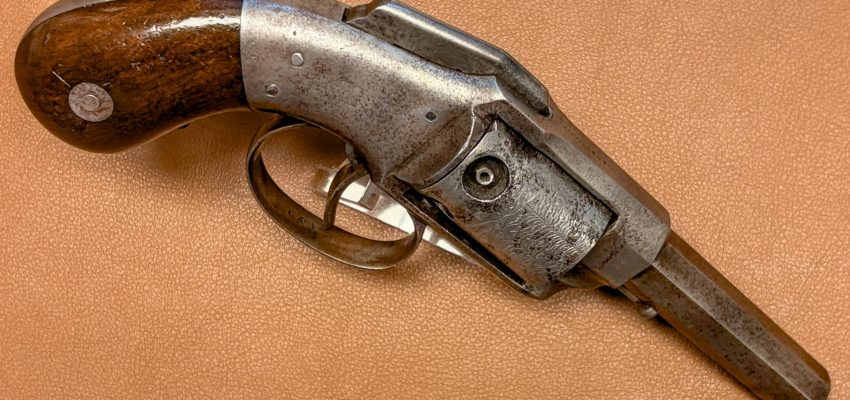
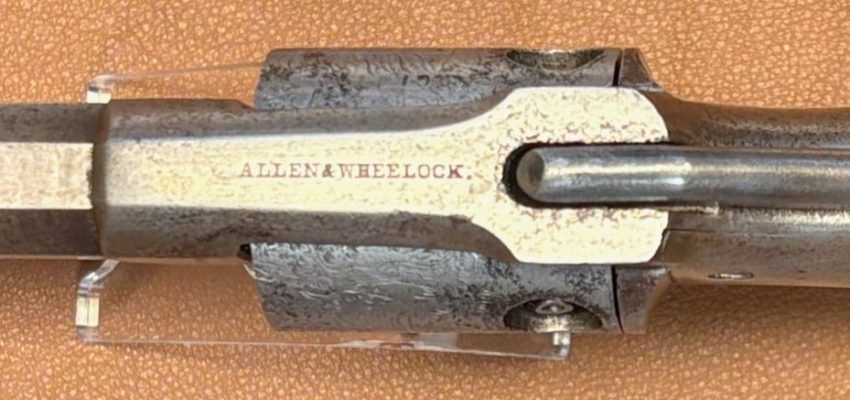
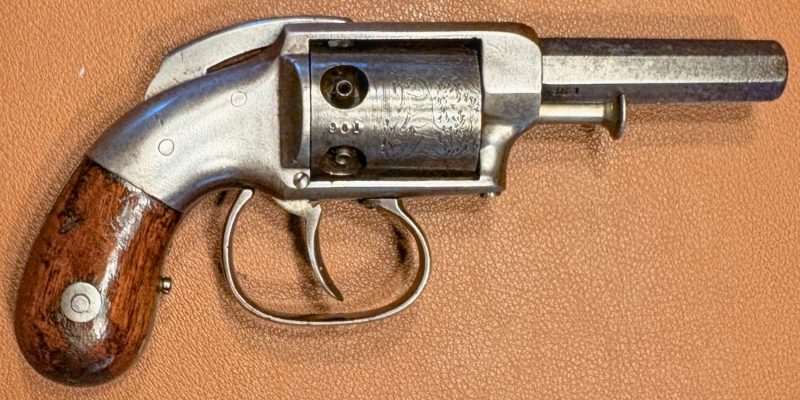
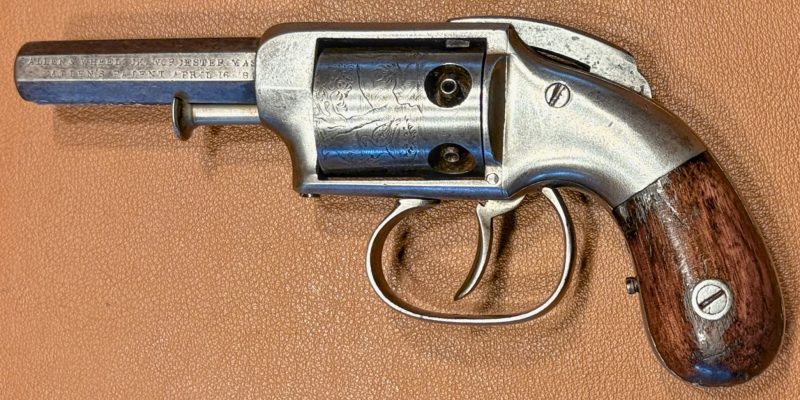
Allen & Wheelock Barhammer Revolvers
Content:
Detailed pictures of collection models
Overview
-
Production period: ---From 1856 until 1861/62
-
Production quantity: ---- Estimated at less than a thousand for each frame size
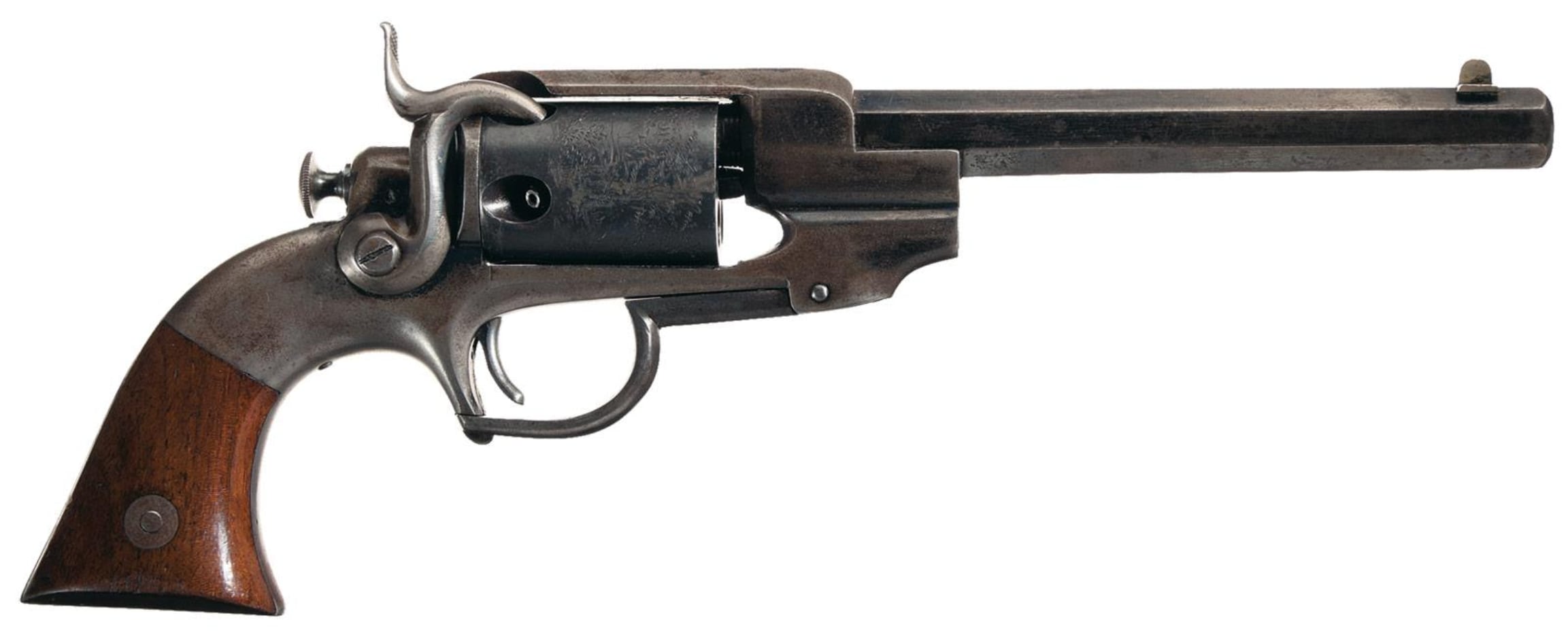
The barhammer percussion revolvers were the very first revolvers designed and produced by Ethan Allen. These are also called transition revolvers due to the fact that there is a strong resemblance to the pepperboxes.
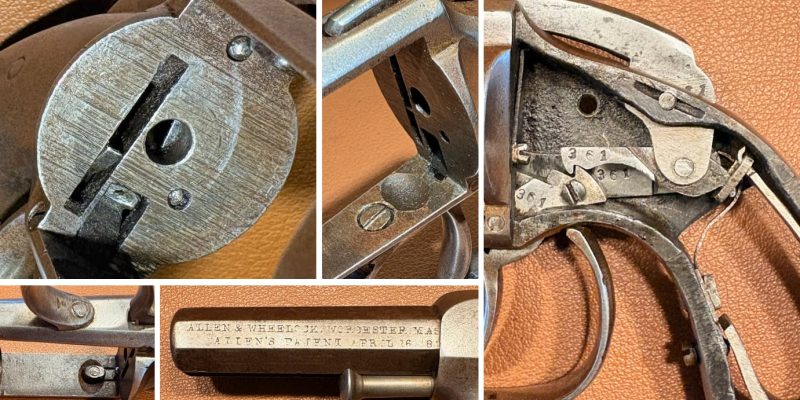
The double action mechanism and the cylinder locking is identical to the pepperboxes using the US3998 patent of 1845. It looks like Ethan Allen was still hanging-on to the idea that speed of fire was of much more importance than any accuracy. All in all, the revolver isn’t much more than a pepperbox with a single barrel.
The revolvers came standard with a blued frame, barrel and trigger guard. The cylinders, hammer and trigger were case-hardened. The grips were of varnished walnut but ivory grips could be ordered as an option.
The revolvers were produced in 3 distinctive frame and cylinder sizes: Large, medium and small.
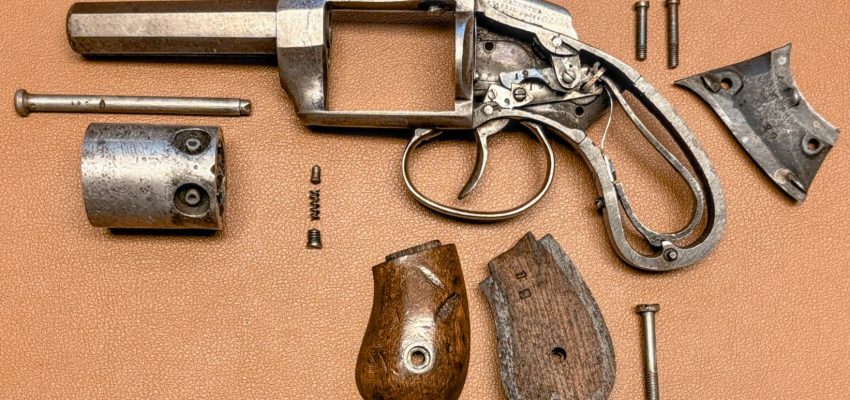
Early production models had the peculiarity where the cylinder pin could only be removed by unscrewing the barrel from the frame! Obviously, this is extremely unpractical, and a second variation was quickly introduced having a more classical cylinder pin.
All first variations and the early production of the second variation are marked ALLEN & WHEELOCK either on the top flat of the barrel or on the top frame strap, and the patent date on the left side of the hammer. Later production have the maker’s name and patent information on the left side of the barrel.
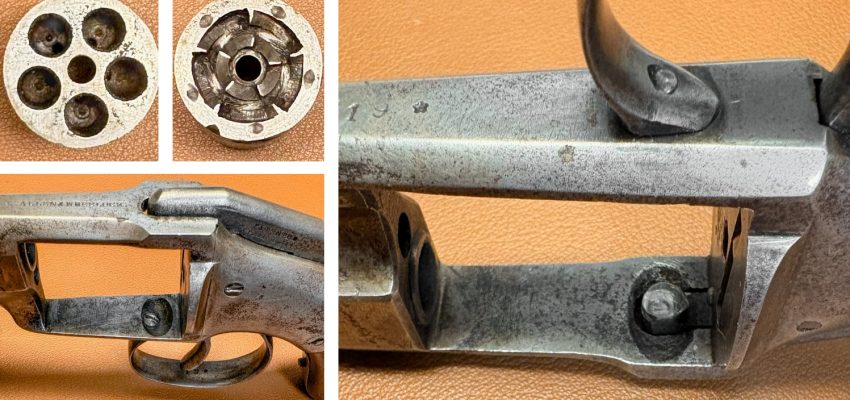
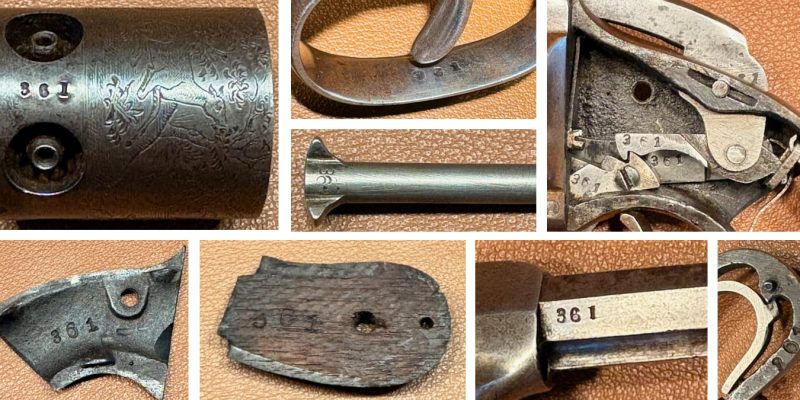
The small frame revolver is in .30 caliber and has a cylinder length of 1,25″. The medium and large frame revolvers are both in .32 caliber with cylinder lengths of 1,5″ and 1,625″ respectively. Some cylinders have hammer rests (as can be seen on picture of the large frame cylinder) while others have not.
It is not known when production exactly started and ended but it is generally believed that the production period ran from 1856/57 to 1861/62 with an estimated production of around 1000 units of each frame size.
All frame sizes have 5 shot cylinders that are beautifully scroll engraved with a scene of animals in a forest.
Rollin White
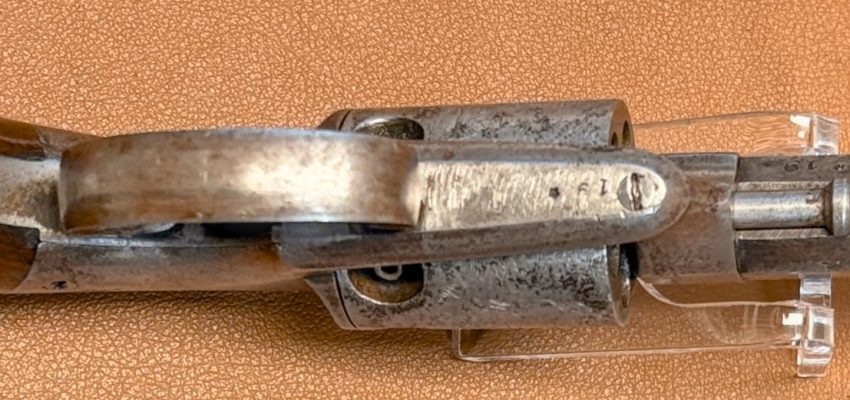
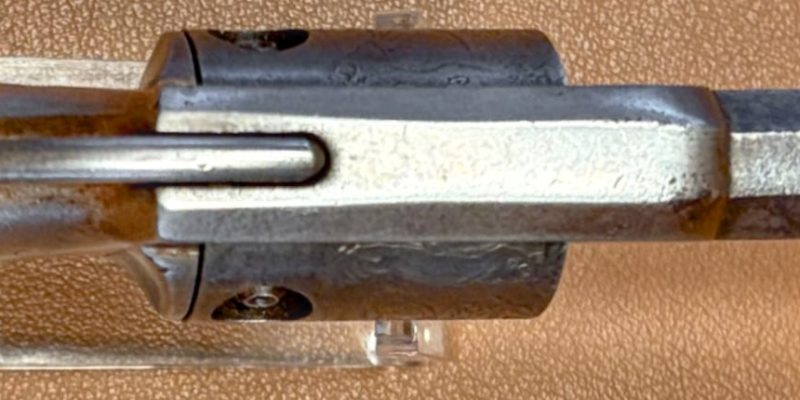
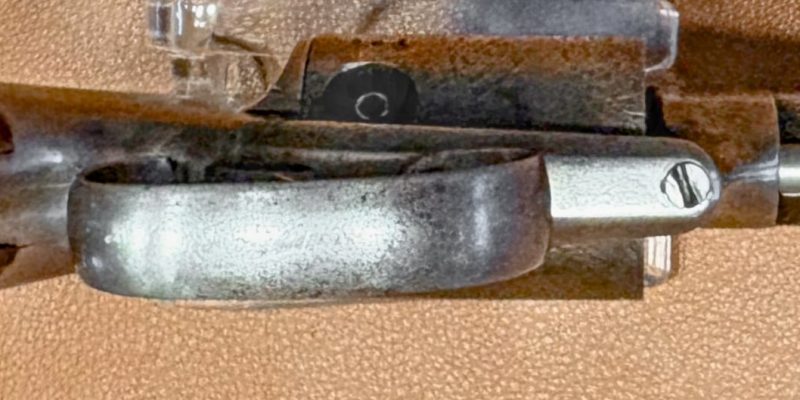
The revolver shown here is a true curiosity. This Allen & Wheelock bar hammer revolver was modified by Rollin White and served as the model for his U.S. Patent 19,961, issued on April 13, 1858. The design aimed to achieve two main objectives: (1) to reduce the gap between the cylinder and the barrel in order to minimize gas leakage, and (2) to prevent jamming caused by expended fired cartridge cases. As with many of Rollin White’s inventions, the concept proved highly impractical, and to the best of my knowledge it was never adopted for production in any revolver.
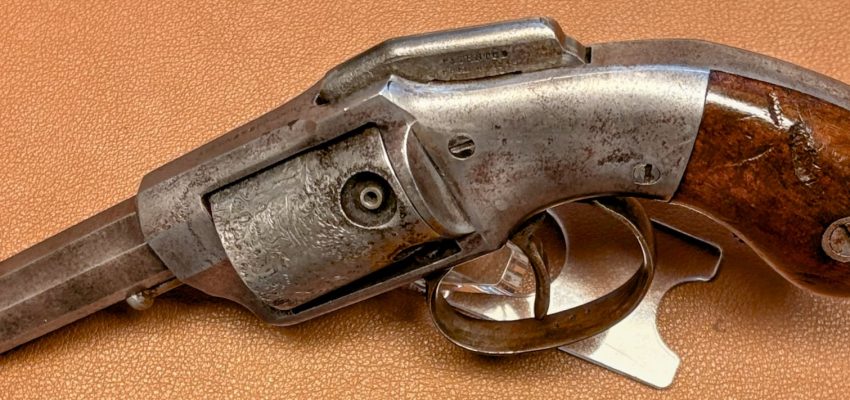
Barhammer Revolver - Medium frame 2nd variation early production
This is a second variation of early production (makers marking on the top strap).
-
Caliber: .32"
-
Serial numer: #19
-
Length: Barrel:7,6 cm (3"), Total:19,5cm
-
Weight: 480 gr
-
Hammer marking: PATENTED APRIL 16, 1845
-
Top strap marking: ALLEN & WHEELOCK


Cylinder pin hold by a setscrew
The action is identical to the pepperboxes
Note the very "light" cylinder index stops
These cavities were probably made to avoid any deformed or cracked percussion caps to jam the cylinder rotation
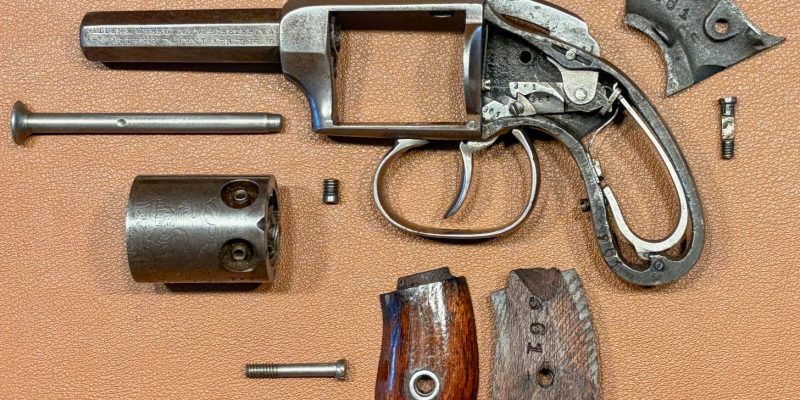
Allen & Wheelock Barhammer Pocket Revolver
This specimen is the most common one found and is of late production having the makers name and patent information on the left side of the barrel and no marking on the hammer. Note that the space on the barrel is too small for holding the information leading to a truncation of the last letters.
-
Caliber: .30"
-
Serial number: #361
-
Length: Barrel:6,35 cm (2,5"), Total:15 cm
-
Weight: 273 gr
-
Barrel markings: ALLEN & WHEELOCK. WORCESTER. MAS / ALLEN'S PATENT APRIL 16 181
From the P.O. Collection


