Allen’s Bar Hammer Percussion Pistols
  • Production period:

    From around 1837 to the civil war era

Related patents: 

  • Production quantity:

    Production limited of the early types, estimated in the hundreds. However, the Worcester production has been significant with quantities of over 10000 of both the standard type and the muff type.

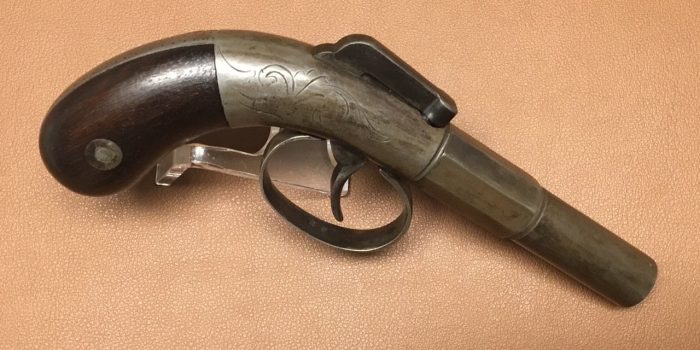
One of the cornerstones of Ethan Allen’s early business was the single-shot bar-hammer percussion pistol, which Allen referred to as the No. 9 Self-Cocking Pistol. Production began in Grafton around 1837 and continued well into the Worcester period, during which the pistol underwent several distinct design variations.

The earliest Grafton and Norwich models, as well as the first Worcester examples, featured a sharply angled grip commonly referred to as the “quick-drop” grip. Judging by the relatively small number of surviving specimens, these early pistols appear to have been produced in limited quantities. This is likely explained by the fact that Ethan Allen’s primary focus during this period was the manufacture of pepperbox revolvers.

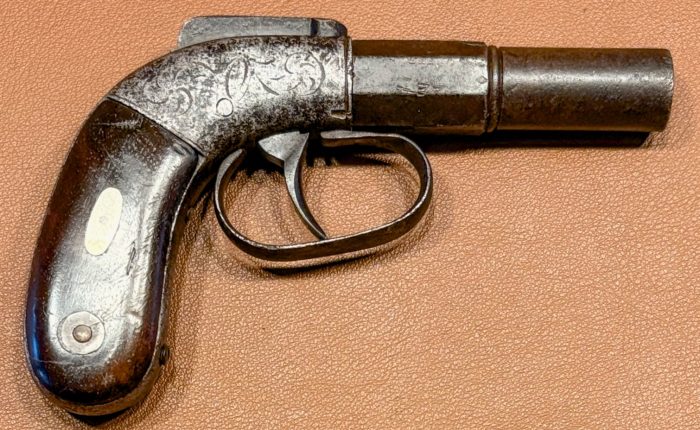
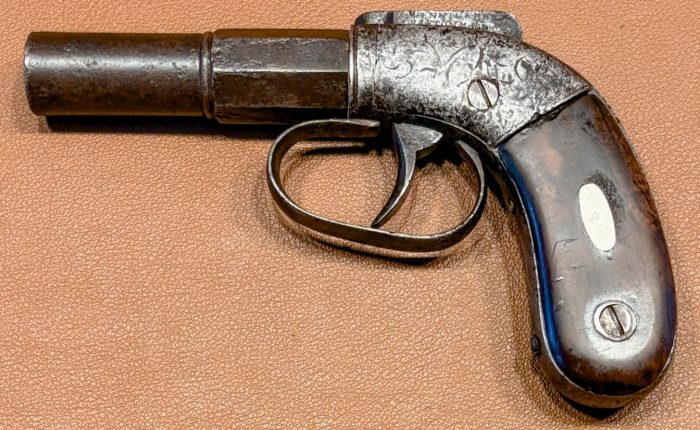
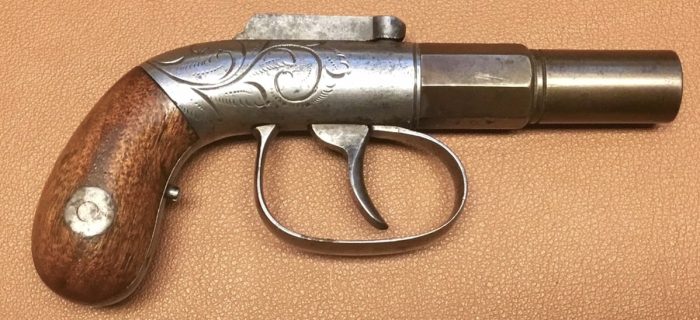
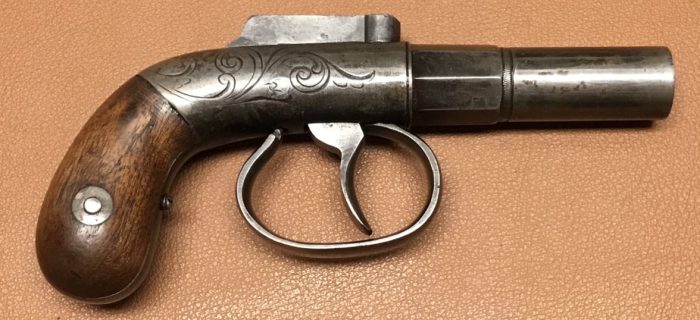
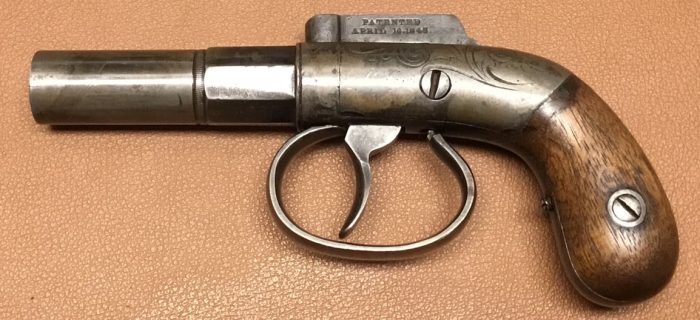
Early in the Worcester period, the grip was redesigned with a more rounded, evenly arched profile, commonly known as the “bag-type” grip. This configuration became the standard Worcester pattern and remained in production for many years with few subsequent design changes. Standard bar-hammer pistols were manufactured in .36 caliber with barrel lengths ranging from 3 to 6 inches.

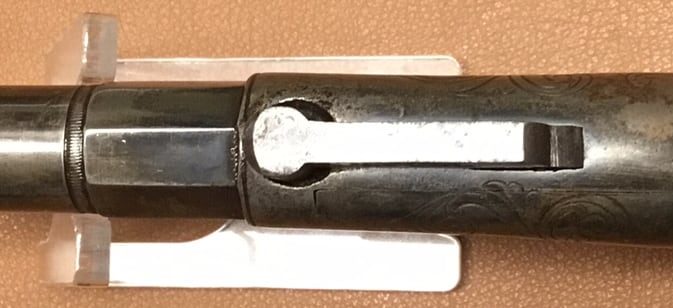
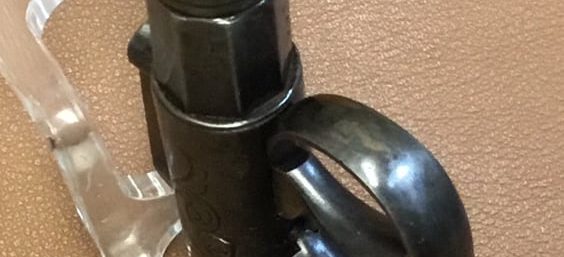
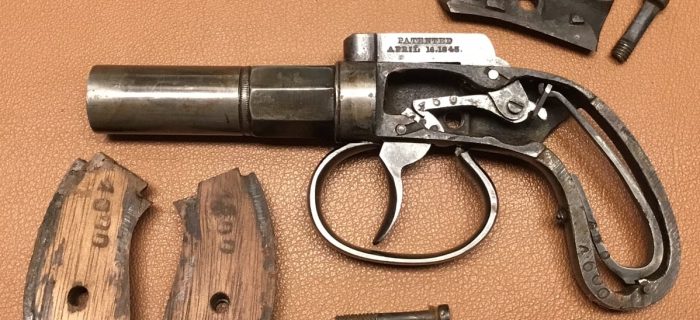
Around 1846, Allen introduced the Muff Pistol, a compact version intended for discreet vest-pocket carry. These pistols were produced exclusively with 2-inch barrels in calibers ranging from .28 to .31. They were only lightly marked, typically bearing the patent inscription on the hammer, while some examples were left completely unmarked.

Civil War soldier Sullivan Ballou with an Allen Thurber single shot barhammer pistol

The standard Barhammer pistol featured a blued finish with walnut grips. These pistols were frequently sold as part of a set that included a combined bullet mold and barrel wrench.

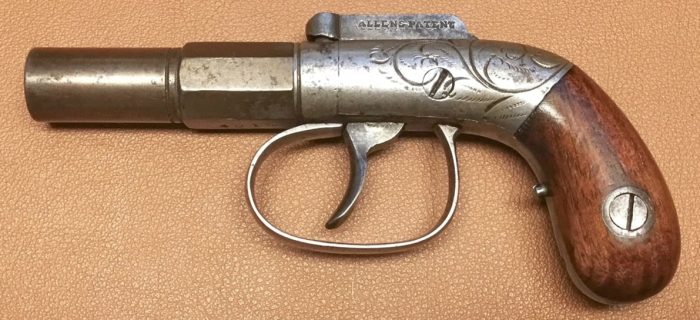
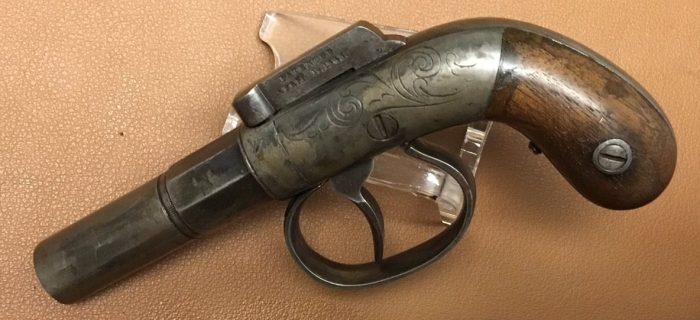
Hand-engraving embellishes the frames of all models except for models manufactured during the very last production period where engraving was omitted to save on production costs.

Typical Grafton and early Norwich production with the "quick-drop" grip
Typical Norwich production having the improved 1845 patented action
Typical Worcester production with the "bag-type" grip

The grip on the very early Grafton pistols have a wide back strap of 1/2″. Later versions have the narrow back strap of 1/4″ that remained in production on all other models without changes.

Around the middle of the Norwich period, Allen replaced the mechanism covered by the 1837 patent with an improved design patented in 1845. The most visible external change was the relocation of the mainspring tension screw to a position level with the trigger. Curiously, the PATENTED / 1837 / CAST STEEL barrel marking continued to be used well into the Worcester period, despite the adoption of the later patent.

During the latter part of the Norwich period, the oval silver escutcheon inset into the grip was discontinued, and the frame engraving was revised to a slightly different pattern. Allen also introduced a ring-trigger variant, expanding the range of available configurations.

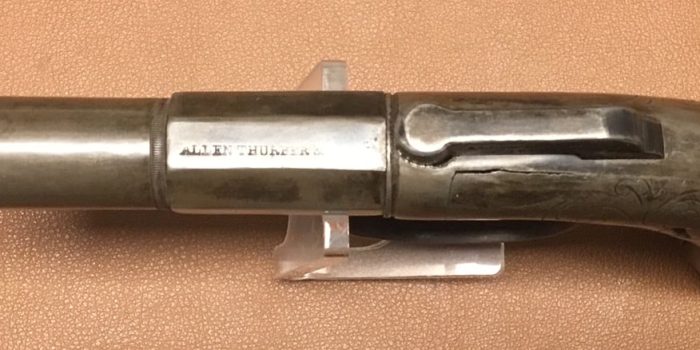
Norwich-period pistols are marked ALLEN PATENT on the side of the hammer and are found with one of two barrel inscriptions: PATENTED / 1837 / CAST STEEL on the octagonal portion of the barrel, or ALLEN & THURBER / NORWICH, C-T / CAST STEEL.

Norwich Allen & Thurber Barhammer Ring trigger Pistol - Right side view
Allen & Thurber Bar Hammer Pistol with ring trigger - Early Norwich production

The earliest Worcester-period pistols initially retained the Norwich design. As previously noted, they were soon superseded by a redesigned model featuring a longer frame and the characteristic rounded “bag-type” grip. This configuration became the standard Worcester pattern and remained essentially unchanged for the remainder of production.

By the final years of manufacture, demand for single-shot bar-hammer pistols had declined considerably as more advanced repeating firearms gained popularity. In an effort to reduce production costs, the decorative hand engraving on the side plates was frequently omitted on these late-production pistols.

A&T Worcester Barhammer Muff Pistol 01
Bar Hammer Muff Pistol - Worcester production

Patent marking can be found on the hammer, and the barrel is usually marked CAST STEEL on one barrel flat, and the brand name ALLEN & THURBER or ALLEN & WHEELOCK on another barrel flat

The small “muff” vest pocket model was introduced during the very last years of Norwich but the vast majority has been produced in the Worcester period. The marking on these guns is minimal, sometimes even completely missing, and there are no pistols known with the maker’s name and location. Common marking (on hammer only): ALLEN’S PATENT or  PATENTED / APRIL 16.1845.

COLLECTION PIECES

Early Grafton Allen & Thurber Barhammer pistol

  • Caliber:

    36

  • Assembly number

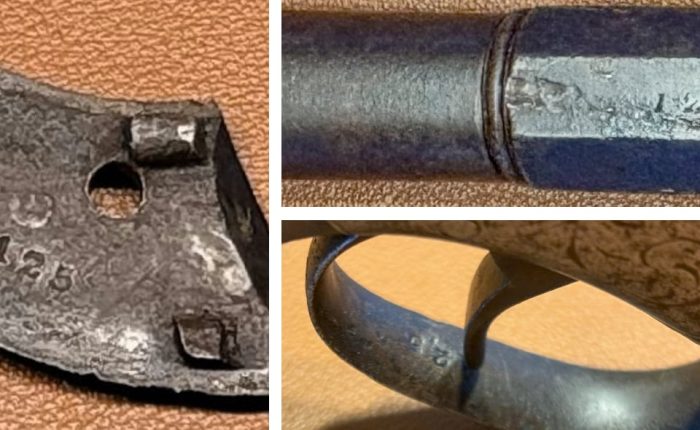
    125

  • Length:

    Barrel:6,75cm (2,7"), Total:13,5cm

  • Weight:

    254 gr

  • Hammer marking:

    Top: ALLEN'S PATENT - Left side: ALLEN & THURBER / GRAFTON

  • Barrel marking:

    CAST STEEL

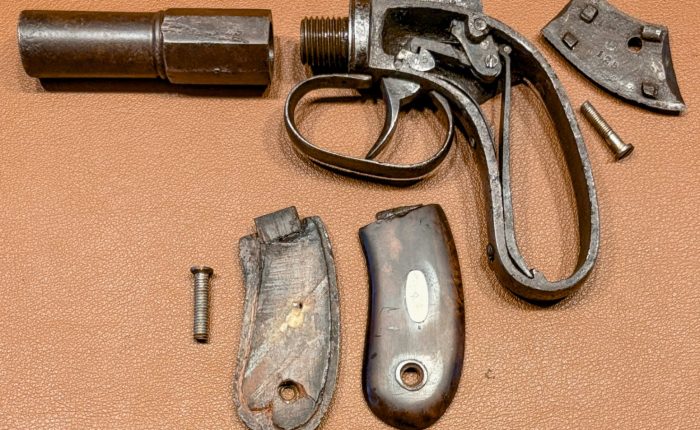
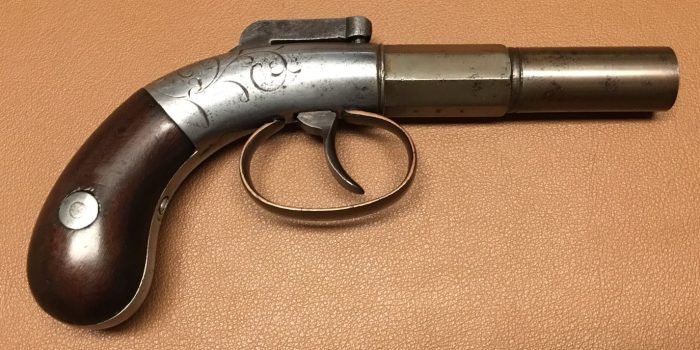
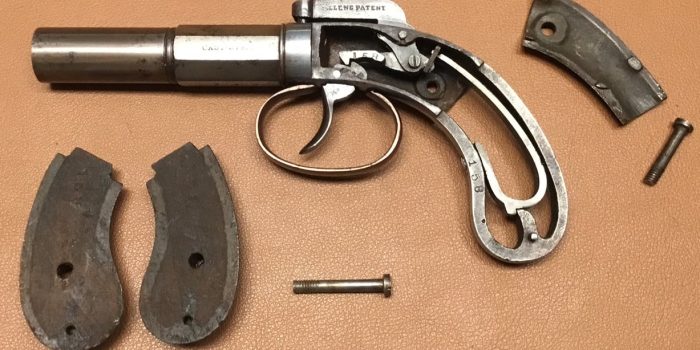
This rather worn specimen is a very rare piece of the early Grafton era. Only a small number were produced, and few surviving pieces are known today. These pistols feature a wide back strap with extremely thin and fragile wooden grips, a design that was quickly abandoned in later production in favor of a much narrower grip strap allowing for more solid grip plates.


From the P.O. Collection 

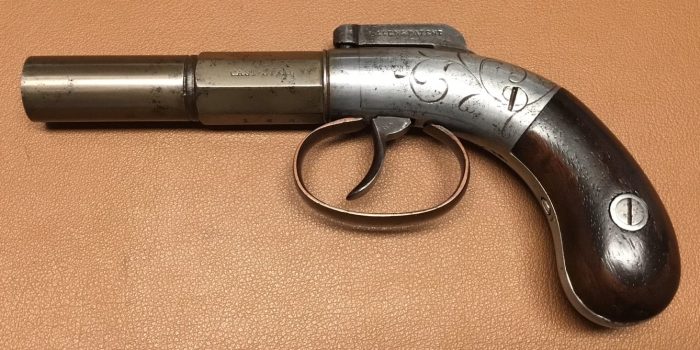
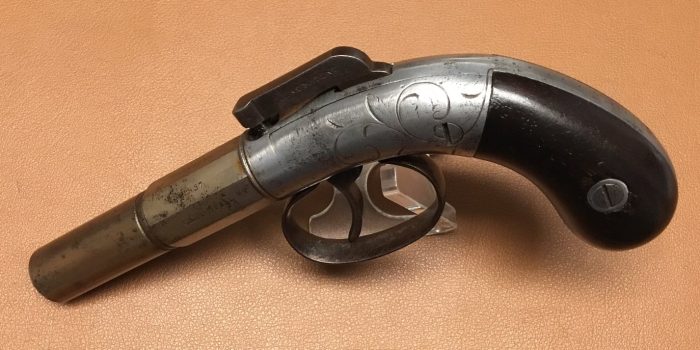
Worcester period standard model – Allen & Thurber

  • Caliber:

    36

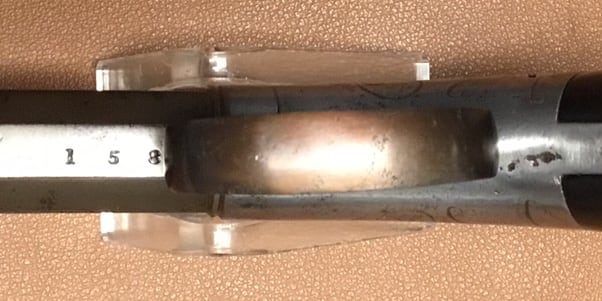
  • Assembly number

    158

  • Length:

    Barrel:7,6cm (3"), Total:16,5cm

  • Weight:

    290 gr

  • Hammer marking:

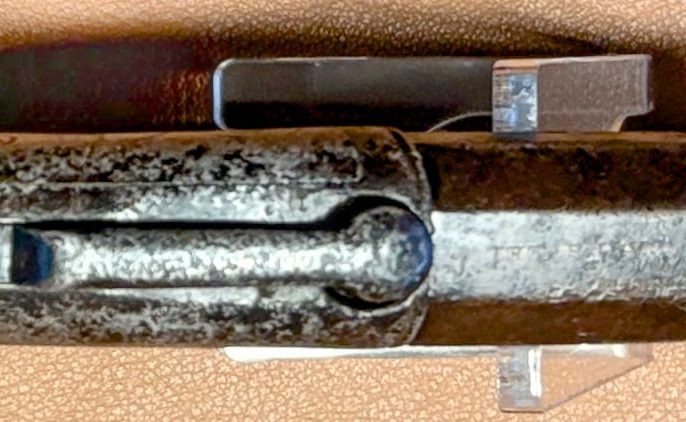
    ALLEN'S PATENT

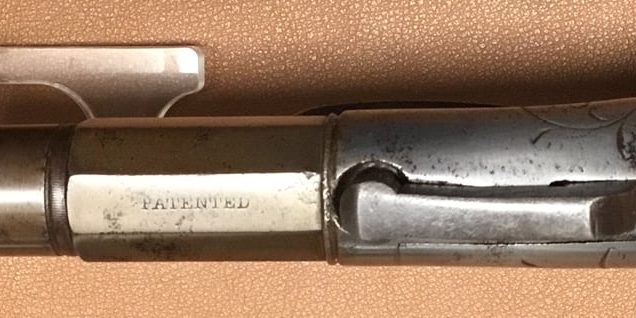
  • Barrel marking:

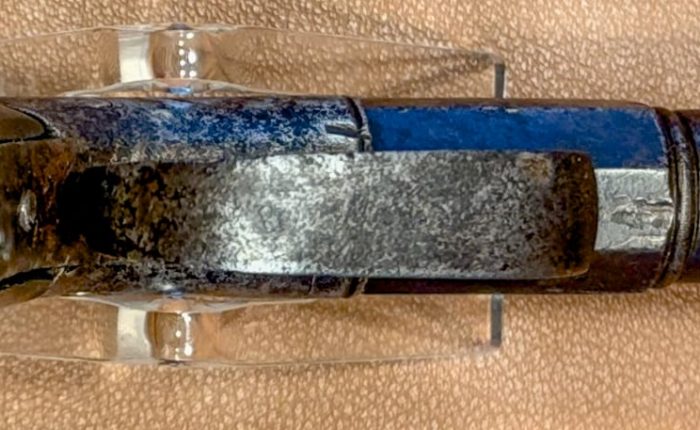
    CASTSTEEL - PATENTED - 1837

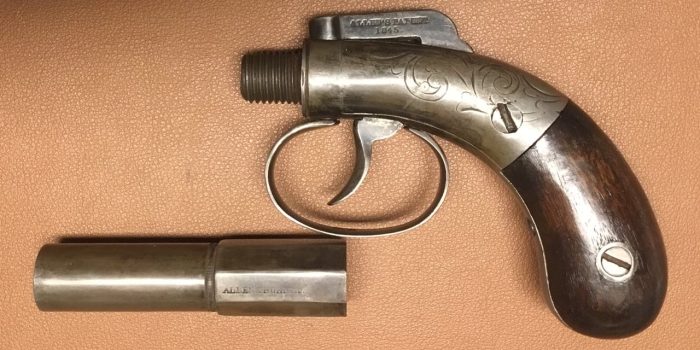
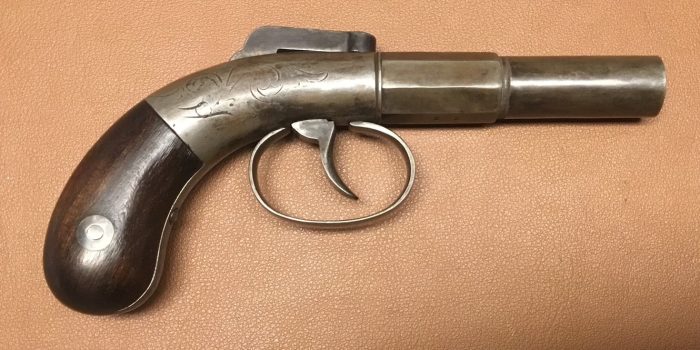
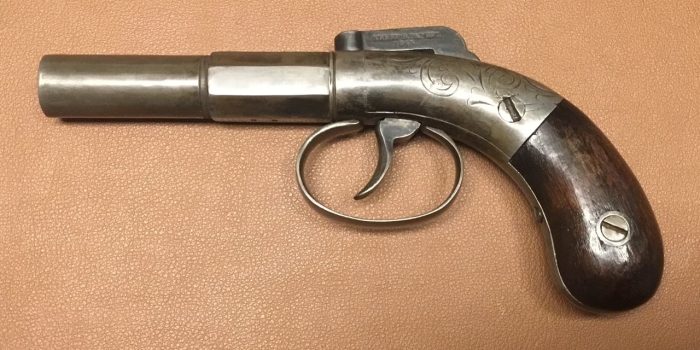
The shown model has the rounded “bag type” grip and is from the Allen & Thurber / Worcester period. Although the mechanism is already of the 1845 patent type, the barrel is still marked with the 1837 patent reference.

Worcester period standard model – Allen, Thurber & Co

  • Caliber:

    36

  • Assembly number

    33

  • Length:

    Barrel:7,6cm (3"), Total:16,5cm

  • Weight:

    290 gr

  • Hammer marking:

    ALLEN'S PATENT / 1845

  • Barrel marking:

    CASTSTEEL - PATENTED - 1837

This one is of a slightly later production date since it has the 1845 patent date on the hammer and Allen Thurber & Co barrel marking. Otherwise identical except for the engraving and markings.

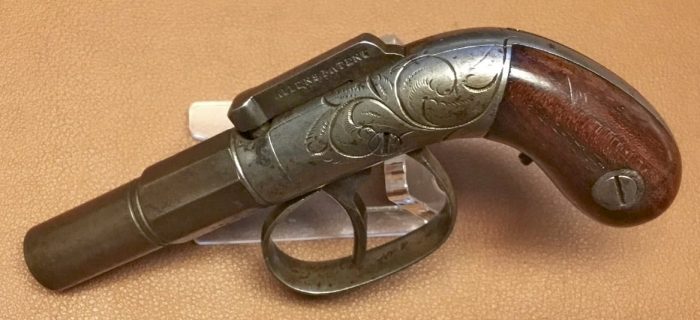
Muff Pistol – Allen & Thurber

  • Caliber:

    31

  • Assembly number

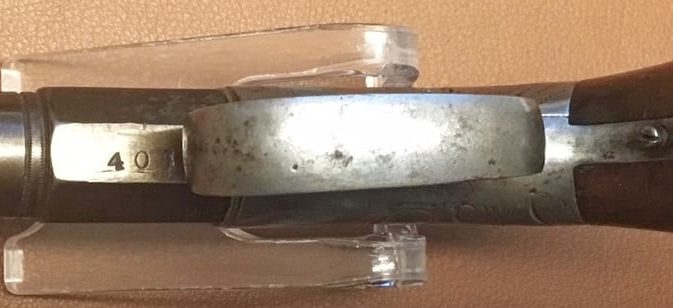
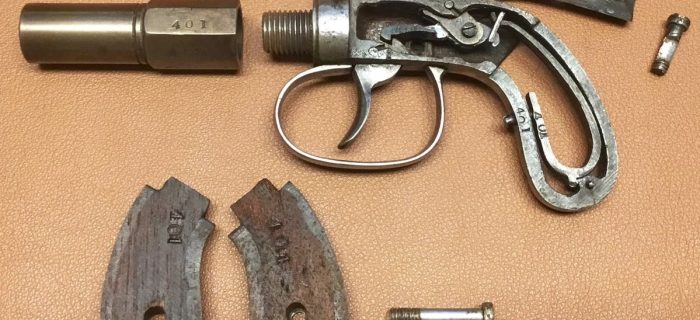
    401

  • Length:

    Barrel:5,1cm (2"), Total:12,4cm

  • Weight:

    160 gr

  • Hammer marking:

    ALLEN'S PATENT

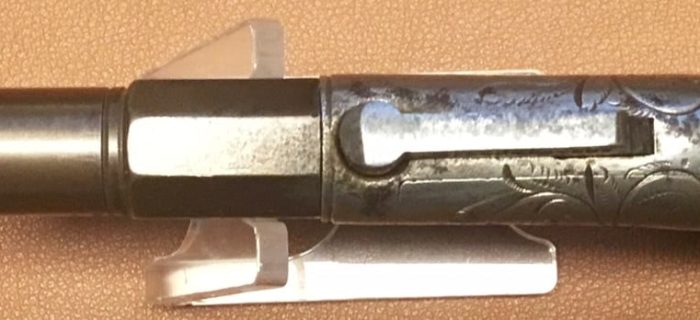
The shown model is from the Allen & Thurber period which can be seen by the marking on the hammer ALLEN’S PATENT.  This marking does not yet reference the 1845 patent. The trigger guard is oval with a straight angle.

Muff Pistol – Allen & Wheelock

  • Caliber:

    30

  • Assembly number

    460

  • Length:

    Barrel:5,1cm (2"), Total:12,4cm

  • Weight:

    160 gr

  • Hammer marking:

    PATENTED / APRIL 16, 1845

This one is probably from the Allen & Wheelock period, but this cannot be said with certainty.  The pistol does not yet have a rounded hammer but does have PATENTED APRIL 16, 1845 hammer markings.

The trigger guard is completely oval.

Continue exploring Ethan Allen’s legacy

Click on the image or title to open a new window
Worcester Production Pepperboxes

Pepperboxes from the Worcester period are characterized by the evenly arched "late rounded" grips design. It is by far the longest period of pepperbox production and the Worcester models are therefore the most encountered pieces today.

Besides the design changes on existing models, the Worcester period gives also birth to some new models like the 4-shot and 5-shot pepperboxes as well as the single action pepperbox.