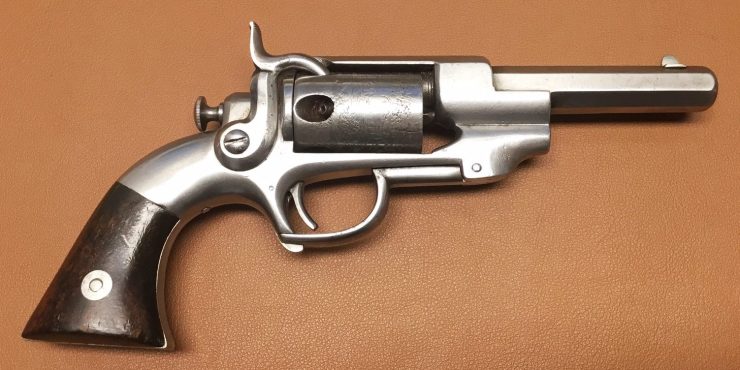
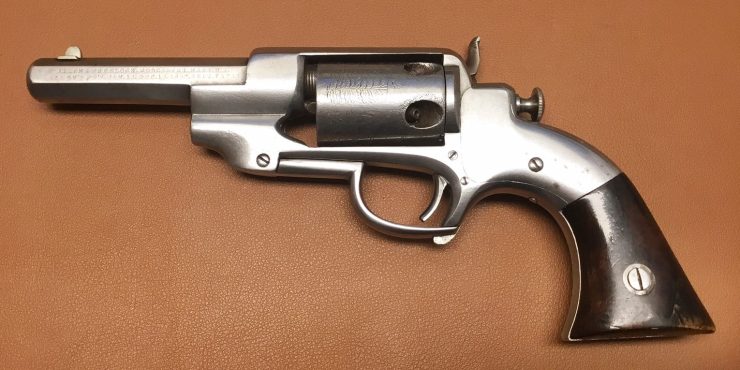
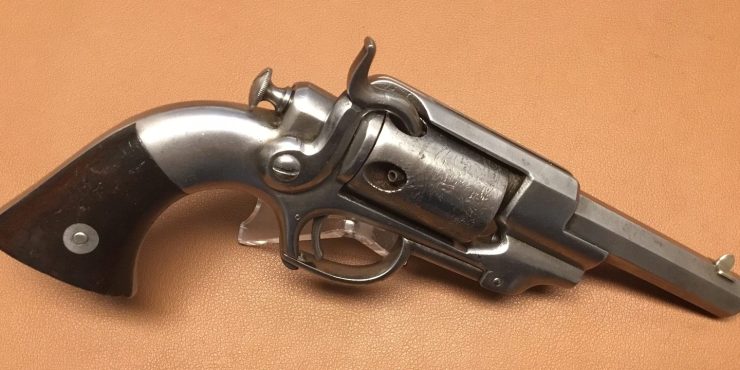
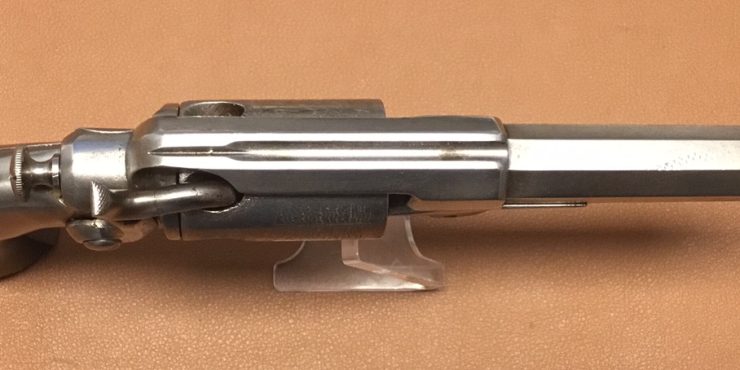
Allen & Wheelock Sidehammer Percussion Revolvers

Content:

Overview

  • Production period: ---From ~1858 to 1861

  • Production quantity: ----The official estimate suggests approximately 750 Navy models and about 1,000 each of the Pocket and Belt models. However, I believe the actual production numbers for the Belt model were significantly higher, as I have observed duplicate serial numbers. This suggests that several production batches may have been manufactured, each using its own serial number range beginning at 1.

Click on the links below for serial number research

Members of the First Battery, Massachusetts Light Artillery with their .36 Side Hammer Navy Revolvers - Aug 1861

It is widely believed that Ethan Allen drew inspiration from the Colt Root Revolver when designing these side-hammer revolvers, as evidenced by their close similarities, including the side hammer and the rear-entering cylinder pin. As a result, this revolver is also known as the “Allen’s Colt.”

This revolver represented a major improvement over the transitional Bar Hammer models. It was a far more advanced weapon, incorporating several unique features described in the following patents:

These revolvers were produced in three distinct frame sizes: a 6-shot Navy model in .36 caliber, a 5-shot Belt model in .32 caliber, and a 5-shot Pocket model in .28 caliber.

Production began around 1857, likely soon after the Colt patent expired. Because the December 15, 1857 patent drawing depicts a five-shot revolver, it is generally accepted that the Belt model was produced first. This view is further supported by the fact that the Belt revolver displays the greatest variety among the models. The Navy version followed soon afterward, while the Pocket model was introduced somewhat later. Overall, production is believed to have lasted only about four years. At least for the Navy model, this can be readily explained by the introduction of the much more robust Center Hammer Navy revolvers in 1861.

US18836 - Dec.15th 1857 Patent drawing
Cased Navy version of early production with a "three screw" side plate
Navy, Belt and Pocket Side Hammer Percussion Revolver

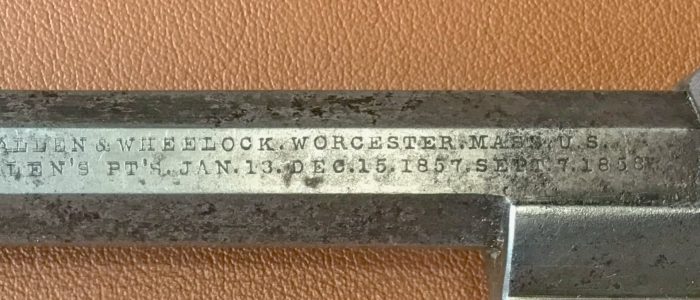
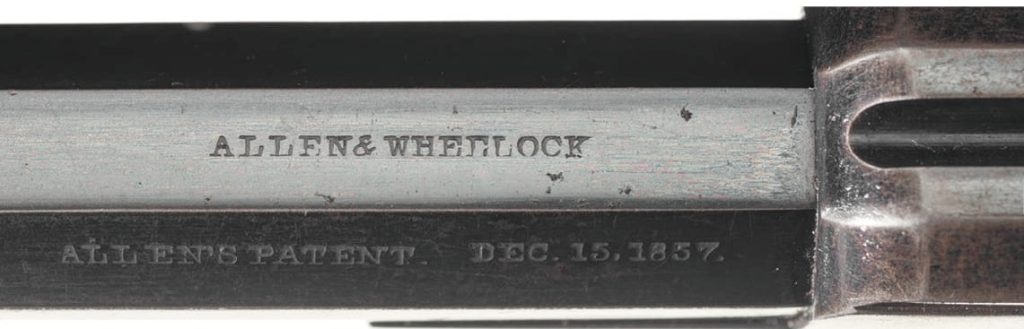
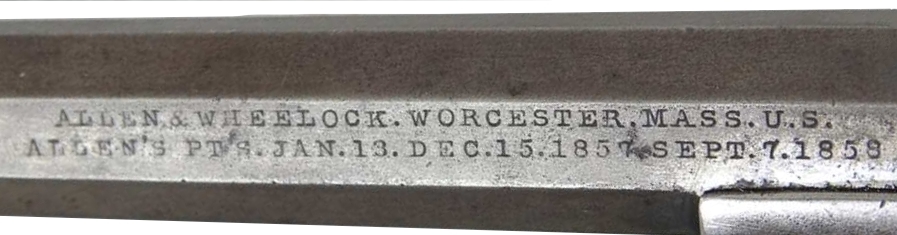
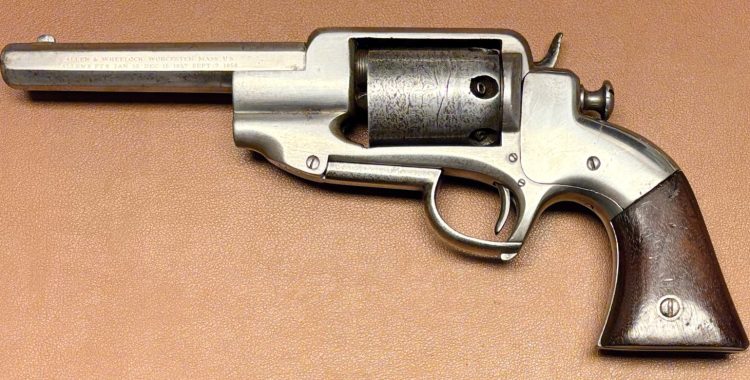
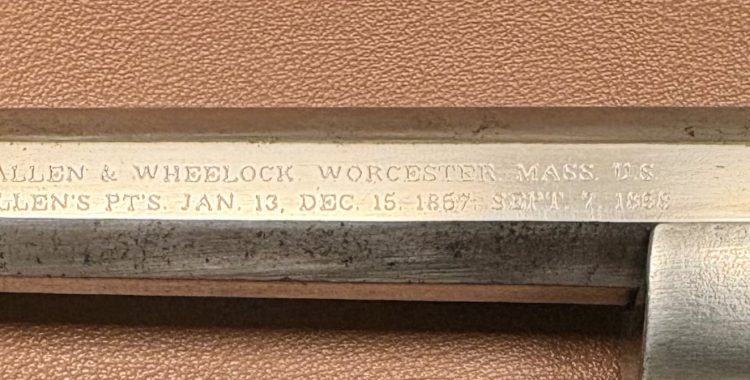
All models are marked on the left side of the barrel with:
ALLEN & WHEELOCK. WORCHESTER, MASS. U.S. ALLEN’S PT’S. JAN. 13. DEC. 15. 1857 SEPT. 7. 1858,
except for early production examples, which do not include the 1858 patent date.

Barrel marking on an early model
Standard barrel marking

The revolvers feature a blued barrel and frame, along with a case-hardened hammer, cylinder, trigger, and trigger guard. The cylinders are attractively scroll engraved and depict animal scenes set in a forest, with a different scene for each caliber.

Cylinder engraving of the Navy version
Cylinder engraving of the Belt version
Cylinder engraving of the Pocket version

Despite the short production period, numerous variants of these revolvers exist, suggesting that Allen continually refined the design to simplify manufacturing and reduce costs. Variations can be found in the side plate, cylinder, cylinder pin, and trigger-guard latch. The Belt revolver shows the greatest variety, likely because it was the first model produced, followed by the Navy and shortly thereafter the Pocket model.

In addition to many minor differences, the primary visual distinguishing feature is the shape of the side plate and the number of screw holes. The side plates have been classified below in what appears to be the most logical evolutionary sequence. The vast majority of production used the Type 6 “one-screw” side plate.

Type 1B (only used on Belt)
Type 2B (Only used on Belt)
Type 3NP (Used on Navy and Pocket)
Type 4B (Only used on Belt)
Type 5BP (Used on Belt and Pocket)
Type 6 (Used on all models)

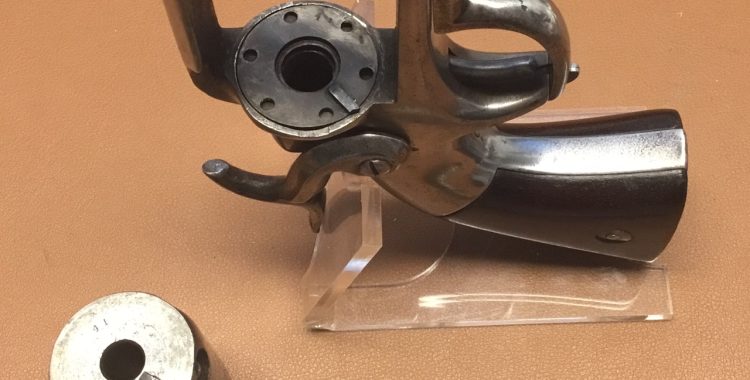
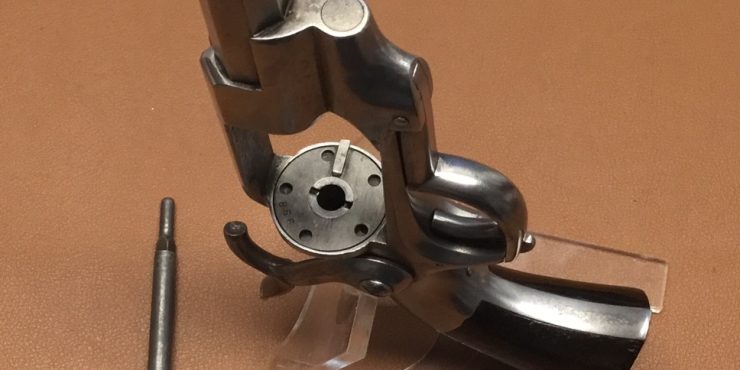
There are basically 3 types of cylinders with a small variation in the first type.  The differences can only be observed by removing the cylinder, as they concern the shape of the rear of the cylinder. The vast majority of production has been produced with the type 3 cylinder.

In addition, several types of cylinder pins can be found across the various models.

Type 1B (Only used on Belt)
Type 1N (Only used on Navy)
Type 2B (Only used on Belt)
Type 3 (Used on all models)
Friction latch
Snap latch

A final distinguishing feature is the trigger-guard locking system. Early production revolvers used a friction-latch system, which proved relatively weak and was soon replaced by a snap-latch system that remained unchanged for the rest of production.

Using these characteristics, a simplified classification can be made according to the tables below. The cylinder type is treated here as a variant rather than a primary type differentiator.

The Belt Model

Type Side Plate Cylinder Trigger Guard
1st – Var 1
Type 1B
Type 1B
Friction latch
1st – Var 2
Type 1B
Type 2B
Friction latch
2nd
Type 2B
Type 1B
Friction latch
3rd
Type 4B
Type 2B
Friction latch
4th – Var 1
Type 5BP
Type 2B
Friction latch
4th – Var 2
Type 5BP
Type 3
Friction latch
5th
Type 6
Type 3
Snap latch

The Navy Model

Type Side Plate Cylinder Trigger Guard
1st
Type 3NP
Type 1N
Friction latch
2nd – Var 1
Type 3NP
Type 1N
Snap latch
2nd – Var 2
Type 3NP
Type 3
Snap latch
3rd
Type 6
Type 3
Snap latch

The Pocket Model

Type Side Plate Cylinder Trigger Guard
1st
Type 3NP
Type 3
Friction latch
2nd
Type 5BP
Type 3
Friction latch
3rd
Type 6
Type 3
Snap latch
COLLECTION

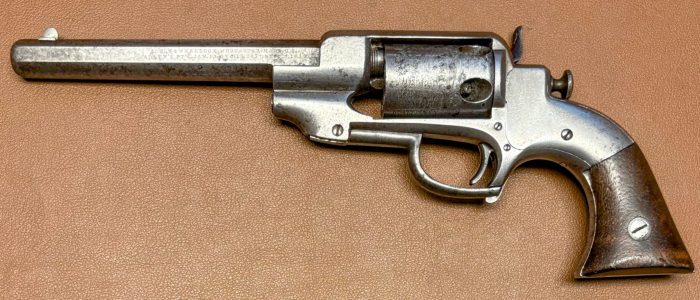
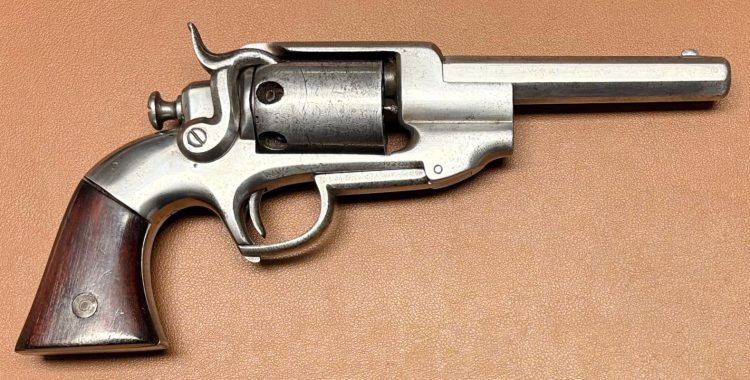
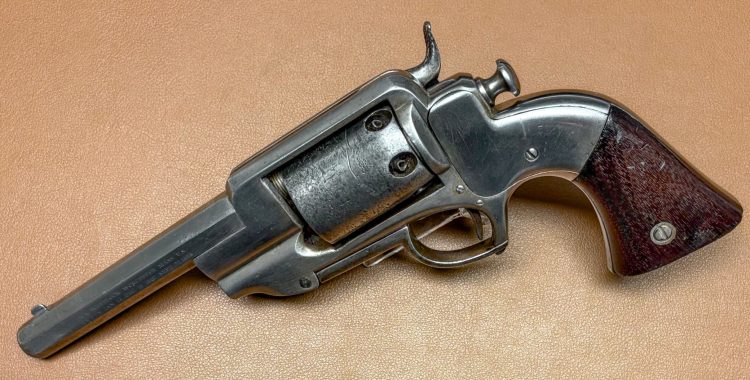
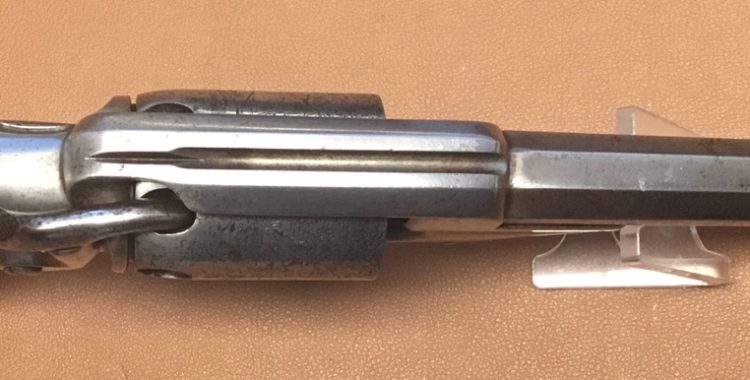
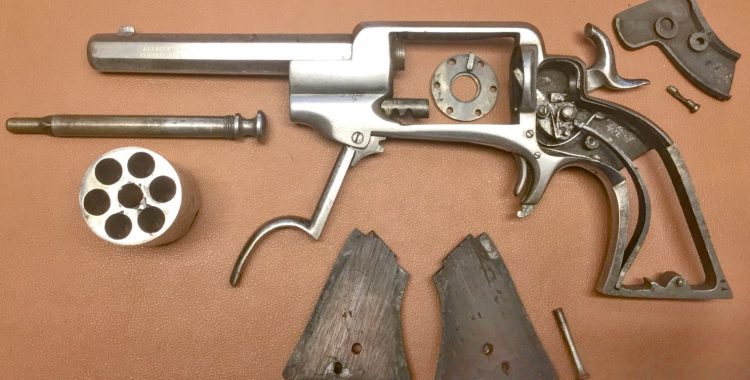
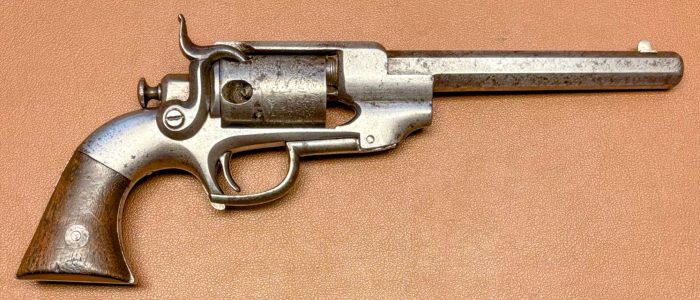
The Navy Side-hammer is a massive 6-shot revolver in .36 caliber. The cylinder has a nice scroll engraving of animals in a forest. The fully octagonal barrel can vary in length from 5.3 to 8 inches. As mentioned, there are many variations of the Navy revolver. The specimen shown here is the most common 4th type with the two patent dates on the barrel, a type 3 cylinder and a type 6 side plate.

  • Caliber: .36"

  • Serial number: #41

  • Length: Barrel:13,5 cm (5,3"), Total:27,5cm

  • Weight: 1042 gr

  • Barrel marking: ALLEN & WHEELOCK. WORCHESTER, MASS. U.S. ALLEN’S PT’S. JAN. 13. DEC. 15. 1857 SEPT. 7. 1858

Sidehammer Belt Revolver - 5th type - 4" barrel

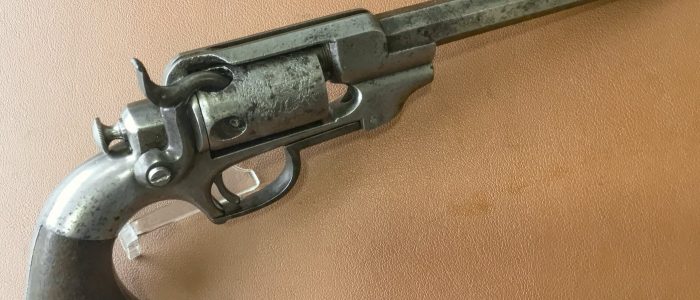
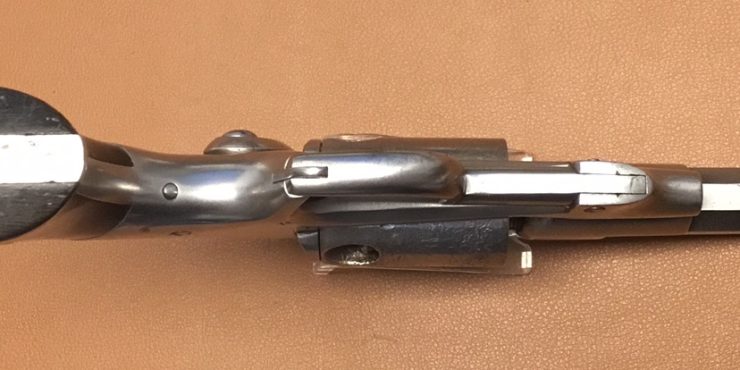
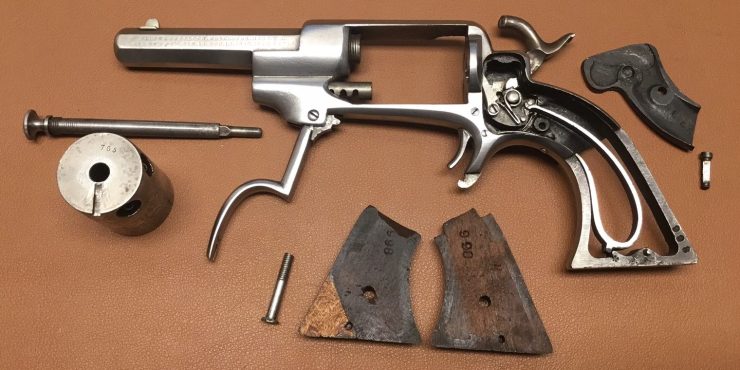
The Belt revolver is a scaled down version of the Navy revolver.  Beside the frame size, the major difference is that the Navy has a 6-shot cylinder, and the Belt has a 5-shot. The cylinder also features a scroll engraving of animals in a forest. The Belt revolvers have been produced in .31, .32 and .34″ caliber. The vast majority are in .32″. All have octagonal barrels with lengths of either four, five, six or seven and a half inches.  The Belt has many variants. The revolver shown here is a 5th type having a type 6 side platea type 3 cylinder and the two patent dates on the barrel.

  • Caliber: .34"

  • Serial number: #866 but #765 on the Cylinder

  • Length: Barrel:10,2 cm (4"), Total:22,6cm

  • Weight: 628 gr

  • Barrel marking: ALLEN & WHEELOCK. WORCHESTER, MASS. U.S. ALLEN’S PT’S. JAN. 13. DEC. 15. 1857 SEPT. 7. 1858

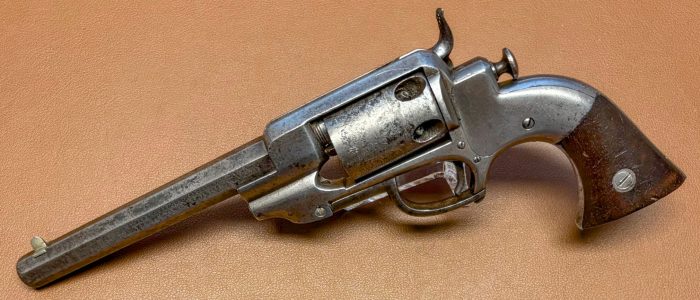
Sidehammer Belt Revolver - 5th type - 6" barrel

As the Belt revolver above, this specimen is a 5th type with the same main characteristics. There are however some minor differences like a slightly smaller trigger guard latch, a different knurling on the hammer (a teardrop shape vs a saddle shape), a different shape of rear sight machined into the frame. Also, the pin on the right side of the frame, close to the trigger has now disappeared.

Taking in consideration that the serial# on this specimen is relatively close to the specimen above, it can be concluded that this revolver if from a different production batch.

  • Caliber: .32"

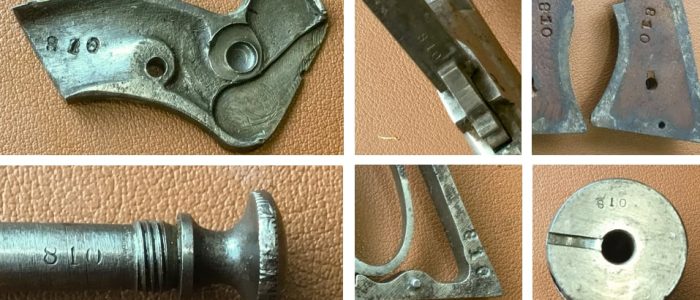
  • Serial number: #810

  • Length: Barrel:15,2 cm (6"), Total:28,4cm

  • Weight: 670 gr

  • Barrel marking: ALLEN & WHEELOCK. WORCHESTER, MASS. U.S. ALLEN’S PT’S. JAN. 13. DEC. 15. 1857 SEPT. 7. 1858

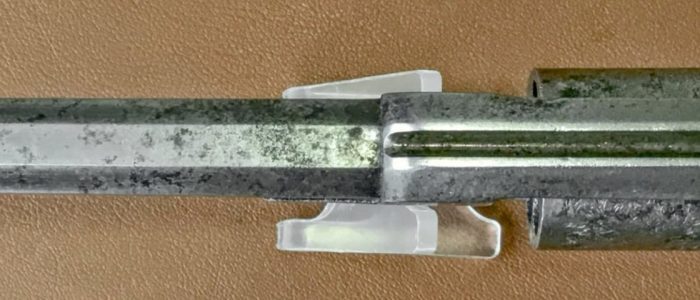
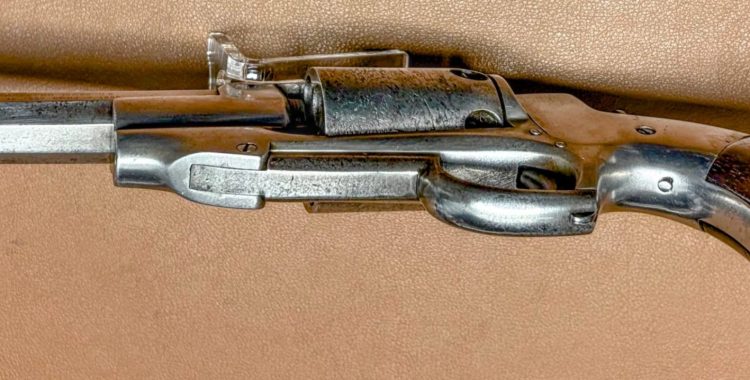
A zoom on some differences between the 2 collection models