Allen’s 32RF Side-Hammer Revolvers

Allen’s 32RF Side-Hammer Revolvers
  • Production period:

    From 1858 to 1863 during the Allen & Wheelock era, and later from 1869—when production resumed under E. Allen & Co.—through 1871.

Related patents: 

  • Production quantity:

    The First model has been manufactured in limited quantities. However, based on the number of surviving examples of later versions, we can confidently say that these were manufactured in substantial quantities, likely exceeding 3,000 units for the Second model and even 5000 for the Third model. On the contrary, the Third model brass frames are extremely scarce.

Production of the side-hammer 32RF revolvers began shortly after the introduction of the 22RF models. Aside from their larger size, the .32 revolvers closely mirror the .22 versions in overall design with the characteristic side-mounted hammer on the frame.

These revolvers typically have a six-shot capacity in .32 Short. As with the .22 rimfire models, users had to remove the cylinder for loading and unloading, using the cylinder pin to eject spent cartridges. Later in production, Allen introduced also a variant with a longer cylinder to accommodate the .32 Long cartridge.

Production halted in November 1863 due to a patent infringement lawsuit but resumed in 1869 during the E. Allen & Co. period after the Rollin White patent expired.

The revolvers were standard finished with blued steel frames, cylinders, and octagonal barrels measuring three, four, or five inches in length. Toward the end of production, the company produced limited numbers with brass frames, which are now considered rare. Walnut grips came standard.

Early models featured finely scroll-engraved cylinders depicting a country scene of dogs chasing a rabbit. In later production, the engraving was omitted.

Cival War soldier holding a late model Allen Wheelock 32rf Sidehammer

Variations

Three primary variations of the revolver can be identified. The following overview outlines the distinguishing characteristics of each model.


First model with its characteristic pinscrew

First Model: This version has a cylinder pin secured by a setscrew located at the bottom of the frame. It is equipped with a ‘quick drop’ style grip, characterized by an almost straight grip angle. The hammer-face is fully rounded, and the recoil shield is notably thick. Early first-model variants have a cylinder length of 0.905 inches, while later examples measure 0.940 inches.

From the ilustrated catalog of arms and military goods - Schuyler Hartley & Fraham - Ney York 1864 (page 140)
32 Sidehammer Revolver 2nd model 01
Late production second model without cylinder engraving and a fully square hammer face

Second model: Starting with this version, the cylinder pin is retained by a spring-loaded latch. This model can be found with various hammer types, including fully rounded, half-round/half-square, and fully square hammer-faces. The recoil shield is thinner and more rounded in profile. Early examples retain the cylinder engraving, while it was omitted in later production.

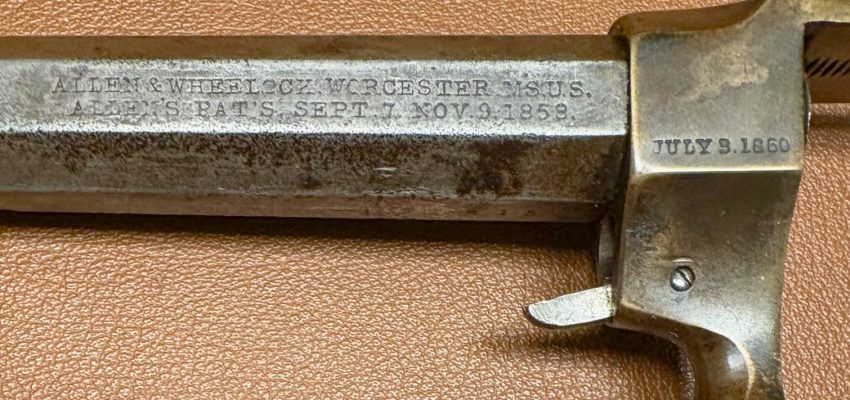
Midway through production of the Second Model, a patent date marking of July 3, 1860, was added to the side of the frame.

This patent referred to the raised portion of the recoil shield, designed to prevent the cylinder from jamming due to expanded cartridge cases after firing. This raised feature had already been implemented on most First Models, however without mentioning the patent date on the frame like we see on the Second and Third Models.

The standard version of the third model
Brass frame third model version in .32rf short

Third model: This version features a redesigned, more elegant frame with a ‘slow drop’ grip, similar to that found on contemporary Smith & Wesson revolvers. Only the fully square hammer face is encountered on these models.

The revolver was available with a 0.94-inch cylinder for the .32 Short cartridge, or with a 1.2-inch cylinder for the more powerful .32 Long cartridge. Barrel and frame markings are identical to those of the second model.

Toward the end of the production period, a limited number of revolvers with brass frames were also manufactured, in both short and long cylinder configurations.

The third model version having the cylinder for .32rf long
The forth model

Forth model:

Following the forced halt in production in 1863, manufacturing resumed in 1869 under Ethan Allen & Co. Apart from updated barrel markings and the adoption of a blade-style front sight, these revolvers are essentially a continuation of the third model.

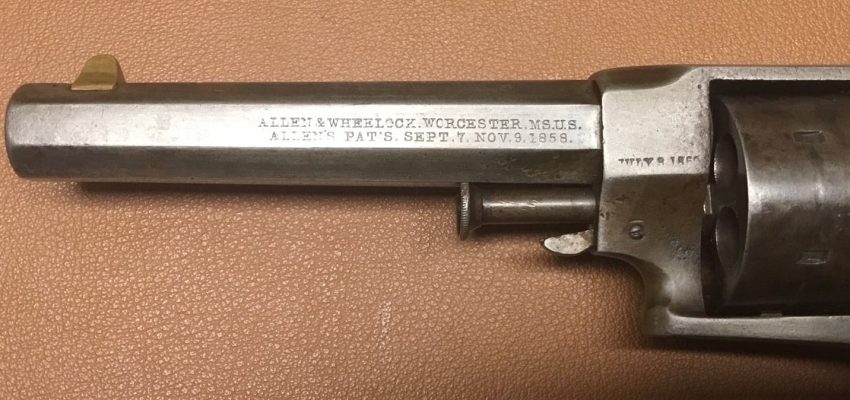
Barrel marking from the Allen & Wheelock period
Barrel marking from the Ethan Allen & Co period
COLLECTION PIECES

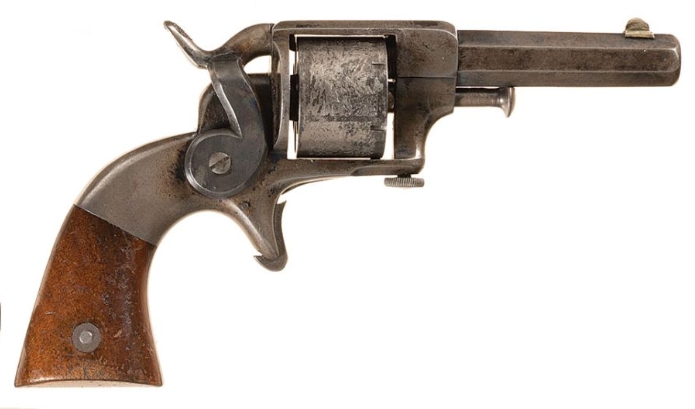
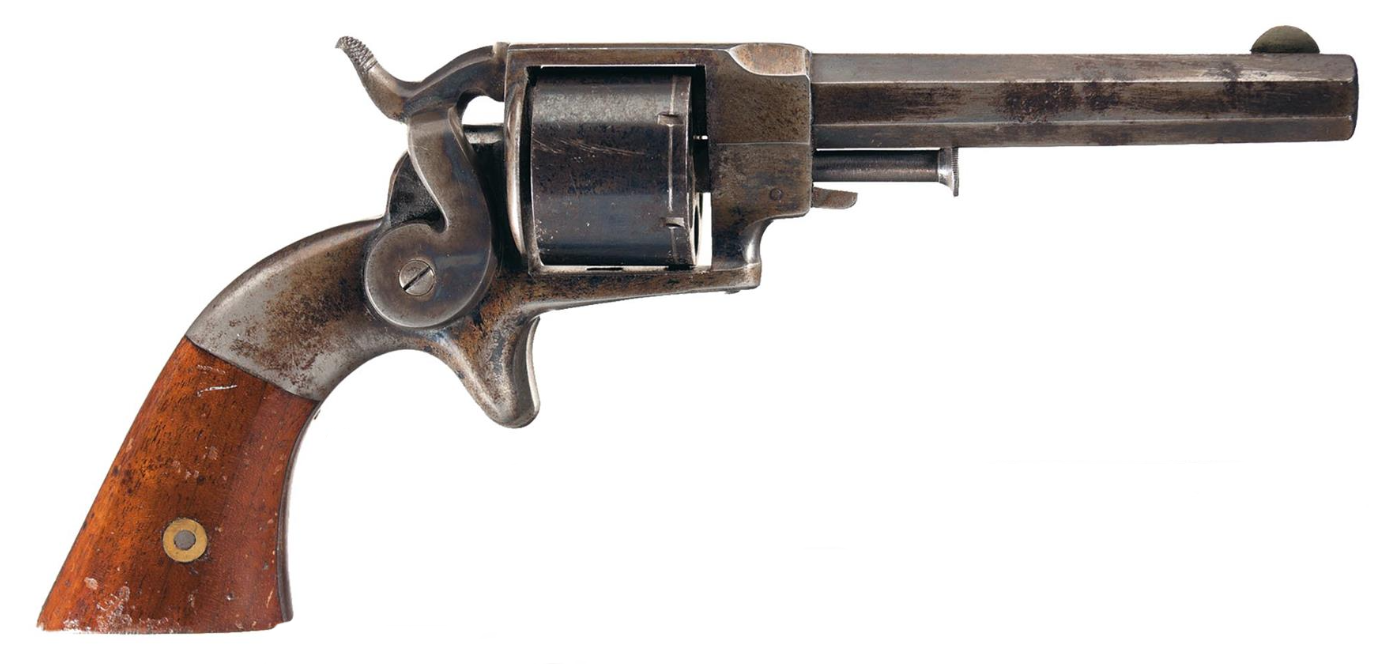
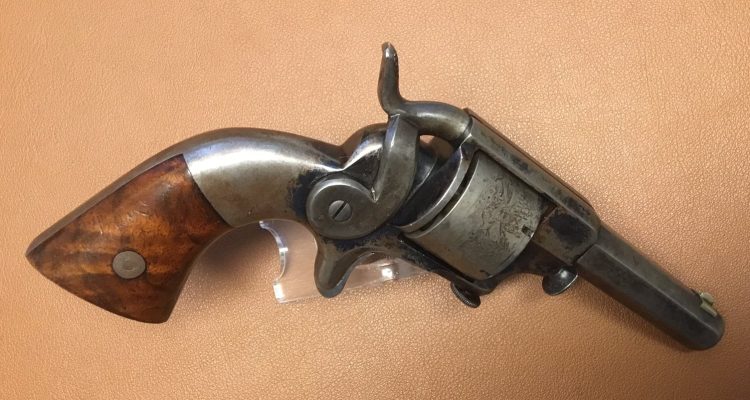
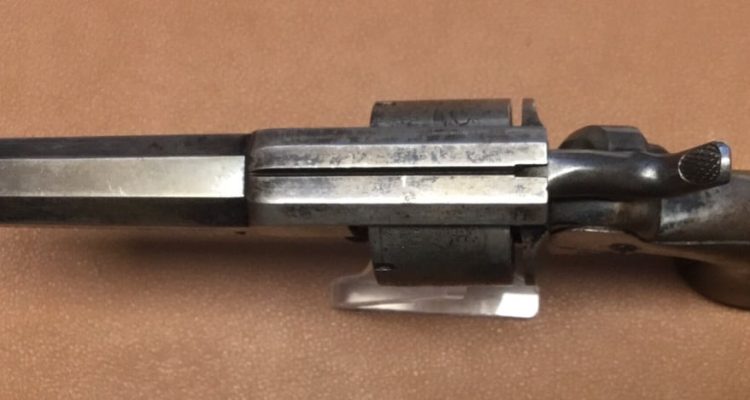
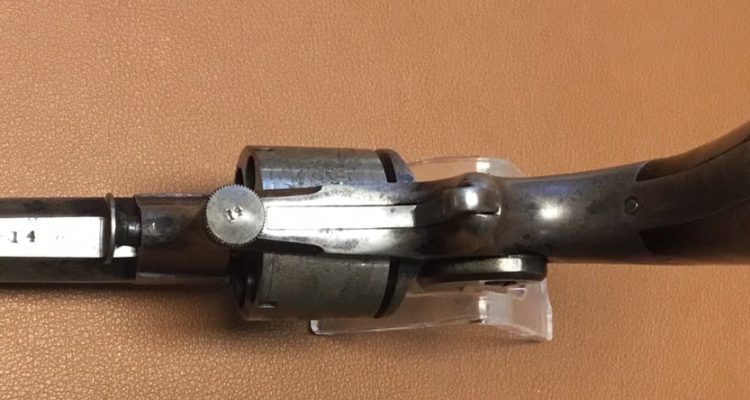
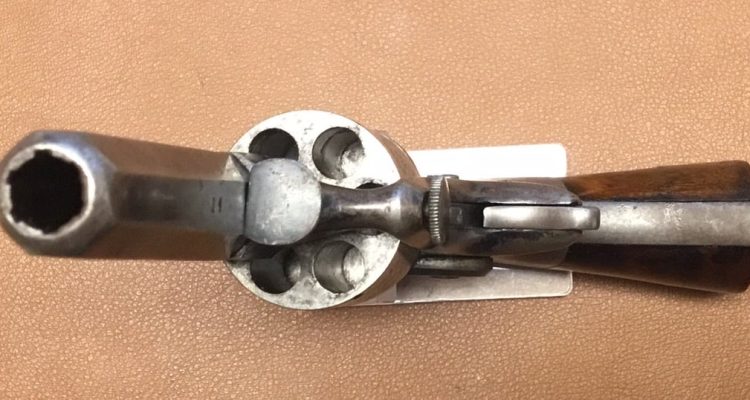
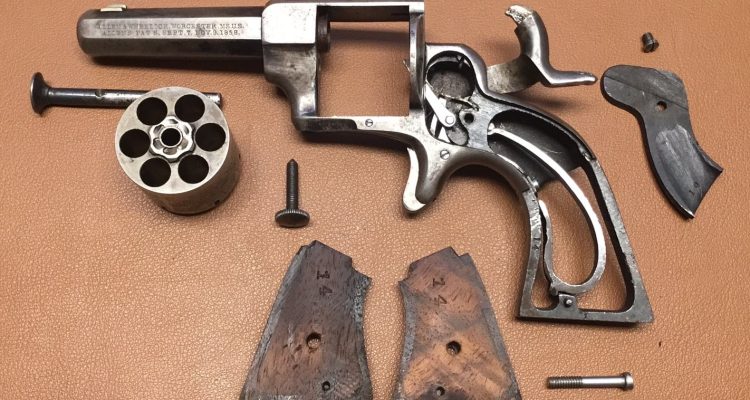
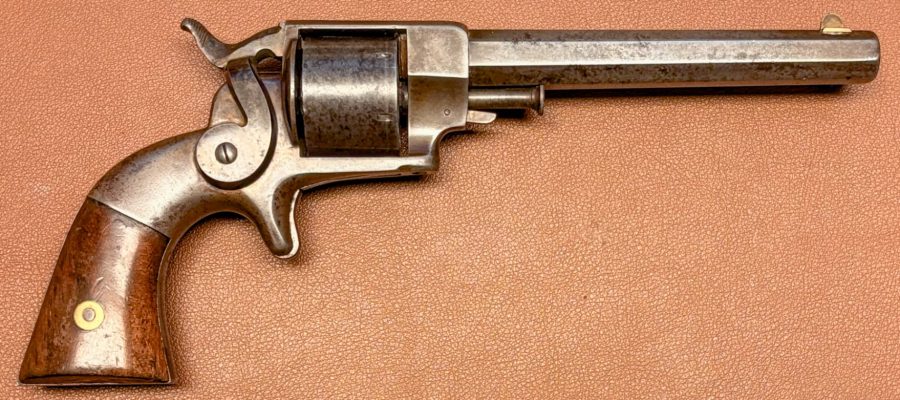
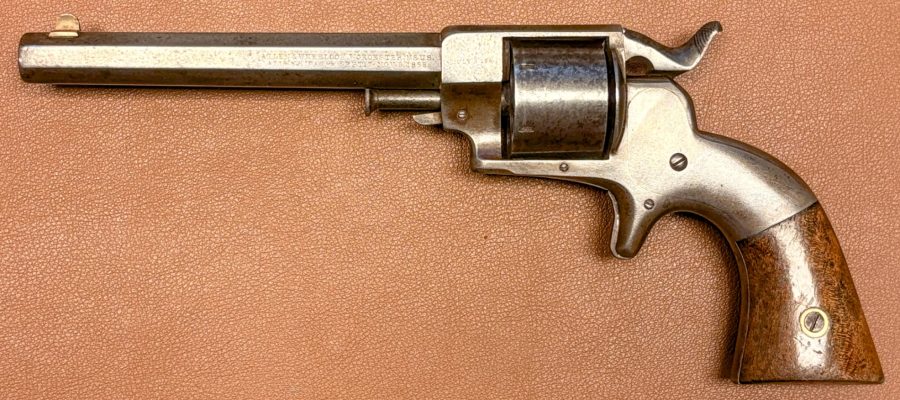
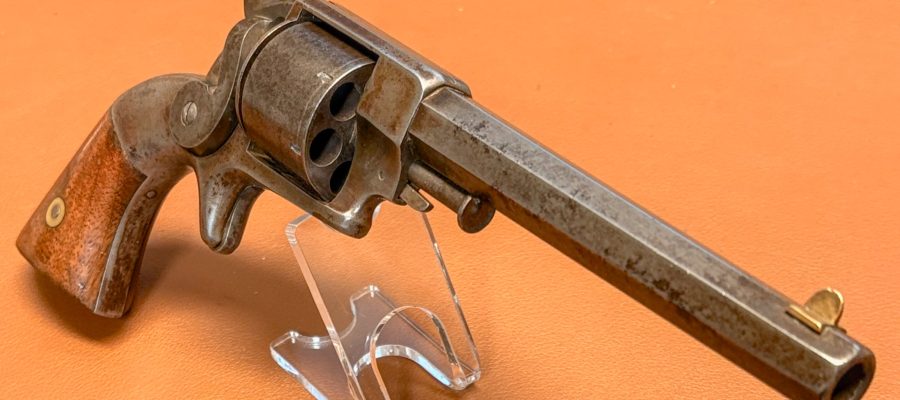
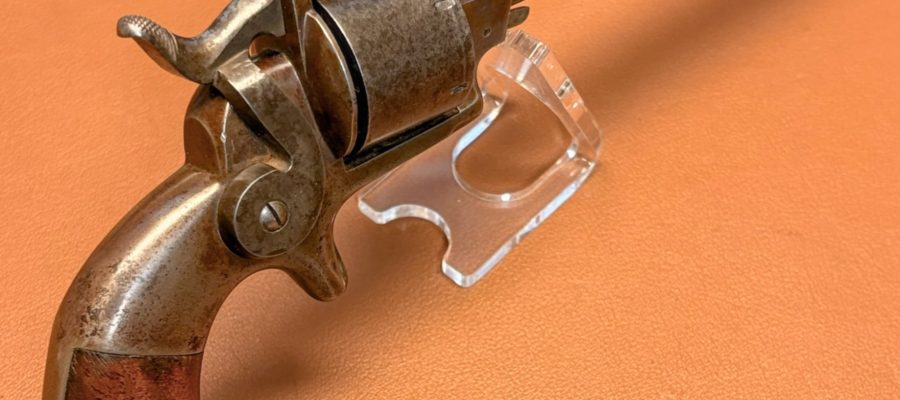
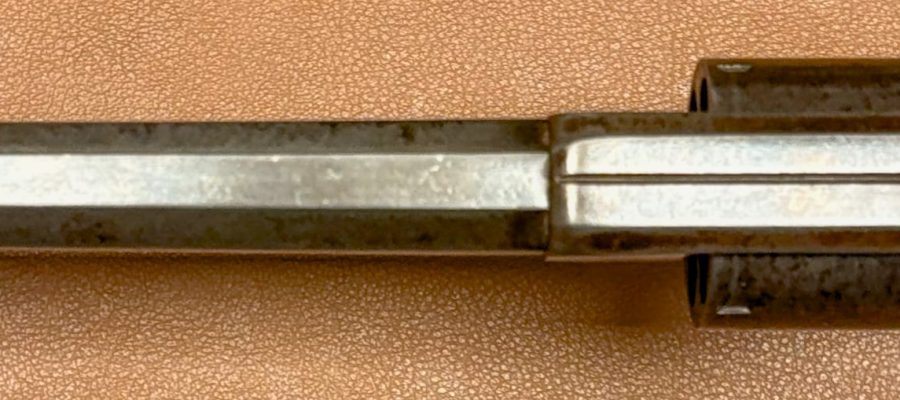
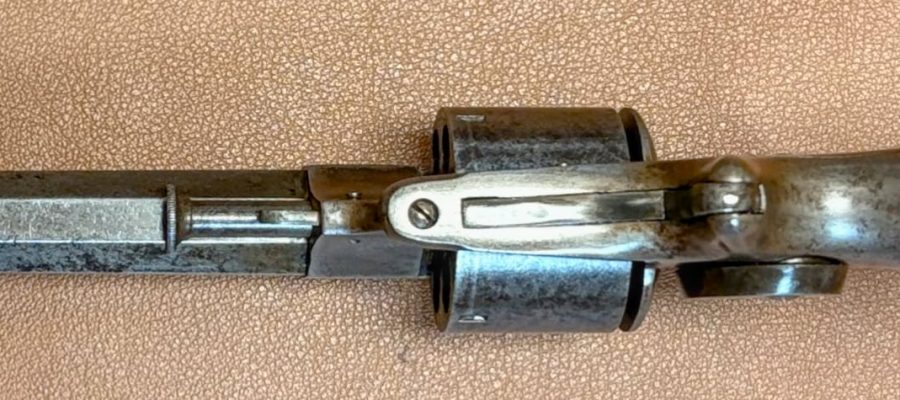
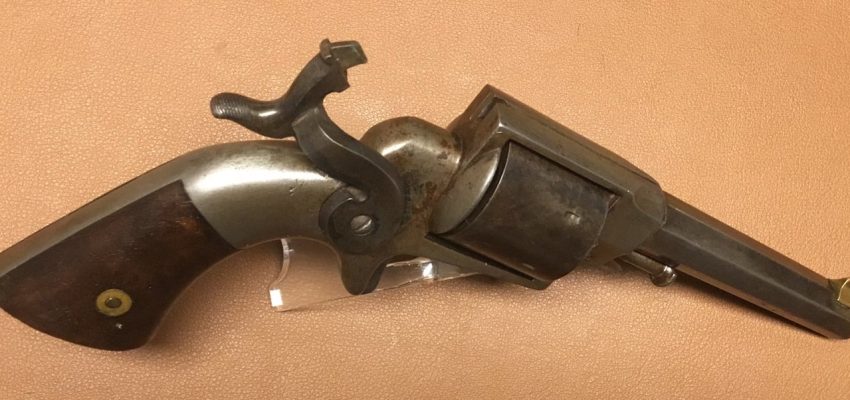
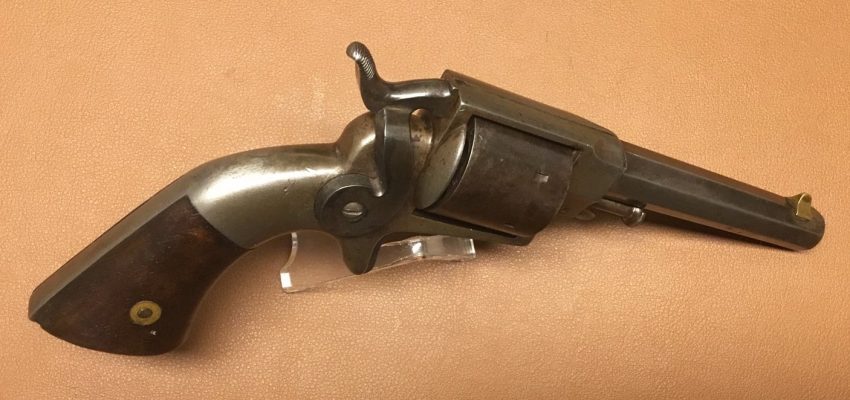
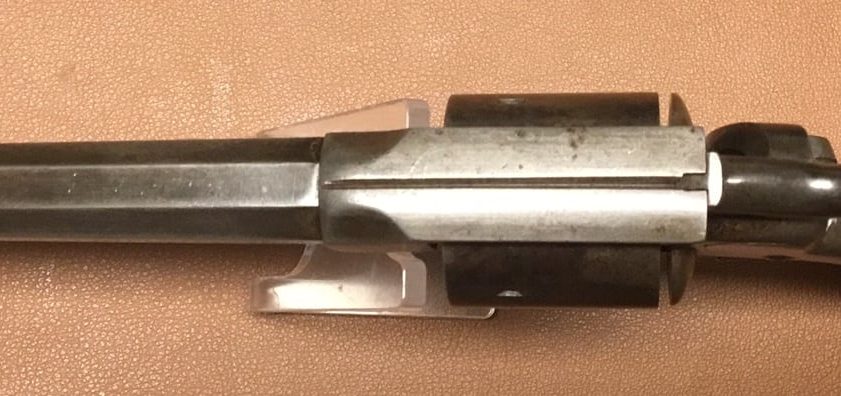
Allen & Wheelock 32rf side-hammer revolver – Early First Model

  • Caliber:

    32RF Short

  • Serial number

    14

  • Length:

    Barrel:7,6cm (3"), Total:17,3cm

  • Weight:

    390 gr

  • Barrel marking:

    ALLEN & WHEELOCK. WORCHESTER. MS. US  /  ALLEN'S PAT'S. SEPT.7. NOV.9.1858

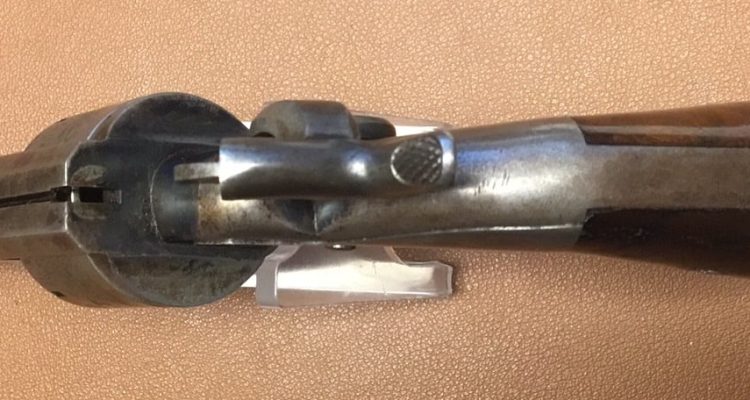
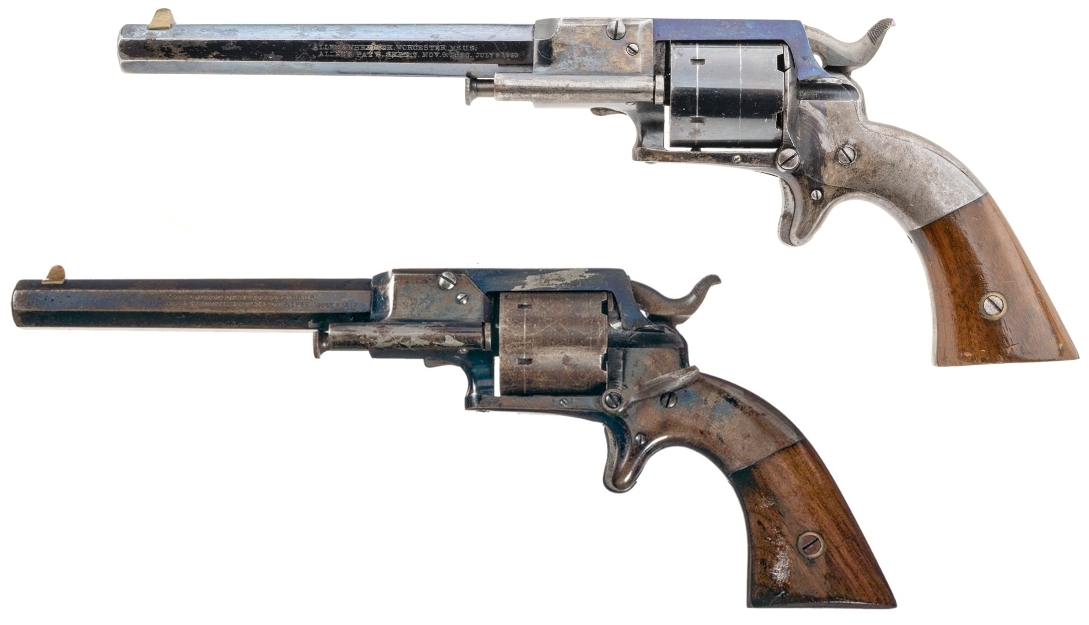
This revolver is a First Model, identifiable by the screw located at the bottom of the frame that secures the cylinder pin. It also has a .905″ cylinder, indicating it is from an early production run.

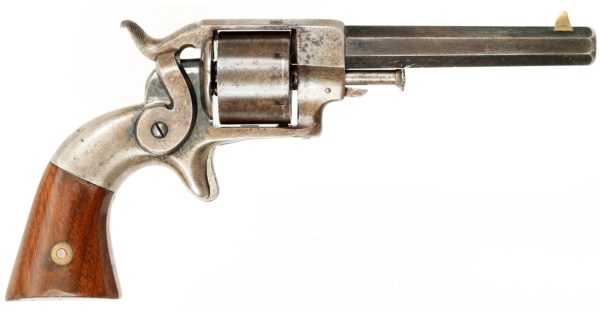
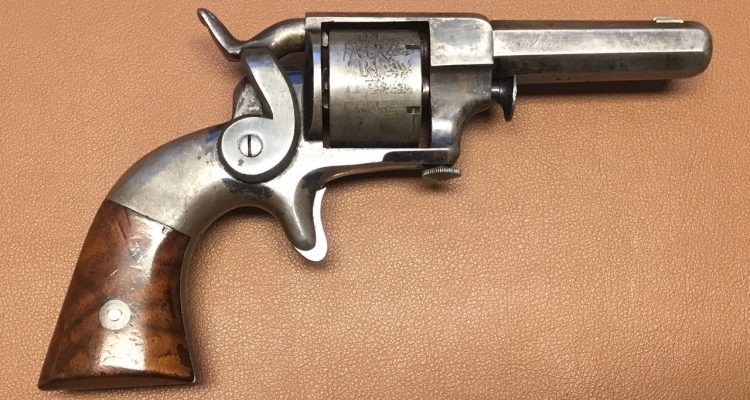
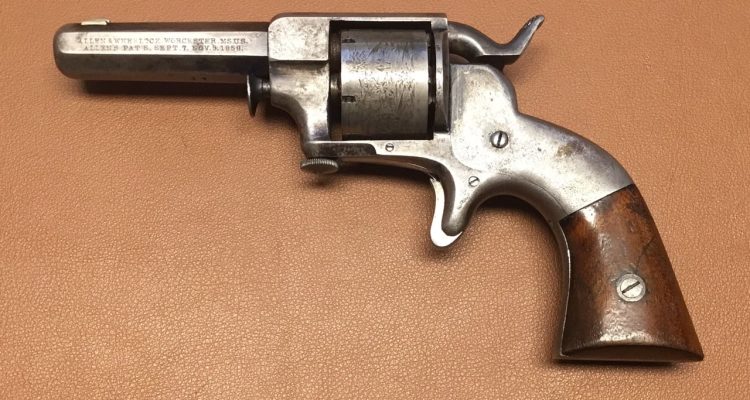
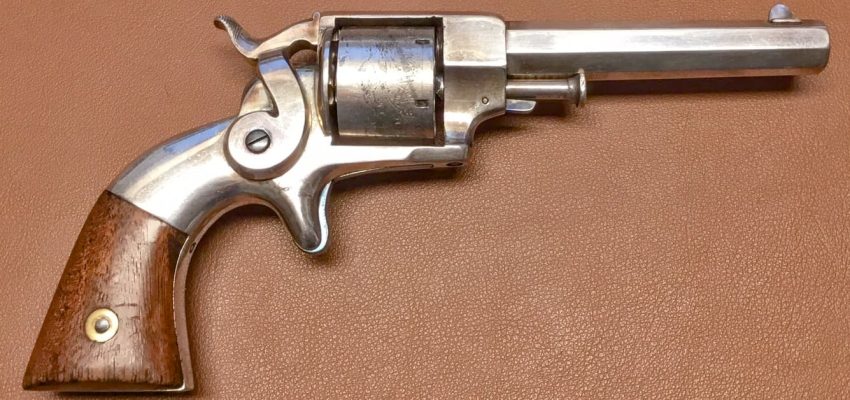
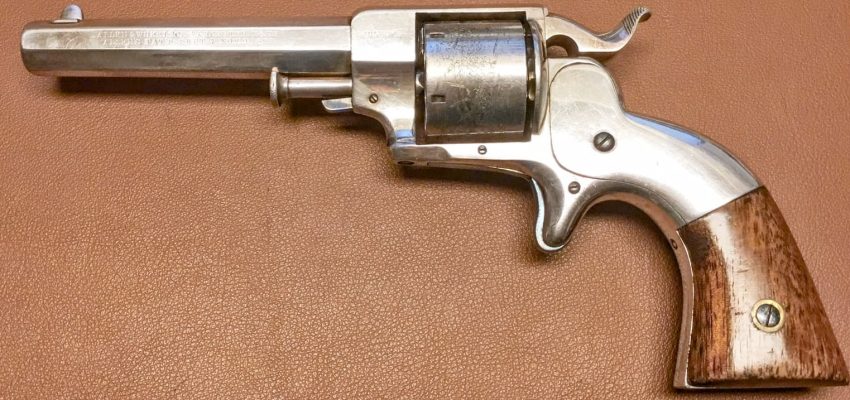
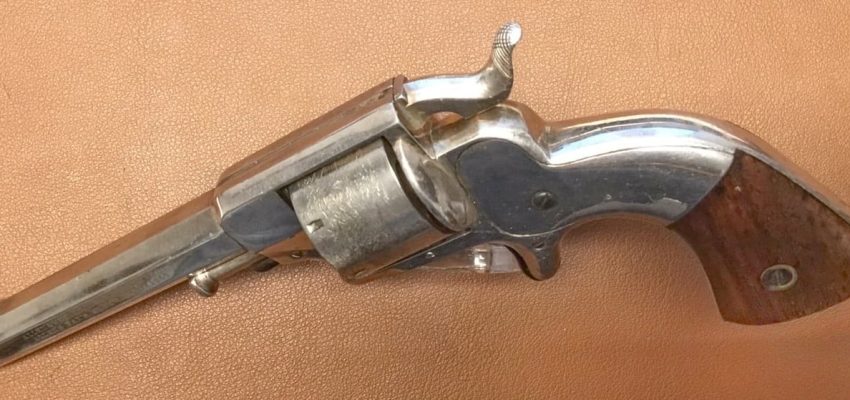
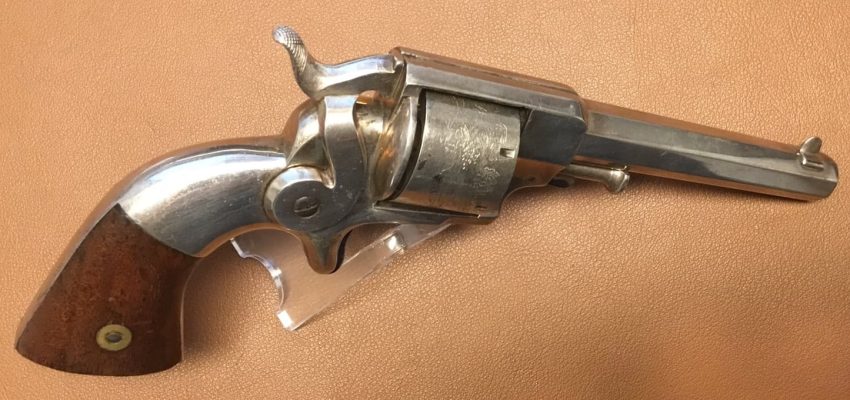
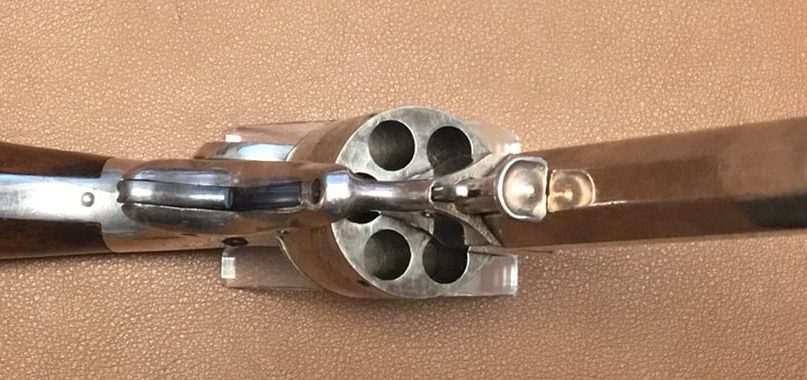
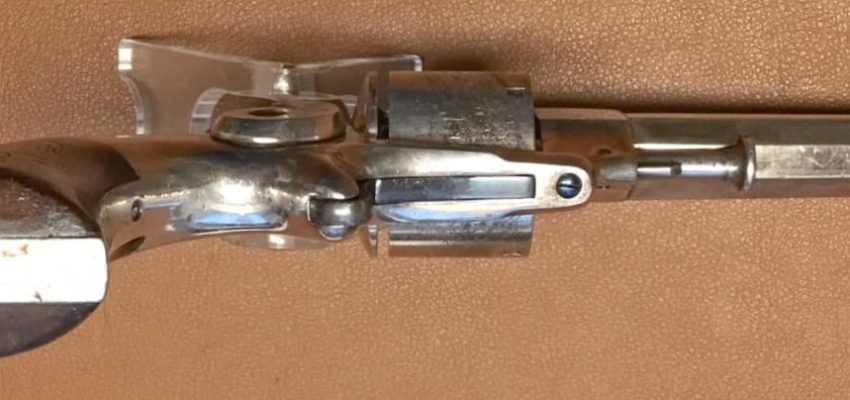
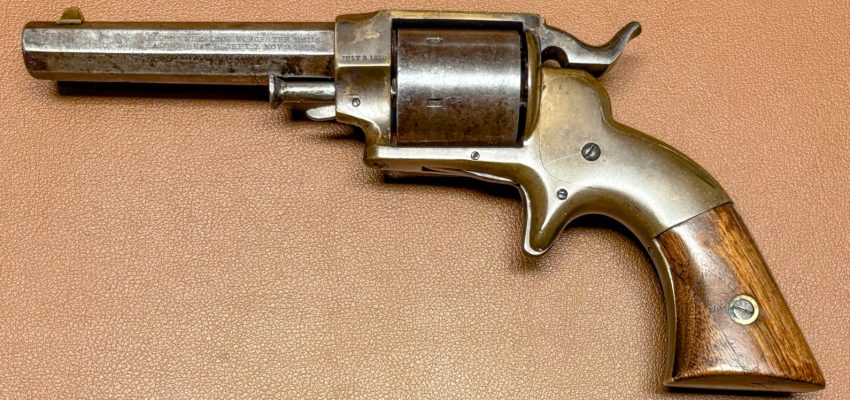
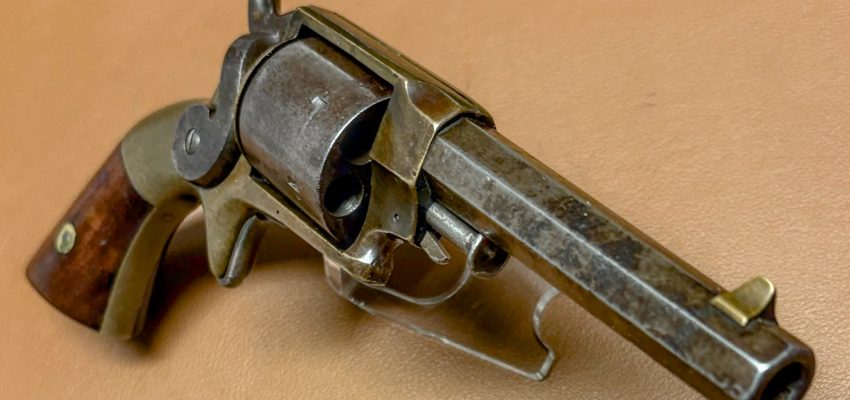
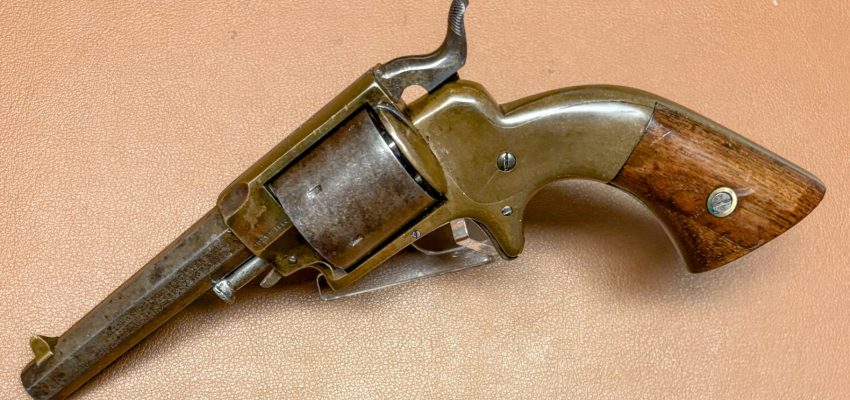
Allen & Wheelock 32rf side-hammer revolver – Second Model – Midway production

  • Caliber:

    32RF Short

  • Serial number

    135

  • Length:

    Barrel:10cm (4"), Total:20cm

  • Weight:

    407 gr

  • Barrel marking:

    ALLEN & WHEELOCK. WORCHESTER. MS. US  /  ALLEN'S PAT'S. SEPT.7. NOV.9.1858

  • Frame marking:

    JULY 8. 1860

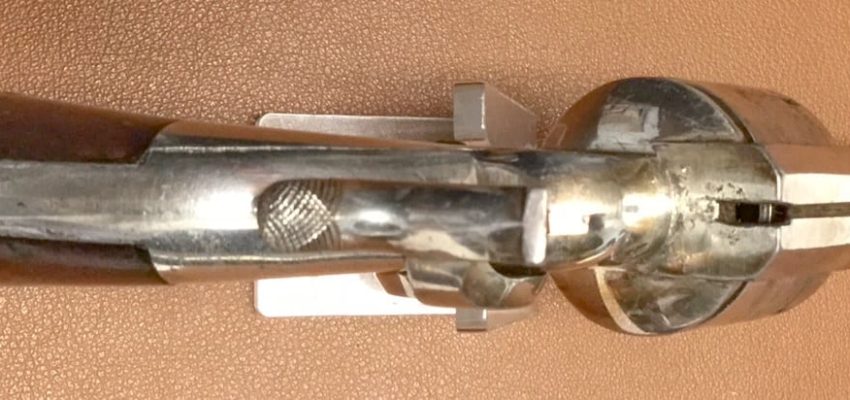
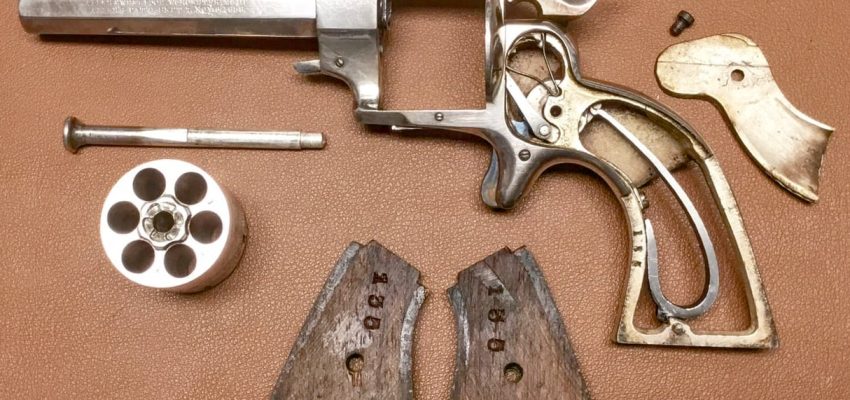
This is a Second Model, having the updated cylinder pin latch locking mechanism. The recoil plate is noticeably thinner, and the hammer has a square head, indicating relatively late production. The revolver shown is in near-mint condition and has a nickel-plated finish, which is relatively rare.

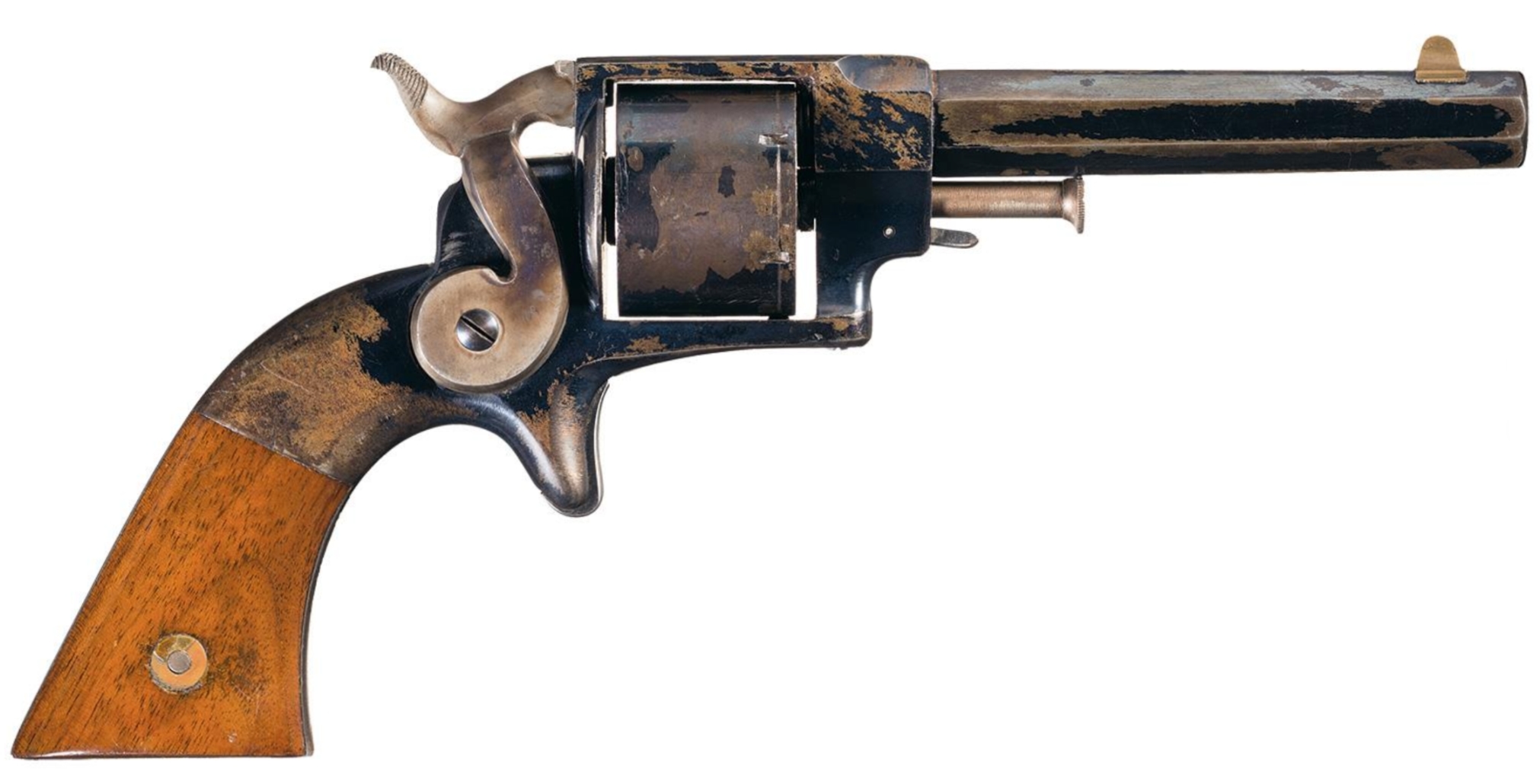
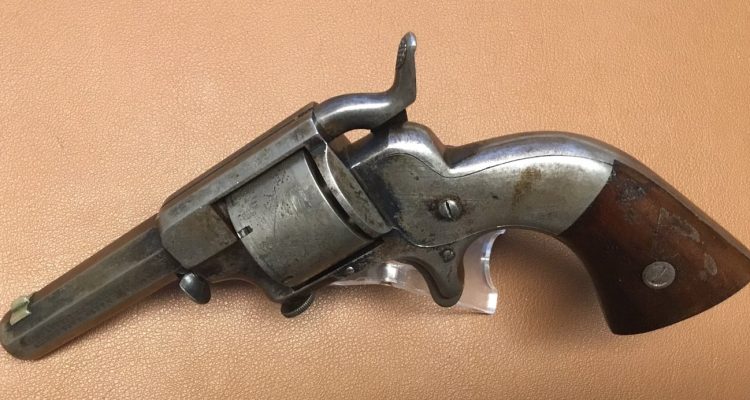
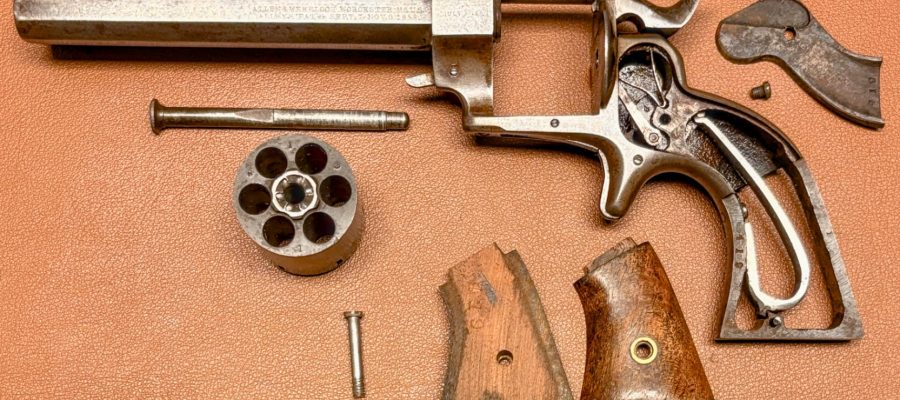
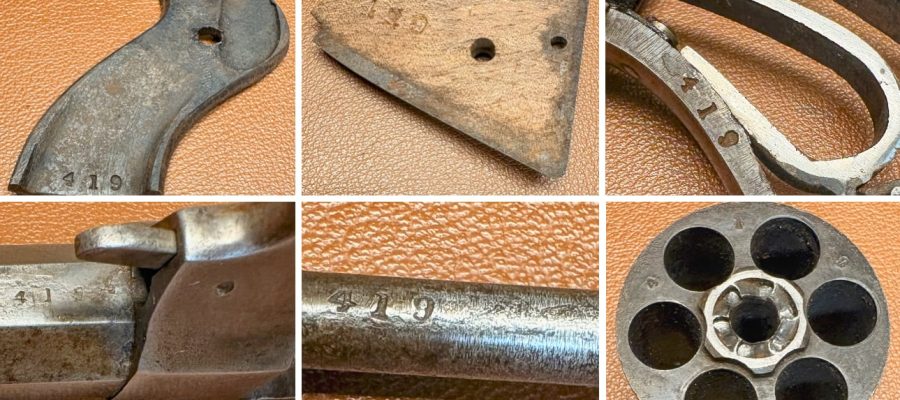
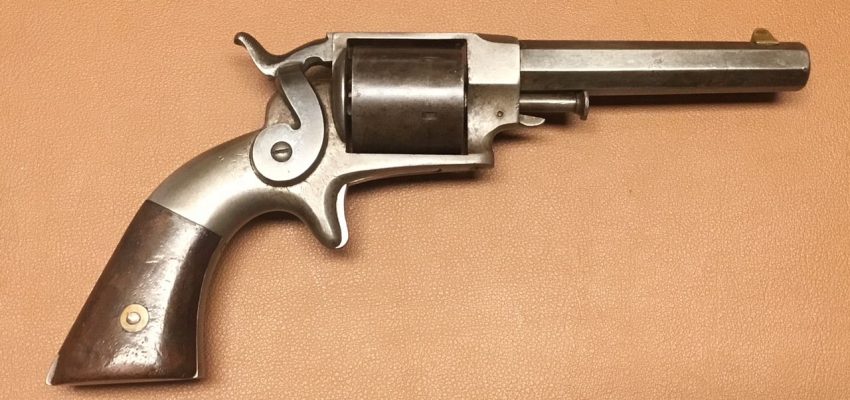
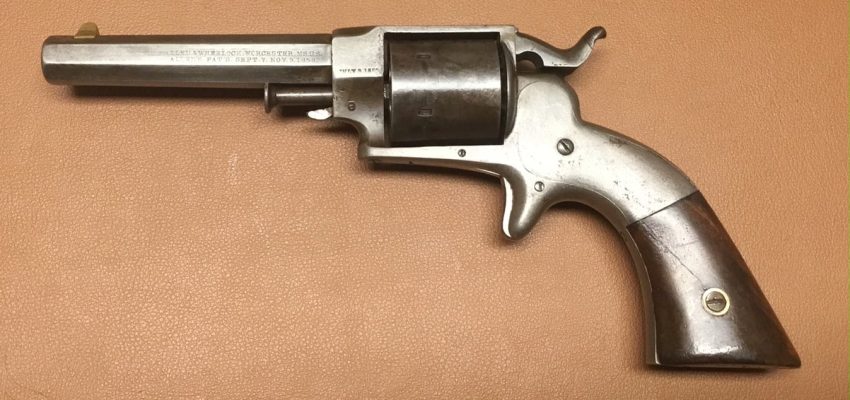
Allen & Wheelock 32rf side-hammer revolver – late Second Model

  • Caliber:

    32RF Short

  • Serial number

    419

  • Length:

    Barrel:12,7cm (5"), Total:22,2cm

  • Weight:

    431 gr

  • Barrel marking:

    ALLEN & WHEELOCK. WORCHESTER. MS. US  /  ALLEN'S PAT'S. SEPT.7. NOV.9.1858

  • Frame marking:

    JULY 8. 1860

This is a late Second Model where the cylinder engraving has been omitted for cost saving reasons. This particular specimen has a relatively rare 5 inch barrel.

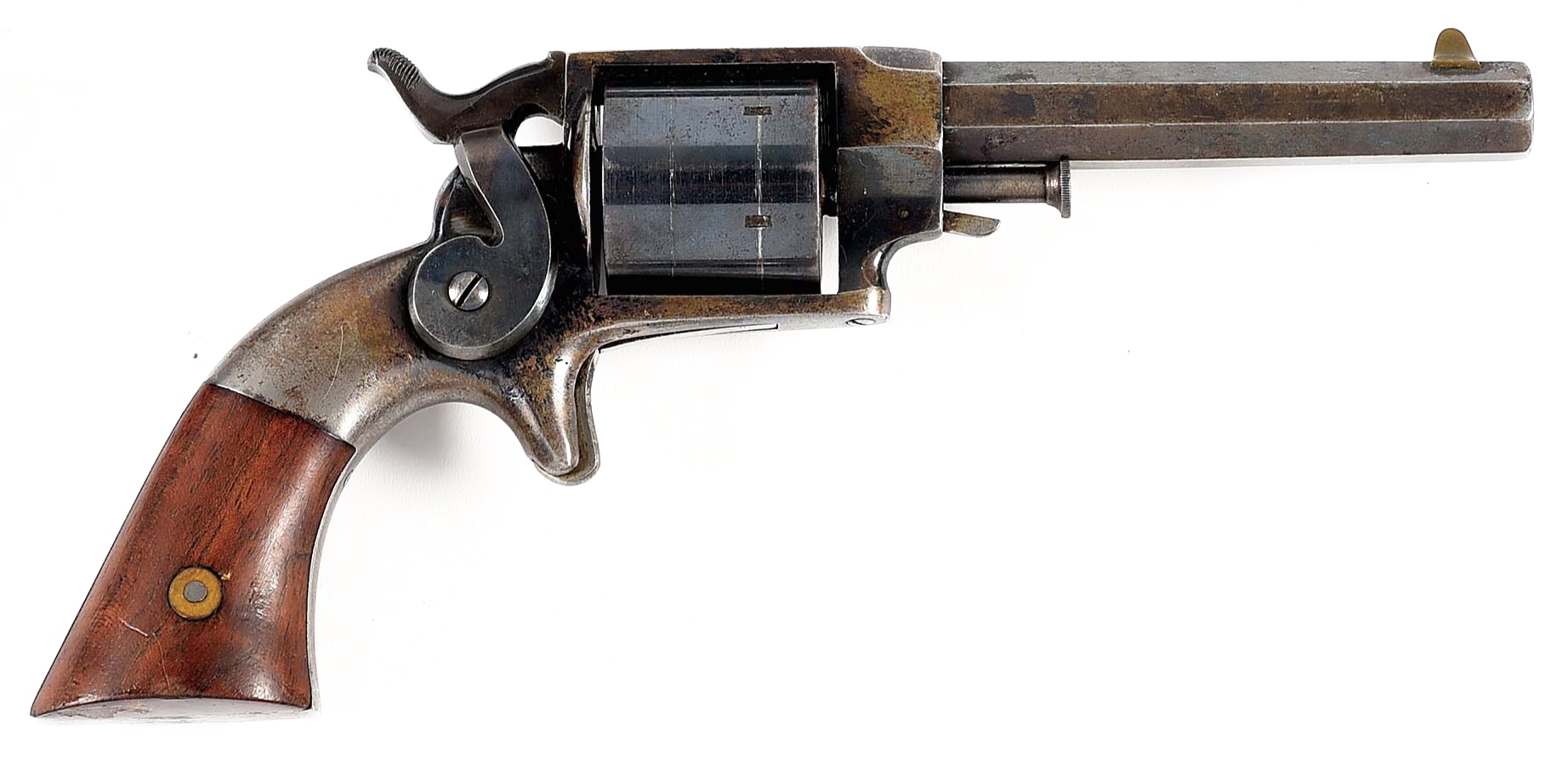
Allen & Wheelock 32rf side-hammer revolver – Third Model

  • Caliber:

    32RF Short

  • Serial number

    358

  • Length:

    Barrel:10cm (4"), Total:21cm

  • Weight:

    434 gr

  • Barrel marking:

    ALLEN & WHEELOCK. WORCHESTER. MS. US  /  ALLEN'S PAT'S. SEPT.7. NOV.9.1858

  • Frame marking:

    JULY 8. 1860

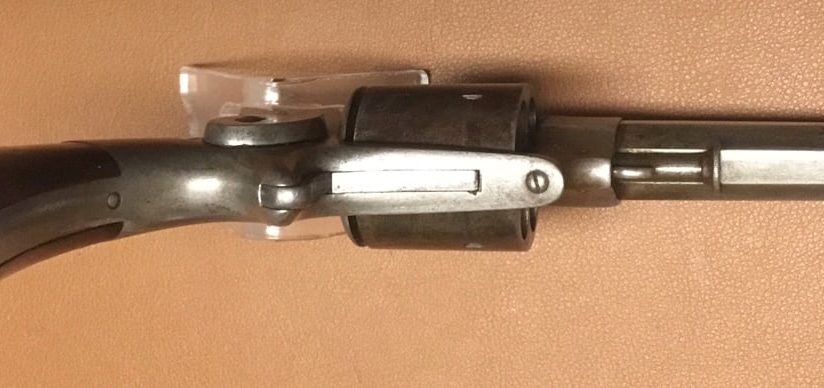
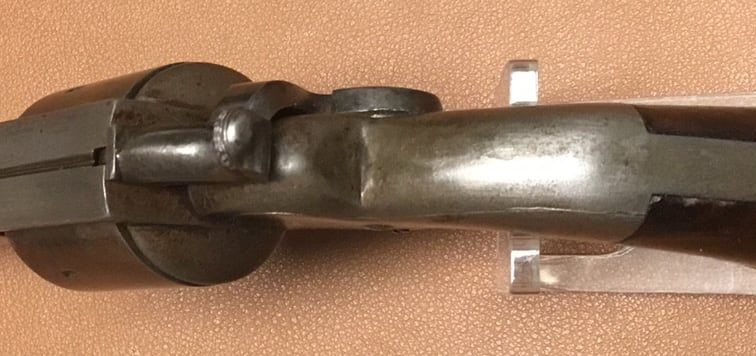
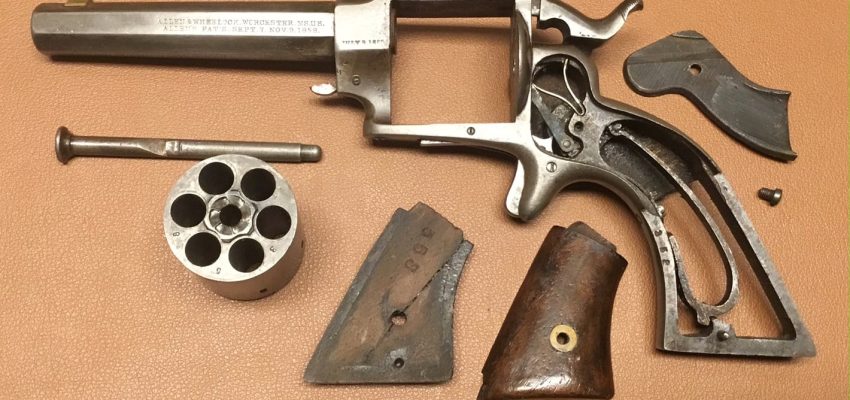
This is a Third Model, featuring the slow-drop Smith & Wesson–style grip. It is equipped with the cylinder designed to accommodate the .32 RF Long cartridge and does not have any cylinder engraving.

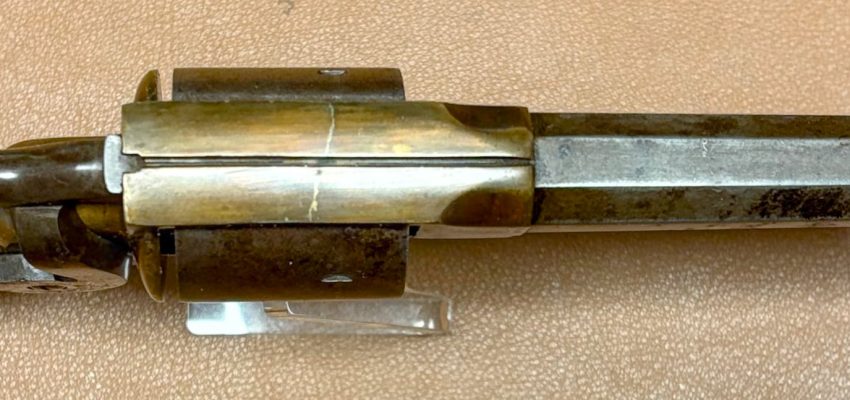
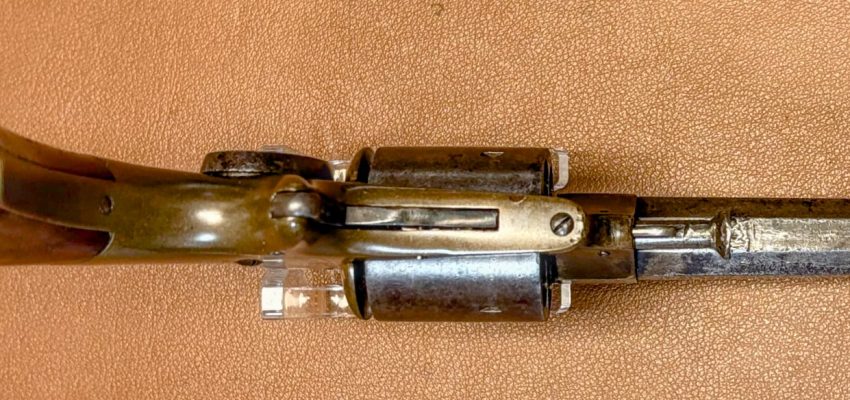
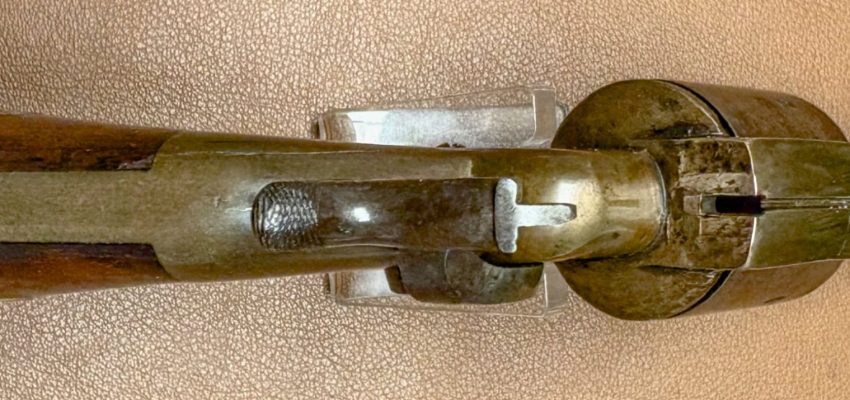
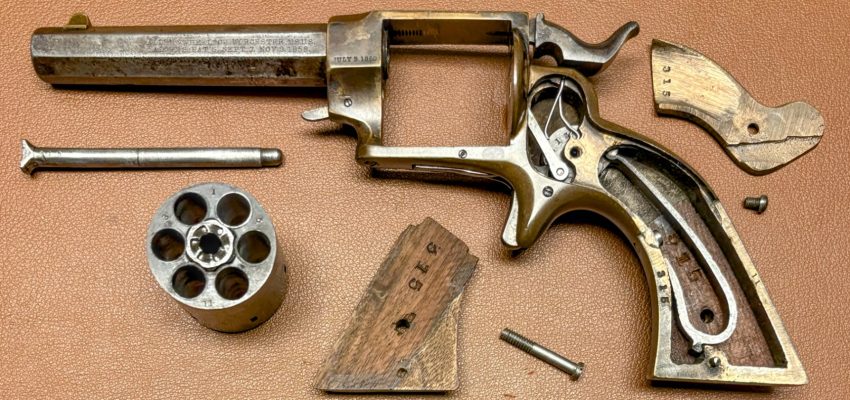
Allen & Wheelock 32rf side-hammer revolver – Third Model – Brass frame

  • Caliber:

    32RF Short

  • Serial number

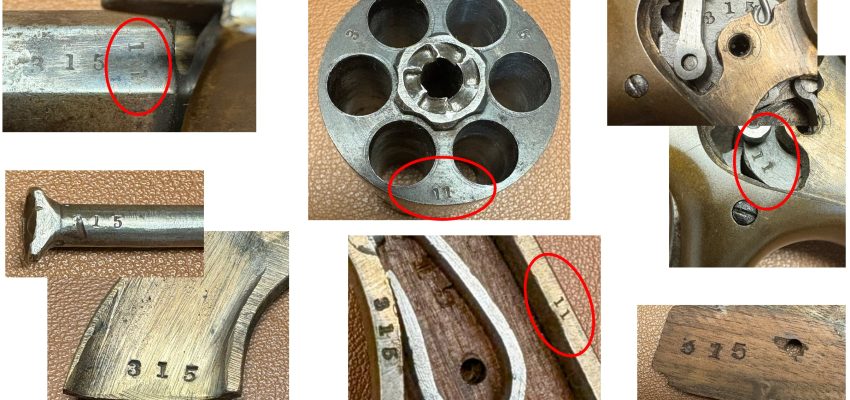
    315

  • Length:

    Barrel:9,6cm (3,8"), Total:20,7cm

  • Weight:

    461 gr

  • Barrel marking:

    ALLEN & WHEELOCK. WORCHESTER. MS. US  /  ALLEN'S PAT'S. SEPT.7. NOV.9.1858

  • Frame marking:

    JULY 8. 1860

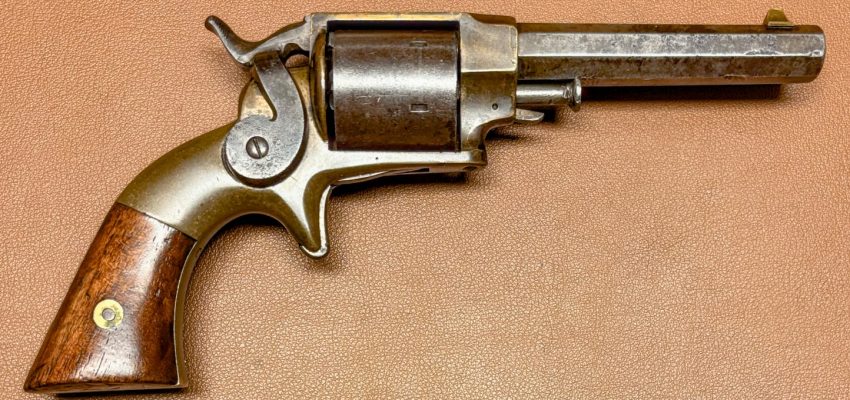
This is also a Third Model with the same characteristics as the above model, however this one has a rare brass frame.

Continue exploring Ethan Allen’s legacy

Click on the image or title to open a new window
Allen’s Side-Hammer Lipfire Revolvers

Allen's side-hammer lipfire revolvers are scarce six-shot pocket revolvers produced primarily between 1861 and 1863 in .32 lipfire caliber, with limited production resuming after 1868. They are distinguished by their side-mounted hammer and innovative overhead rack-and-pinion ejector system, a unique feature among Civil War-era handguns. 
Allen’s 22RF Side-Hammer Revolvers

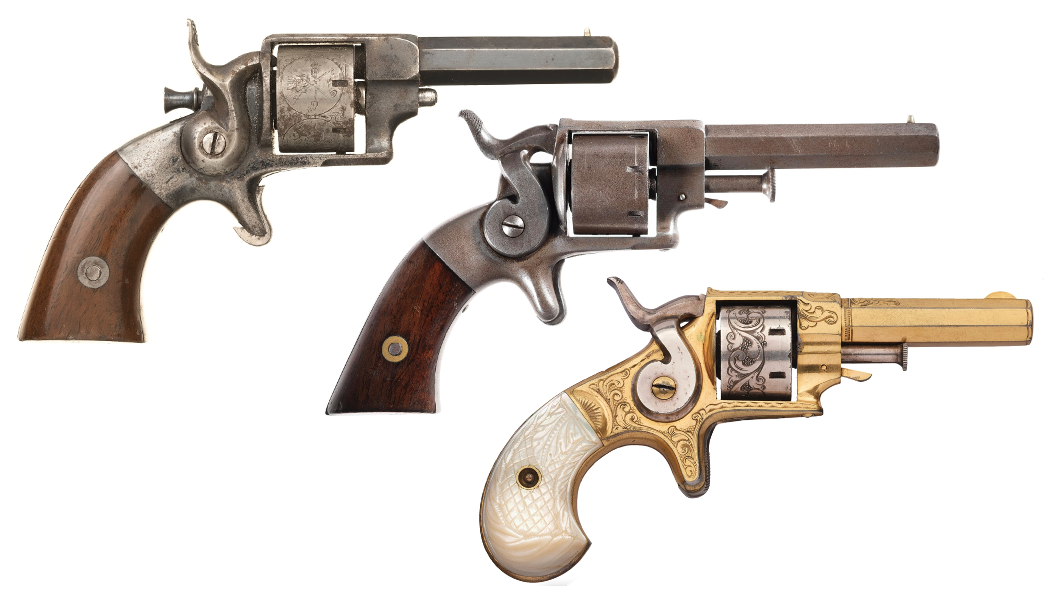
An overview of Allen's six-shot .22 Rimfire side-hammer revolvers, which share the same basic design as the .32 Rimfire side-hammer models, including the distinctive side-mounted hammer and solid-frame construction. The .22 Rimfire revolvers were produced in eight versions, each incorporating variations in design and mechanical features.