Production of the small frame models is limited to around 2000 while the large frame model has been produced in significant quantities, likely of over 10000.
An advertisement from the early 1860's
Most commonly referred to as the Dropping Block or Drop Breech rifle, this firearm has a sleek, streamlined silhouette. It was typically produced with a blued barrel and frame, along with a case-hardened hammer, trigger, and trigger guard.
The rifle was manufactured in two frame sizes. During the Allen & Wheelock era, the small frame was chambered for .35 RF and .38 RF cartridges, while the large frame was designed for .42 RF and .44 RF cartridges. The small-frame model was discontinued at the end of the Allen & Wheelock period (1865), but the large-frame version continued well into the Forehand & Wadsworth era (~1880), with chamberings ranging from .22 to .44 caliber. Centerfire variants were also later added to the product line.
A small frame Drop Block rifle with a brass frame.
The majority of the models have half-octagonal / half-round barrels, with lengths varying from 23″ to 28″. A version with a fully octagonal barrel could be supplied at an additional cost, but these are scarce. Also brass frames have been produced in the Allen & Wheelock era, but these are also quite scarce.
Although no official government contracts are known, most collectors regard all large-frame dropping-block rifles as secondary military arms. There is little doubt that these rifles were at least evaluated for military use, as evidenced by references in The Pitman Notes on U.S. Martial Small Arms and Ammunition, 1776–1933, Volume 1, which includes two schematics of an Allen dropping-breech rifle.
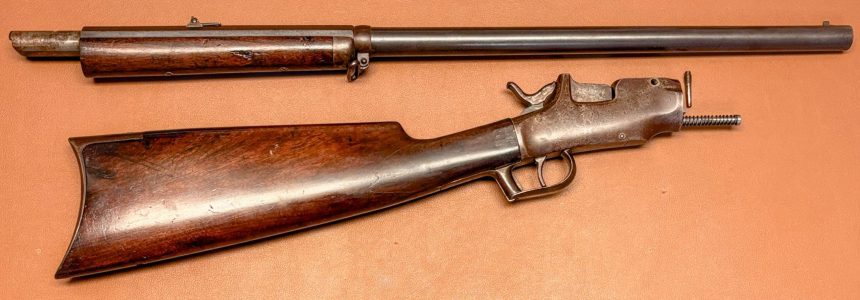
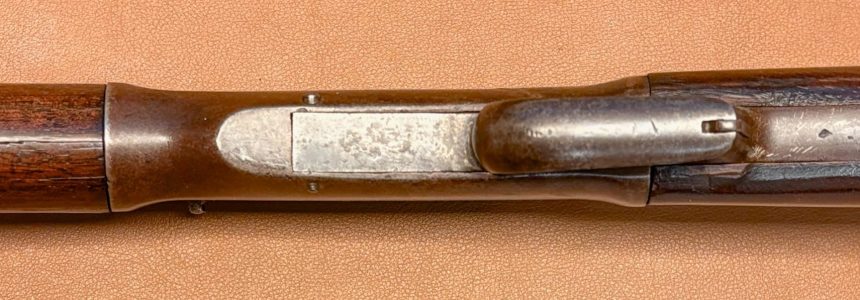
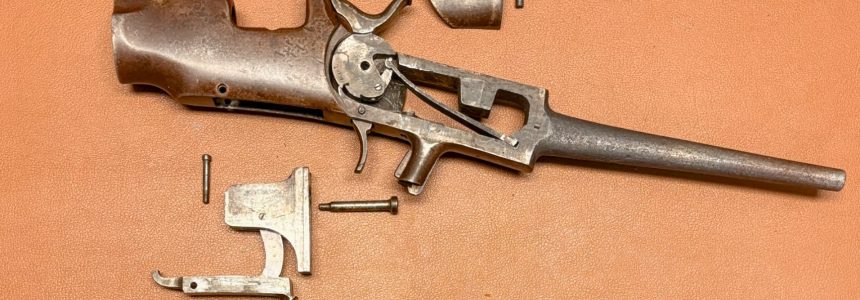
By removing a pin screw situated at the top of the frame, the barrel could be easily separated from the frame to ease transport or cleaning.
Page 81 of The Pitman Notes showing the system
A magnificent cased large frame Drop Block rifle with two barels of different caliber. Note the two tang sights of which the one on the right side is an Allen patented sight.
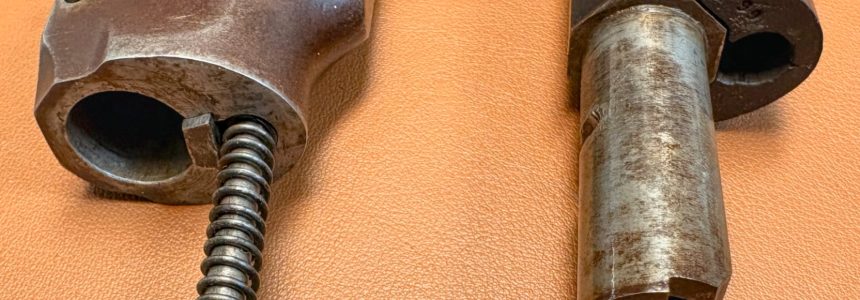
As can be seen with the cased rifle shown above, barrels of different calibers could be fitted to the rifle. Changing calibers also required swapping the breechblock and extractor, though the process was straightforward and easily accomplished.
Another distinctive feature of this rifle is its “swing” rear sight, which can be adjusted by simply positioning the lever in the desired notch. This type of sight has been replaced on later models by a classic blade sight positioned on the barrel. For target shooting, the rifle could also be supplied with Allen’s patented tang sight. (see the patent section for a description)
Although the basic design didn’t change much, many variations have been made over the long production period. Also elaborated high grade models have been made with engraved casehardened frames and select wood.
Many early examples were later converted to fire centerfire cartridges after the original rimfire ammunition became obsolete and was no longer commercially available.
Swing rear sight
Allen's patented Tang sight
Ian McCollum from the Forgotten Weapons channel has produced an excellent video overview of the Drop Breech Rifle, highlighting many of its distinctive and innovative features.
COLLECTION PIECES
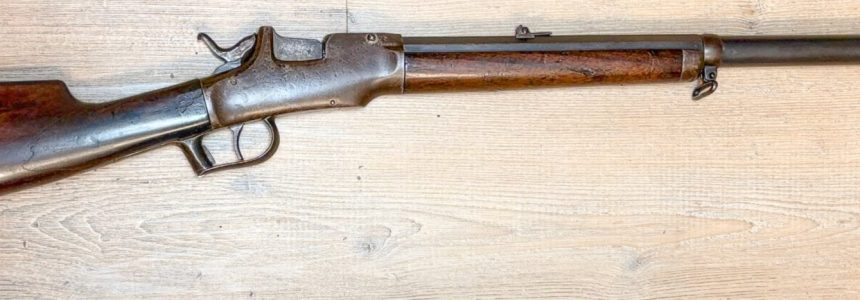
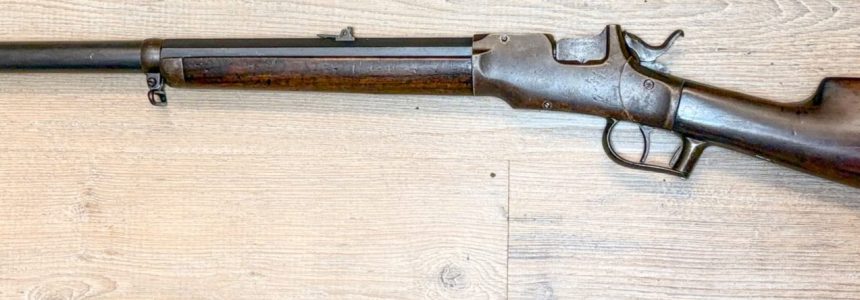
E. Allen & Co Large Frame .44RF Drop Block Rifle
Caliber:
44RF
Serial number
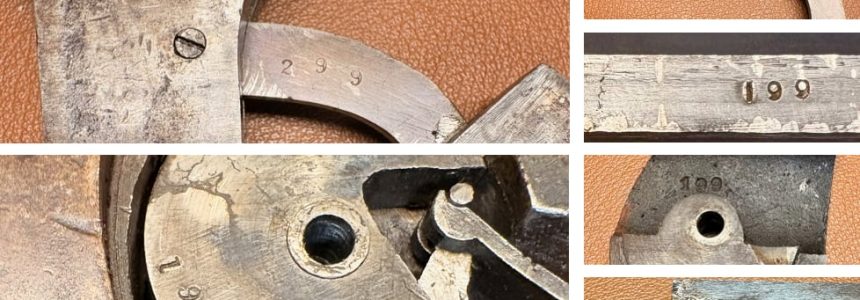
199
Length:
Barrel:64 cm (25"), Total:107 cm
Weight:
3060 gr
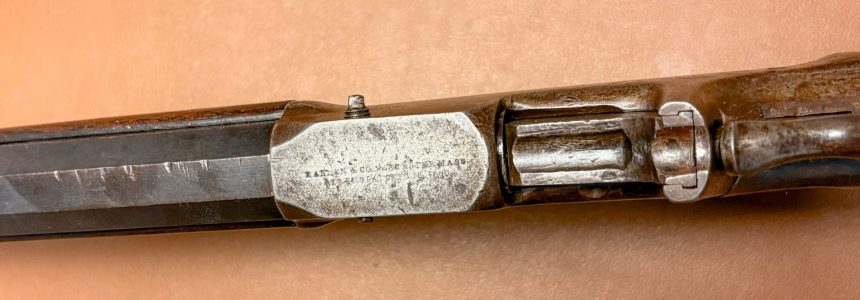
Barrel marking:
E.ALLEN & CO WORCESTER MASS / PATENTS DAT SEPT 18 1860
This large-frame model dates from the E. Allen & Co. period and is chambered in .44 Henry. The rifle features a late-type buttplate; the earlier versions are noticeably less curved.
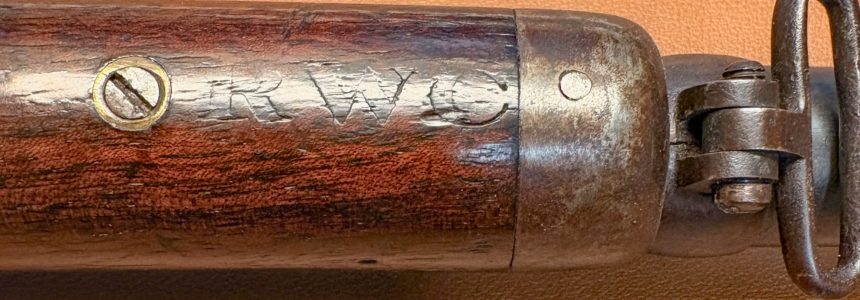
Note that the forearm is marked “RWC,” though the significance of this marking remains unknown to me.