
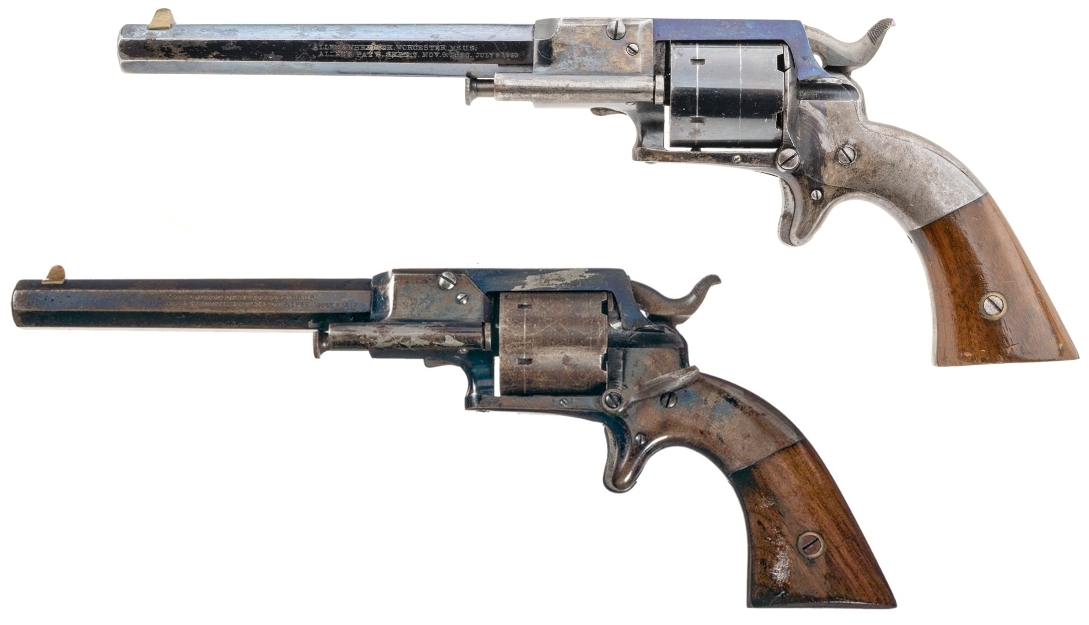
Allen's .22RF Sidehammer Revolvers
Commercial era:
Allen & Wheelock
E.Allen & Co
Forehand & Wadsworth
-
Production period:
From 1858 to 1863 during the Allen & Wheelock era, and later from 1869—when production resumed under E. Allen & Co.—through 1871.
-
Production quantity:
Earlier models are relatively scarce, particularly the 2nd and 3rd models. Based on the number of surviving examples of later versions, we can confidently say that these were manufactured in substantial quantities, exceeding 5,000 for the latest model.
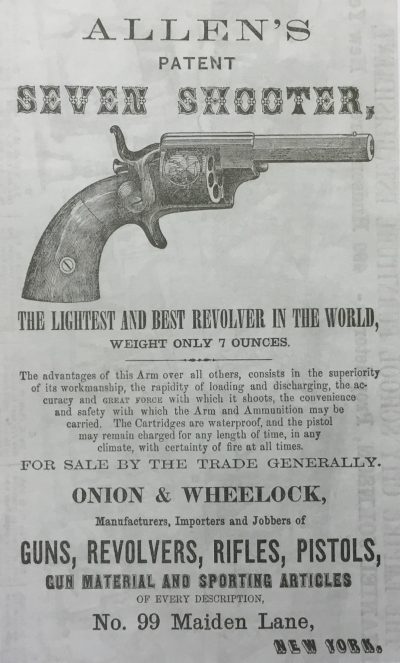
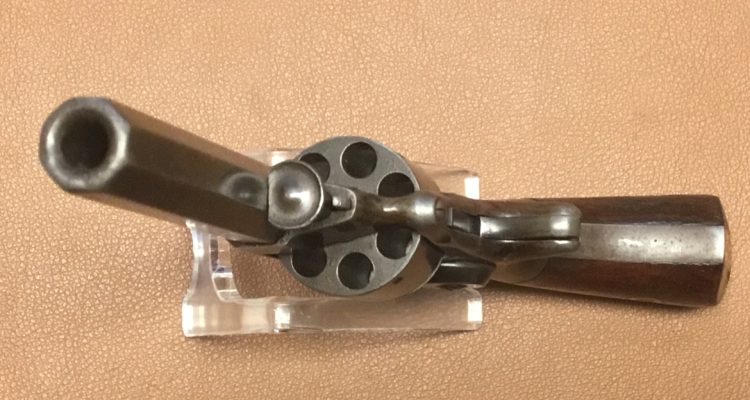
The .22 rimfire 7-shot side-hammer revolver was the very first cartridge revolver developed and produced by Allen & Wheelock. This development coincided with Smith & Wesson’s introduction of their Model 1 revolver, which featured a patented fully bored-through cylinder. Allen’s cartridge revolver clearly infringed upon this patent, sparking direct competition with S&W’s revolvers.
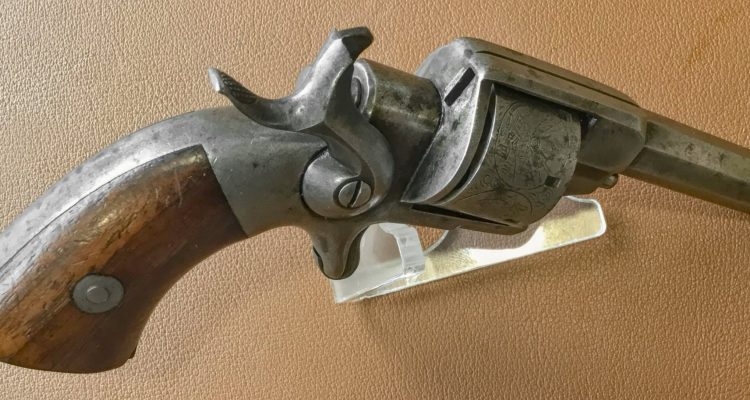
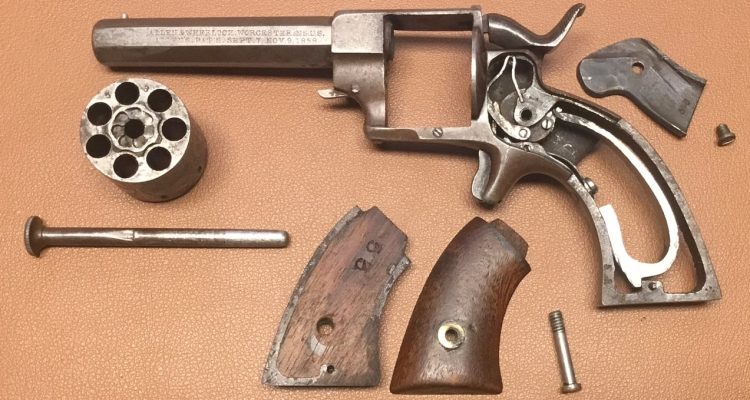
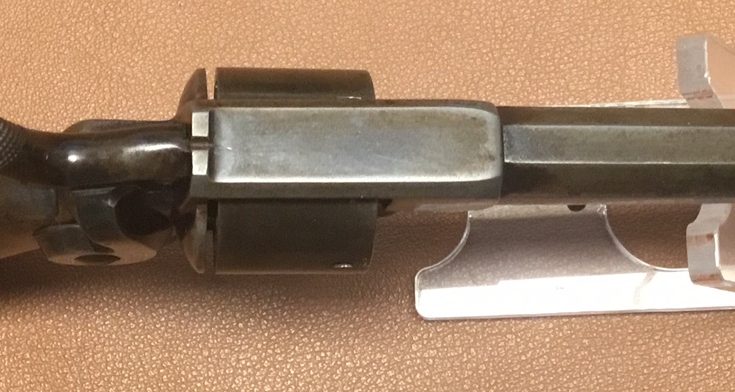
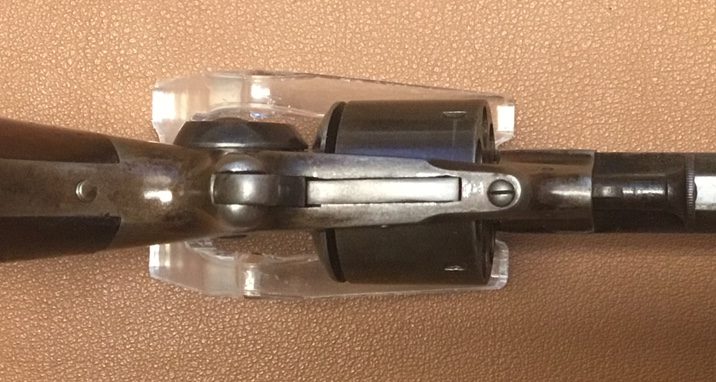
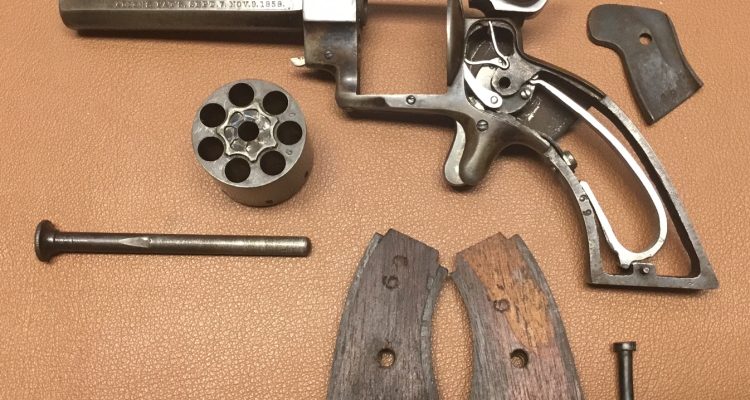
The characteristic feature of Allen’s revolvers is the placement of the hammer, affixed to the side of the frame, a design documented in patent US22005 issued in November 1858. These revolvers have a 7-shot capacity in .22 short, necessitating the removal of the cylinder for loading and unloading, using the cylinder pin to expel spent shells.
Initial production likely commenced around 1858 and continued until November 1863. Allen was forced to halt all of the cartridge revolver production following S&W’s legal victory in the patent infringement lawsuit. Production resumed in 1869 after the expiration of S&W’s patent. After Allen’s death in 1871, production continued for some time under the new company name Forehand and Wadsworth.
The majority of the revolvers have a blued steel frame, cylinder and octagonal barrel. Nickeled specimens do exist but are relatively scarce. The grips are made of walnut wood.
During the initial production period, Ethan Allen continually tinkered with the design. In only 5 years time, he managed to create six variants of the revolver. Below you will find an overview of the most important characteristics that can help you identify the various models.
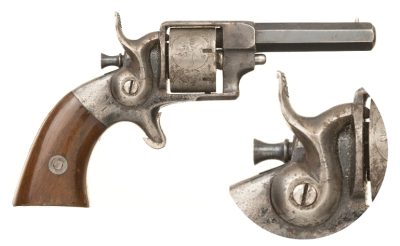
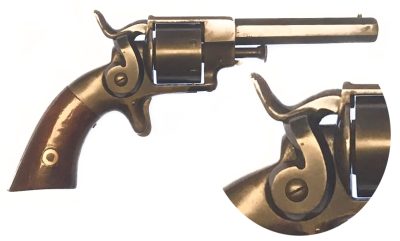
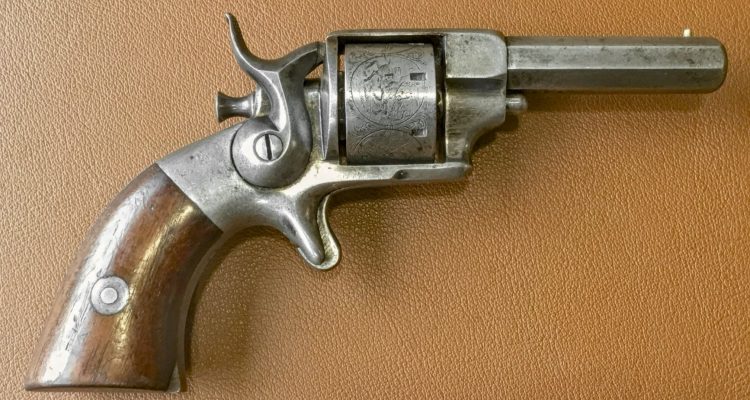
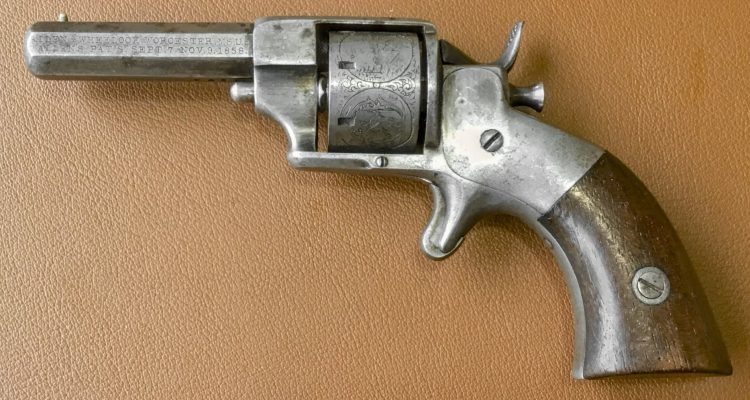
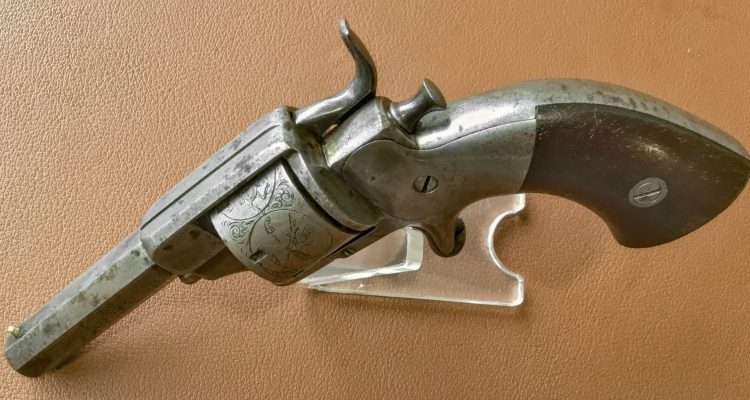
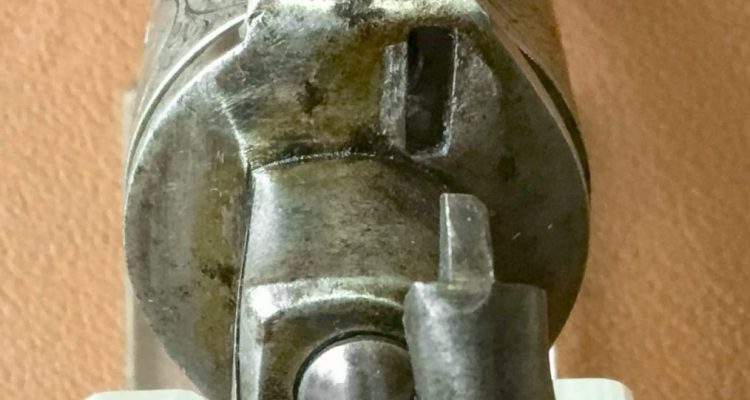
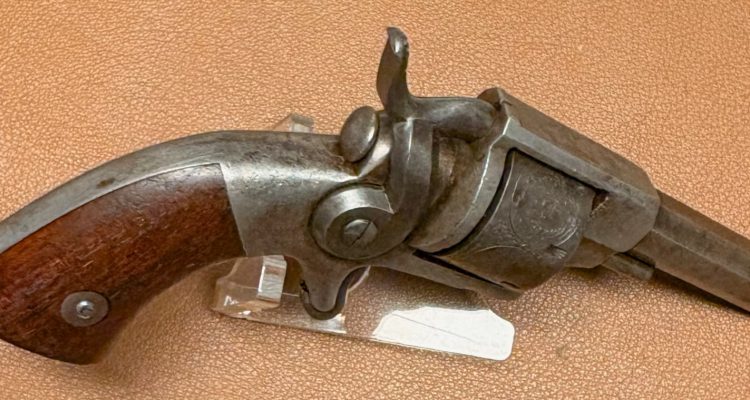
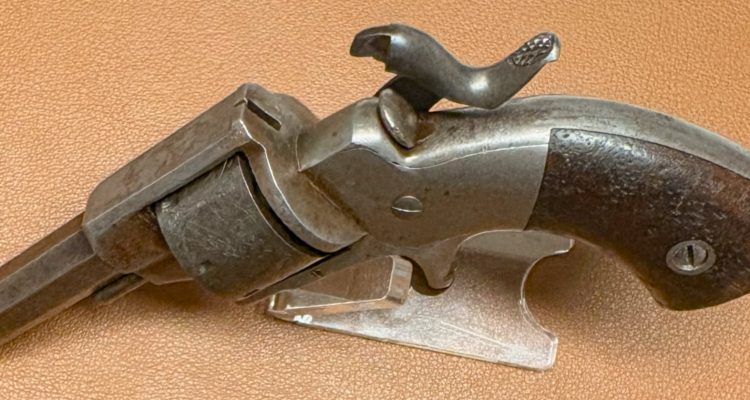
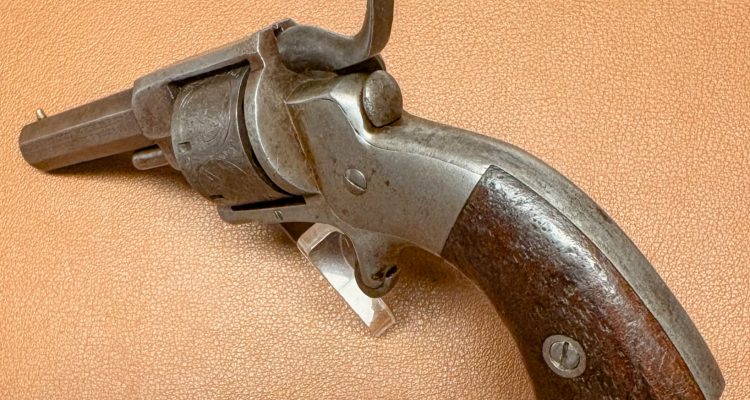
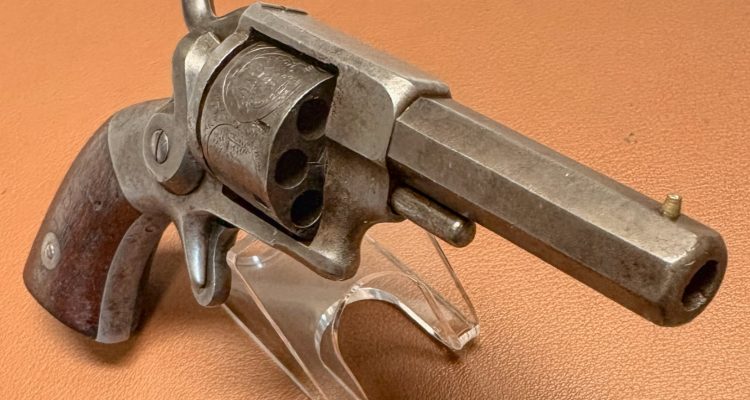
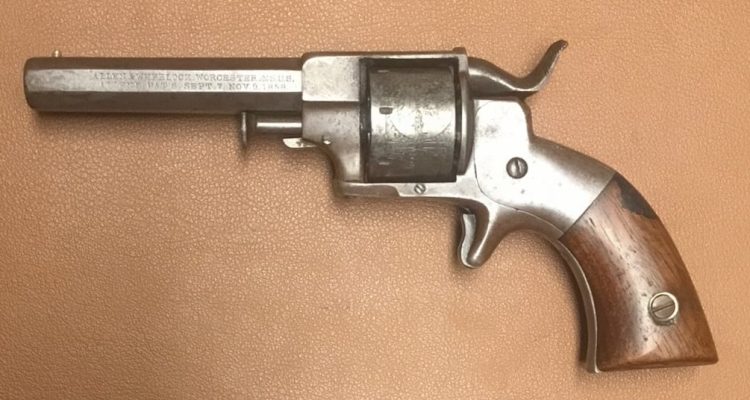
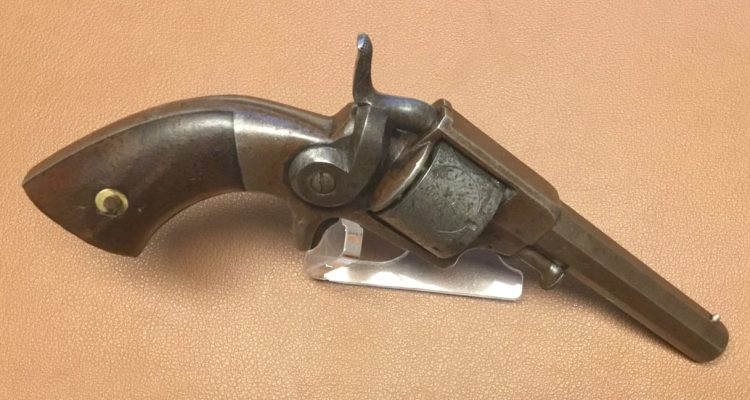
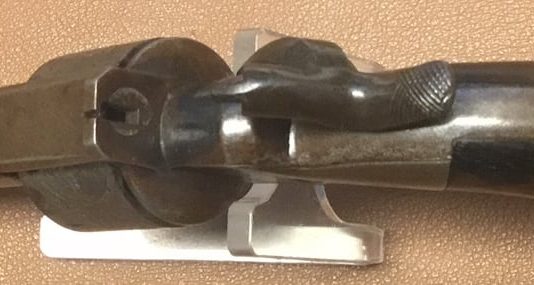
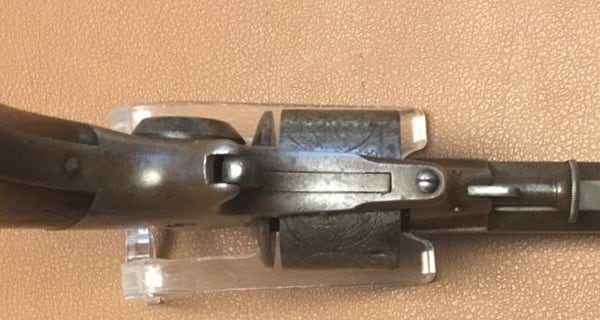
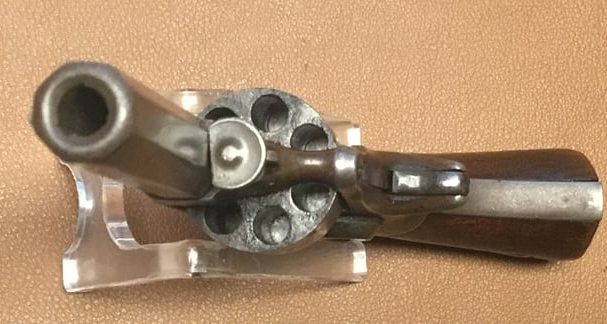
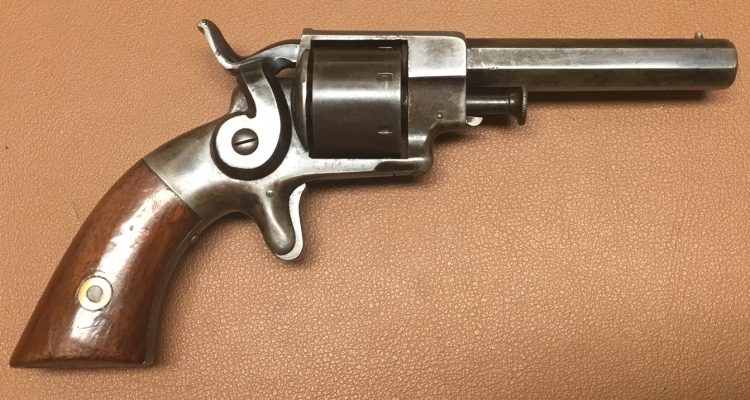
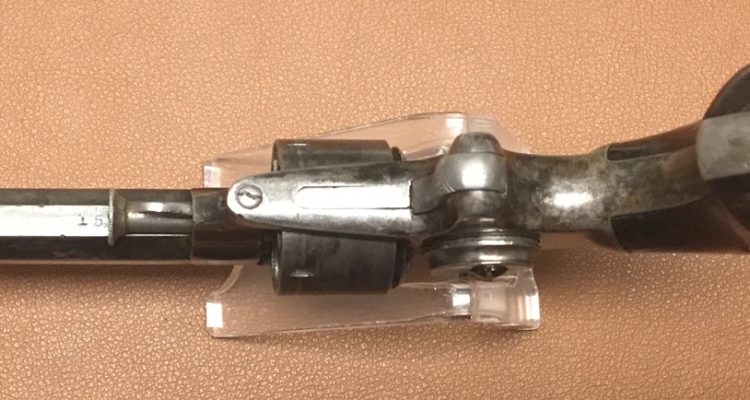
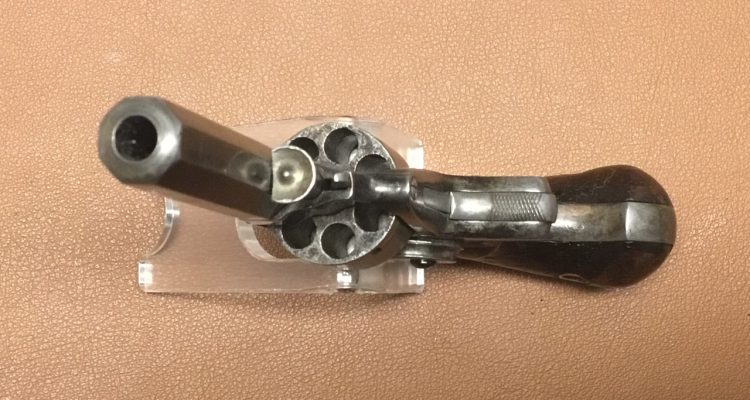
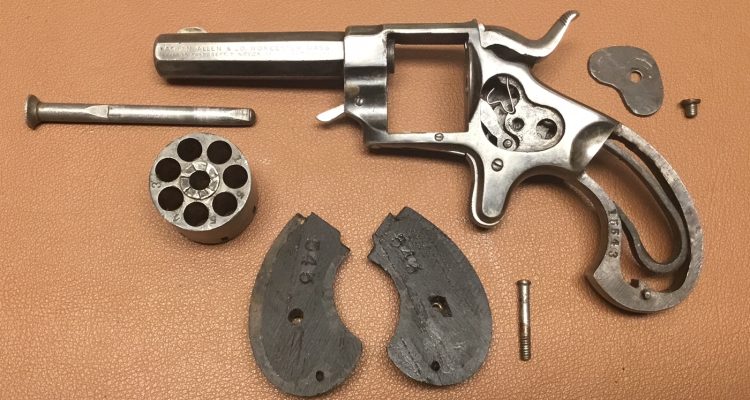
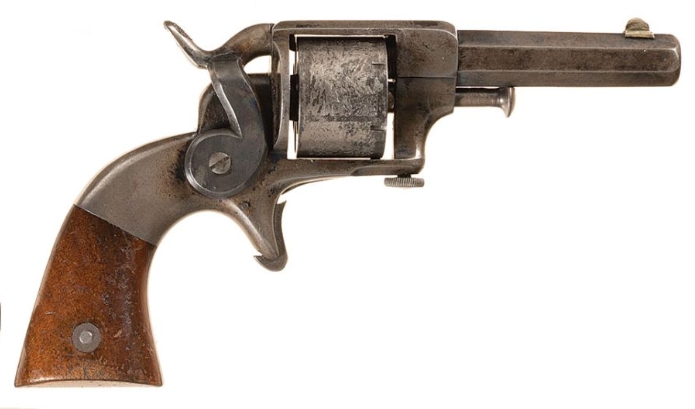
First Model: This model has a cylinder pin that enters from the rear of the frame. The end of the pin has the shape of an hourglass. The hammer is nicely rounded throughout. The hammer entry is offset to the right.
Second Model: This model has the cylinder pin entering from the front of the frame. The pin is held in place by a setscrew located under the front of the frame. From this model onwards the hammer entry is centered.
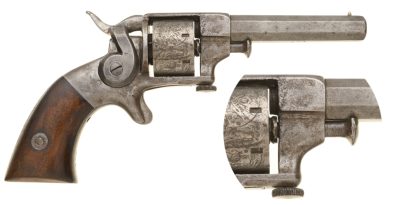
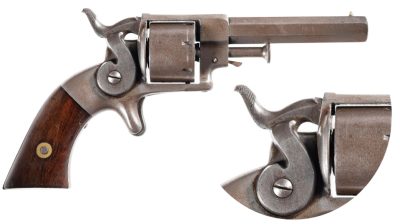
Third Model: A button head cylinder pin enters from the rear of the frame. This is the last model where the grip escutcheons are made of steel. On later models these are made of brass.
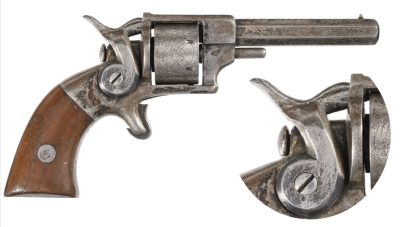
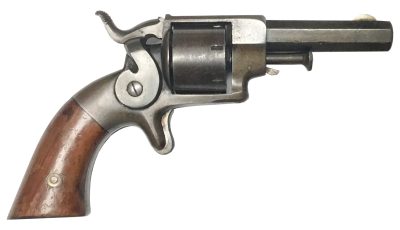
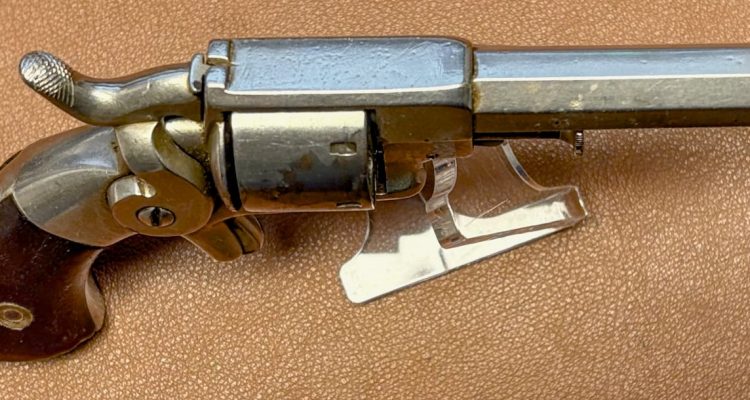
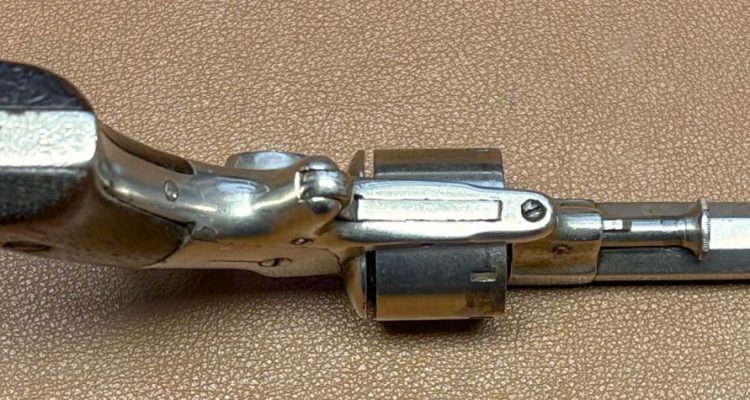
Forth Model: This model and all subsequent models have the cylinder pin entering from the front of the frame and kept in place by a spring latch retainer. It is the last model with the ‘quick drop’ grips.
From the Fifth Model onwards, we see the introduction of cost cutting measures, without any doubt to offer a lower priced gun to face competition: cylinders without engraving are now standard and the trigger screw that had been hidden under the side plate is now placed on the outside of the frame.
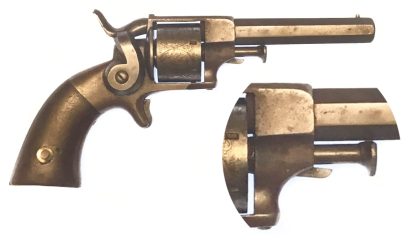
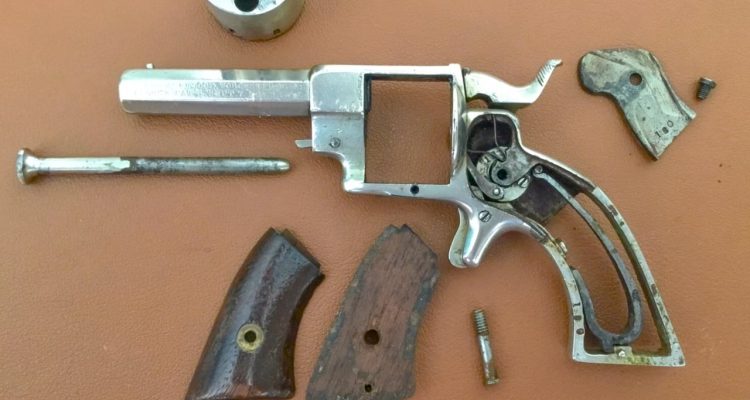
Fifth Model: This model has the new frame with the grip shape as we know from the S&W revolvers of that time. The recoil shield is now much thinner, and the hammer face is half round-, half square.
Sixth Model: fairly identical to the fifth model except for the hammer face now being completely square. This is the most common Allen & Wheelock 22rf revolver.
In the second production period of E.Allen & Co, 2 variants are identified.
Seventh Model: Other than the barrel markings, these revolvers are a continuation of the sixth model. Only the front sight changed to a blade and the grip escutcheons are slightly smaller.
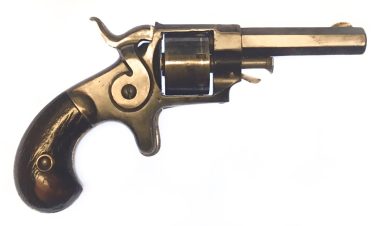
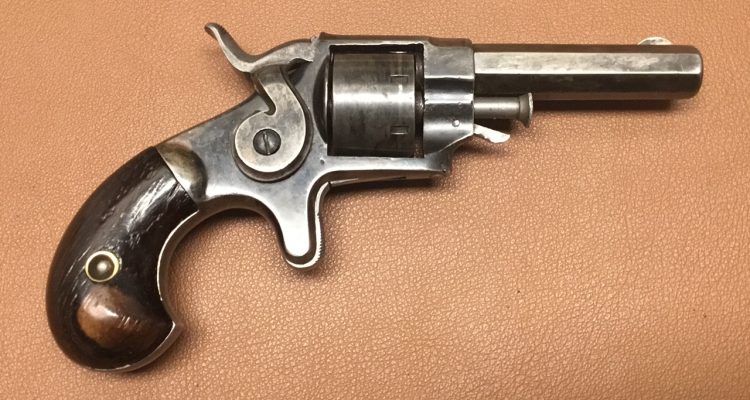
Eigth Model: The change to the bird’s head grips was the final design change This style remained standard without any changes for the remainder of the E.Allen & Co period.
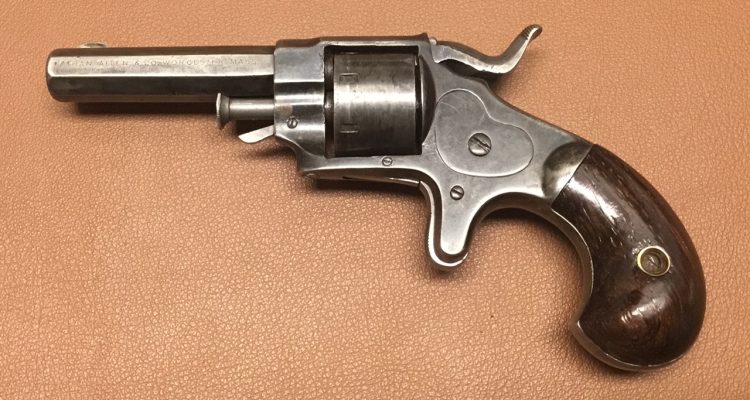
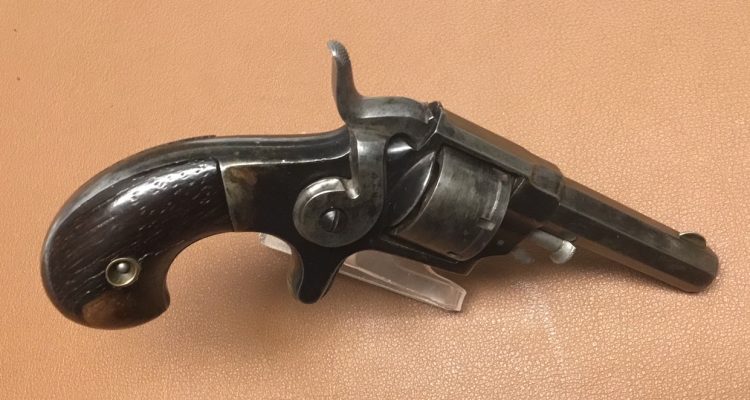
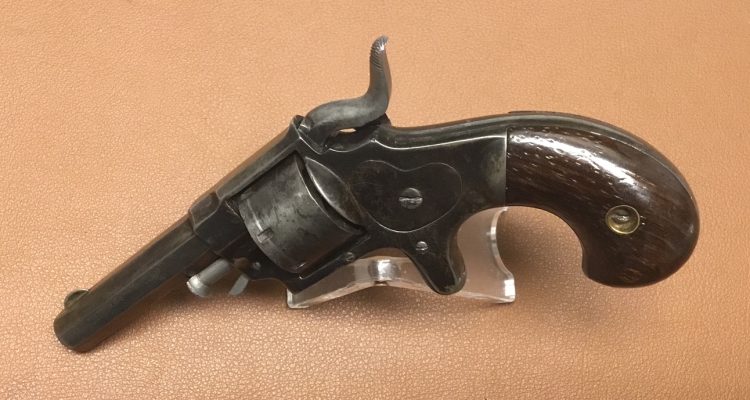
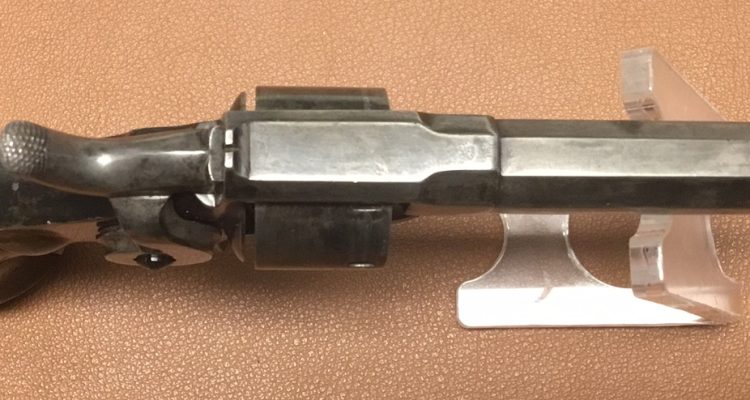
Note that the cylinder is reduced in both diameter and length, resulting in a lighter overall revolver. Production of the Eighth Model continued into the Forehand & Wadsworth era and lasted until the 1890s. Due to to this extended production period, it is the most commonly encountered variant.
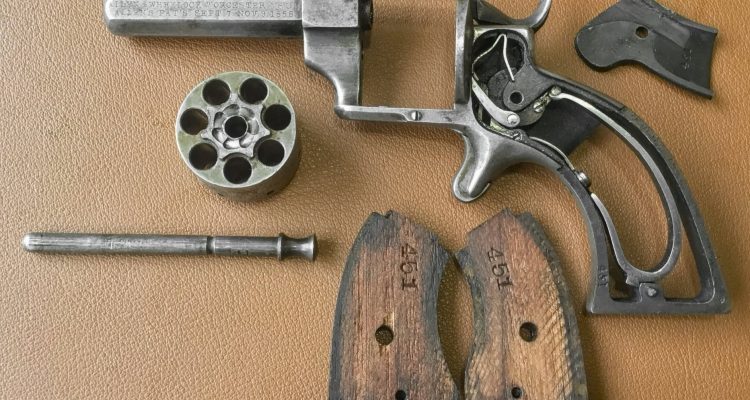
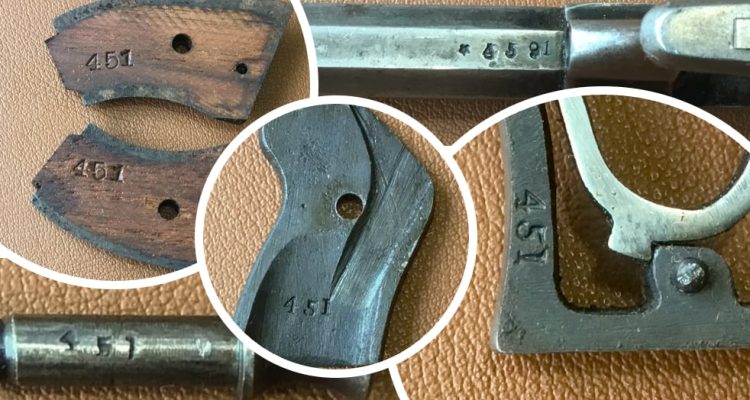
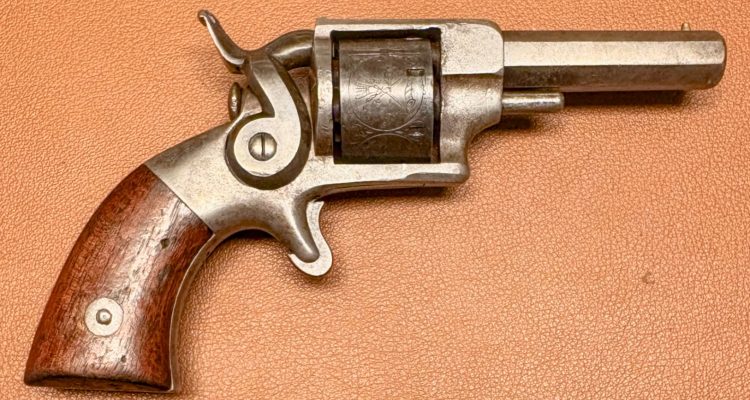
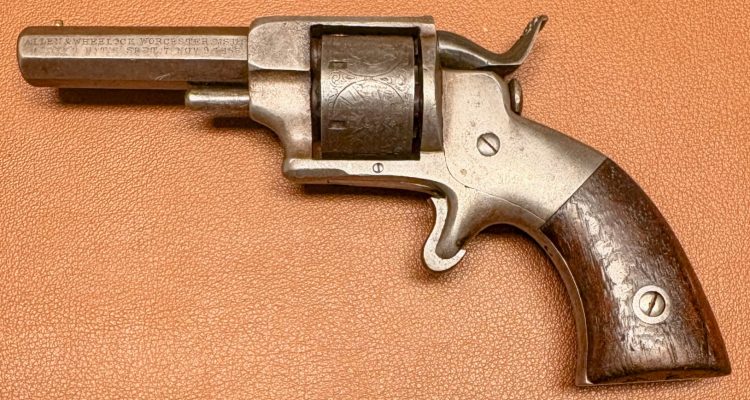
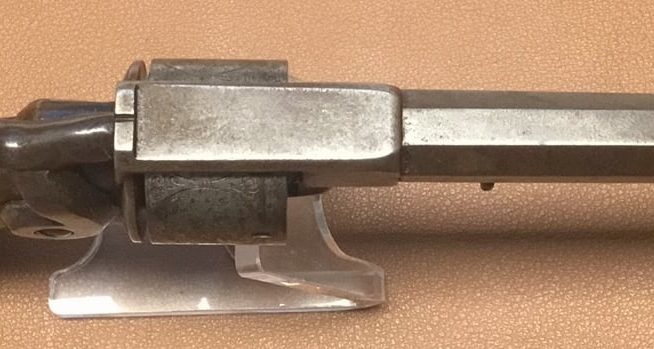
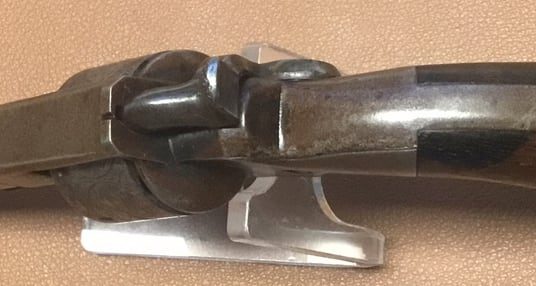
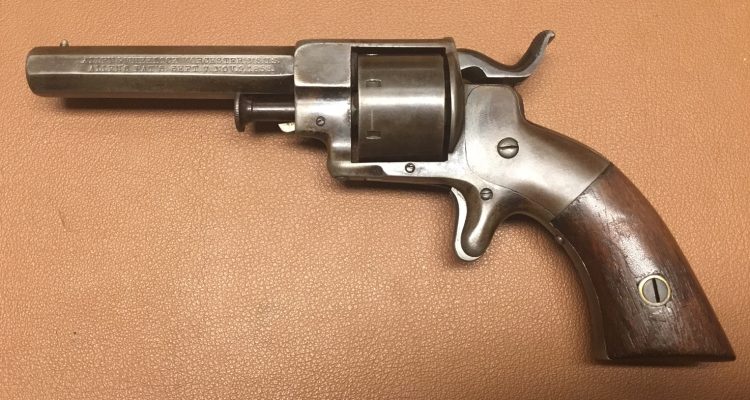
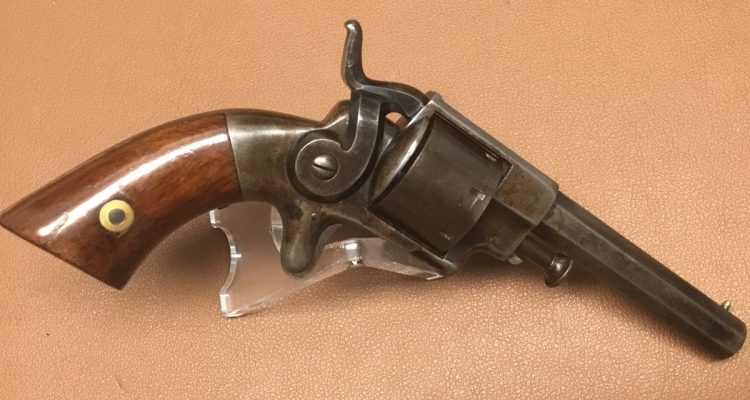
Allen & Wheelock 22rf side-hammer revolver - First Model
-
Caliber:
22RF Short
-
Serial number
451
-
Length:
Barrel:6cm (2,35"), Total:14,7cm
-
Weight:
215 gr
-
Barrel marking:
ALLEN & WHEELOCK. WORCHESTER. MS. US / ALLEN'S PAT'S. SEPT.7. NOV.9.1858
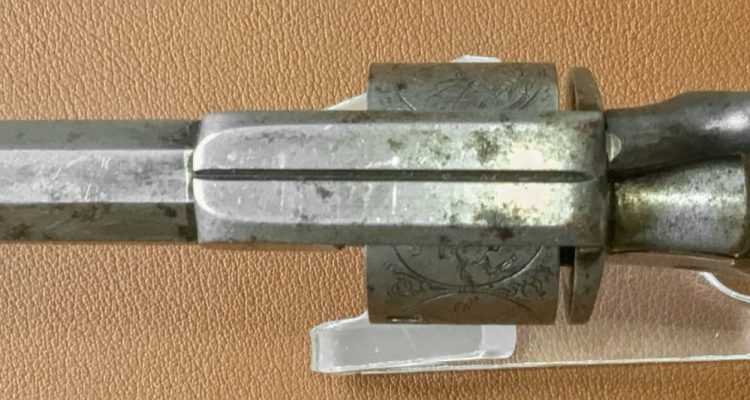
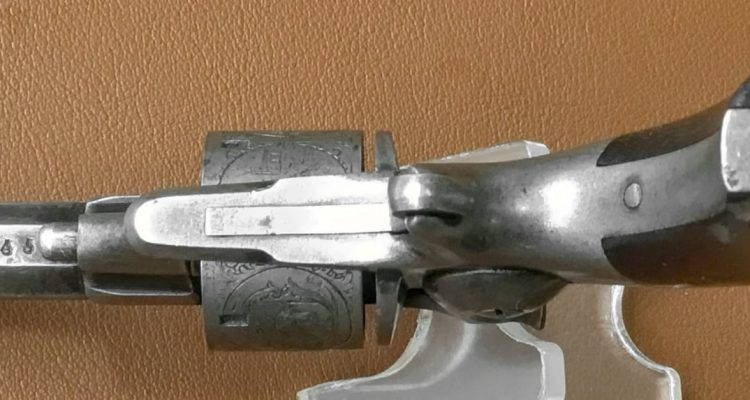
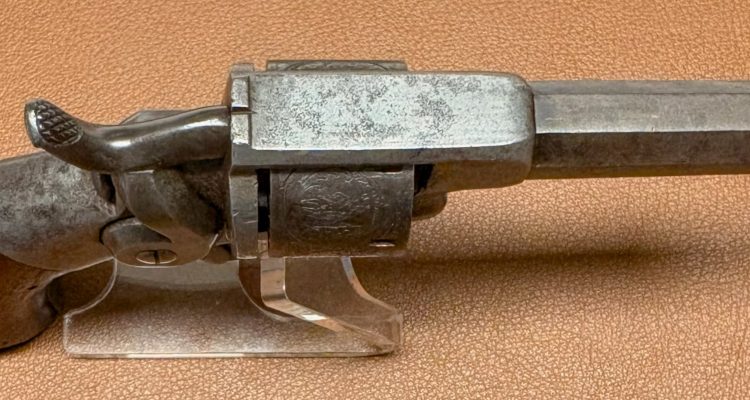
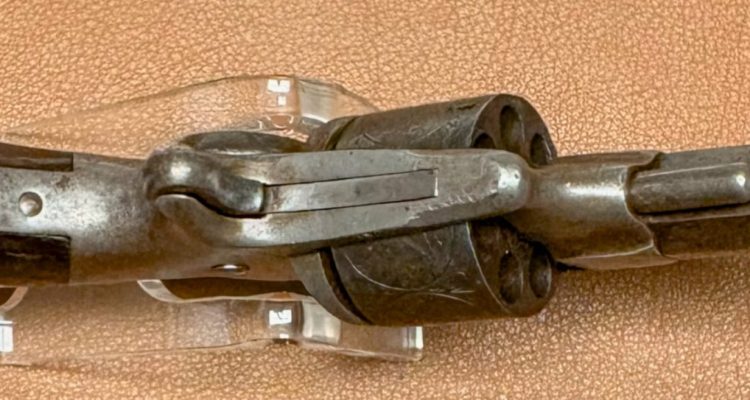
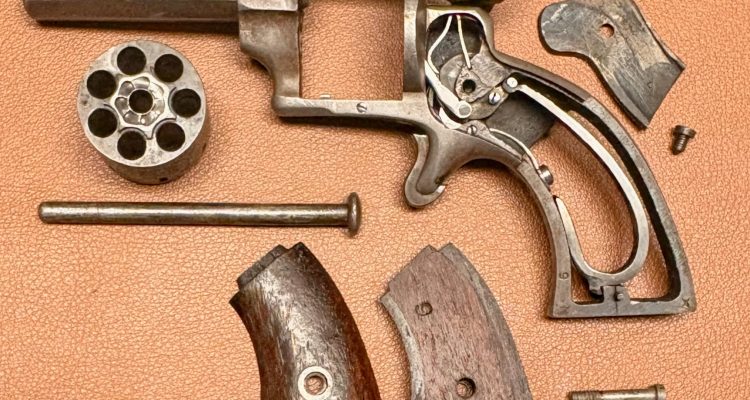
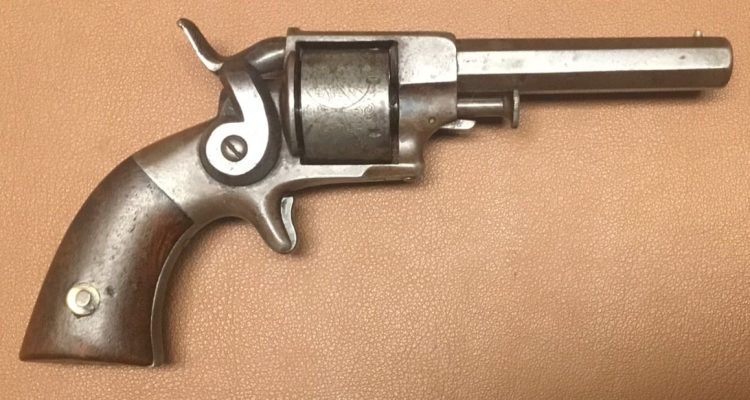
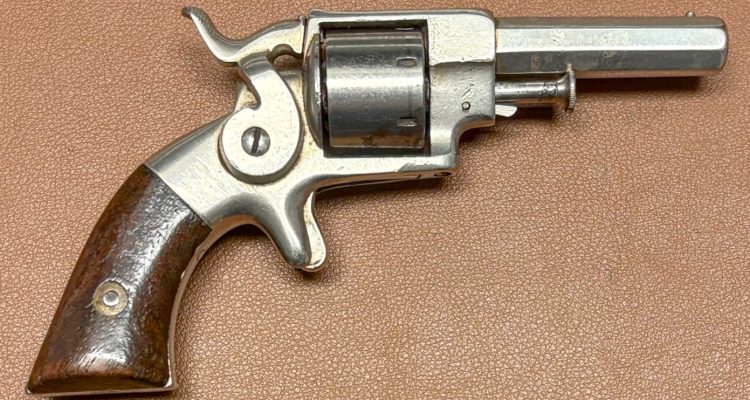
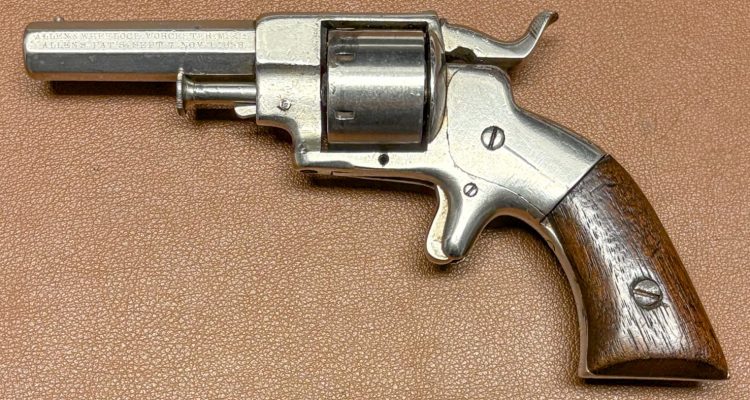
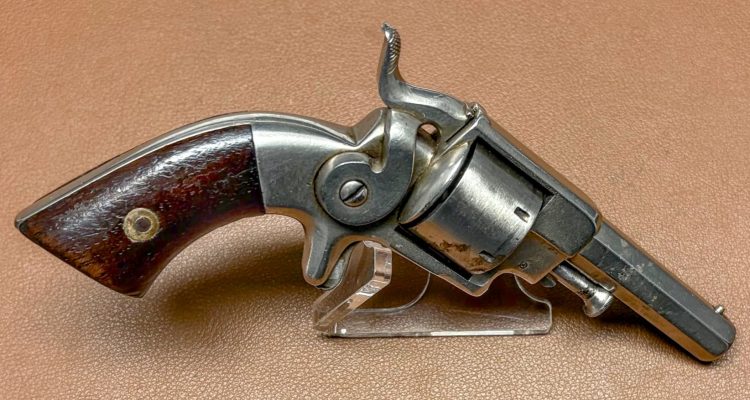
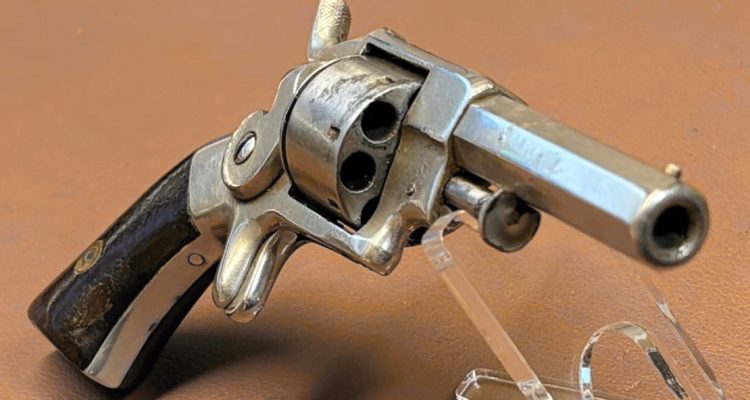
This revolver is a First Model with the characteristic hourglass-type cylinder pin, a finely contoured hammer, and a hammer entry positioned slightly to the right of the frame.
Allen & Wheelock 22rf side-hammer revolver - late Third Model
-
Caliber:
22RF Short
-
Serial number
9
-
Length:
Barrel:6cm (2,35"), Total:14,7cm
-
Weight:
224 gr
-
Barrel marking:
ALLEN & WHEELOCK. WORCHESTER. MS. US / ALLEN'S PAT'S. SEPT.7. NOV.9.1858
The Third Model is commonly known as the “button head,” a nickname derived from the distinctive shape of its cylinder pin. The revolver is of late Third Model vintage having already the frame with the standard-sized rear sighting lug.
Allen & Wheelock 22rf side-hammer revolver - Forth Model
-
Caliber:
22RF Short
-
Serial number
53
-
Length:
Barrel:7,6cm (3"), Total:15,9cm
-
Weight:
233 gr
-
Barrel marking:
ALLEN & WHEELOCK. WORCHESTER. MS. US / ALLEN'S PAT'S. SEPT.7. NOV.9.1858
The Fourth Model introduces the spring-latch–retained cylinder pin, as described in Allen’s patent (U.S. Patent No. 33,328, issued September 24, 1861). The recoil plate is noticeably thinner than on earlier models, and the grip escutcheons are now made of brass. The hammer face remains fully rounded.
Allen & Wheelock 22rf side-hammer revolver - Intermediate Fifth Model
-
Caliber:
22RF Short
-
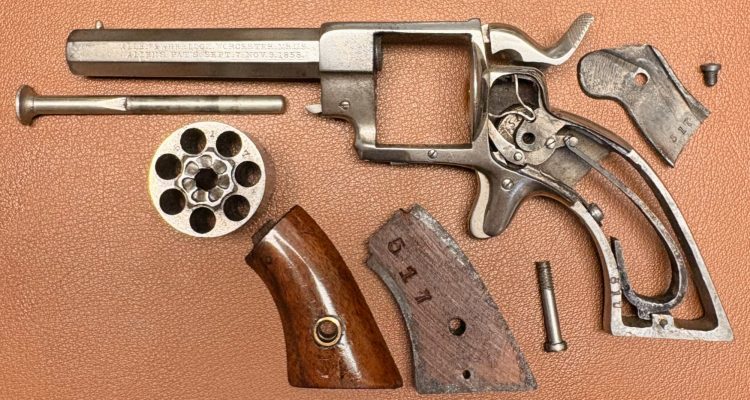
Serial number
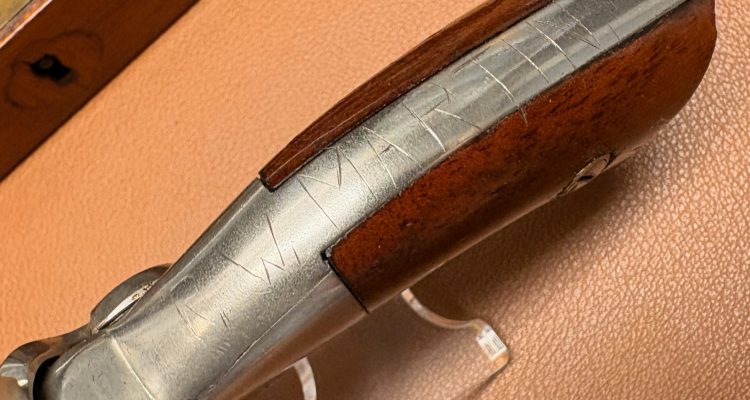
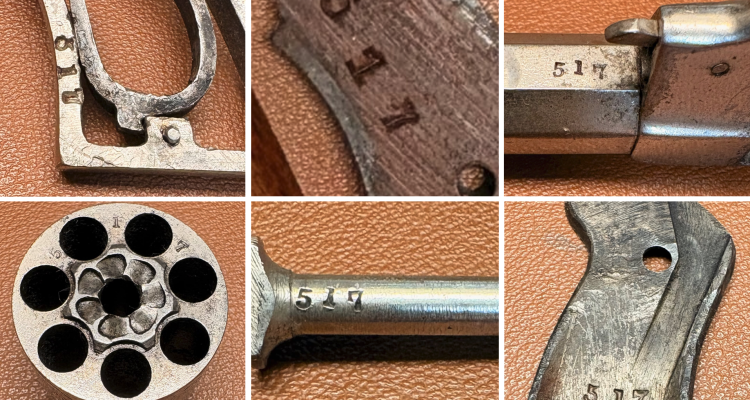
517
-
Length:
Barrel:7,6cm (3"), Total:16cm
-
Weight:
227 gr
-
Barrel marking:
ALLEN & WHEELOCK. WORCHESTER. MS. US / ALLEN'S PAT'S. SEPT.7. NOV.9.1858
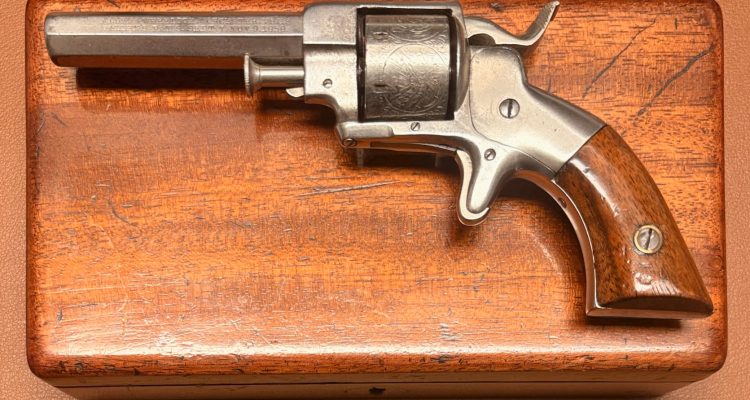
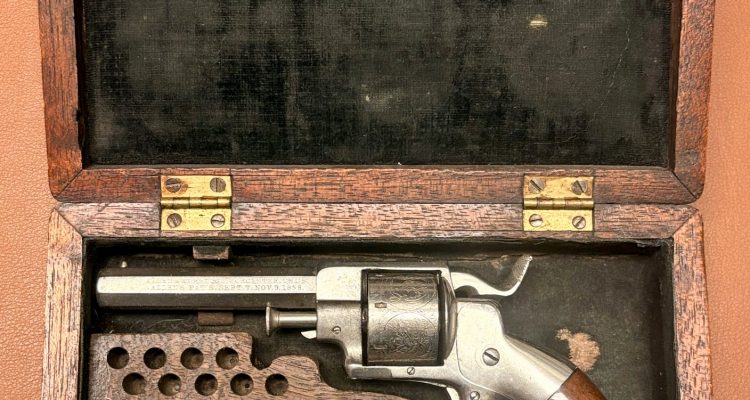
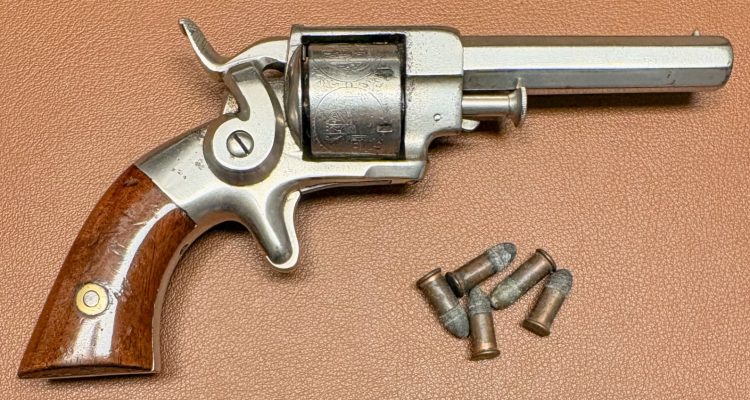
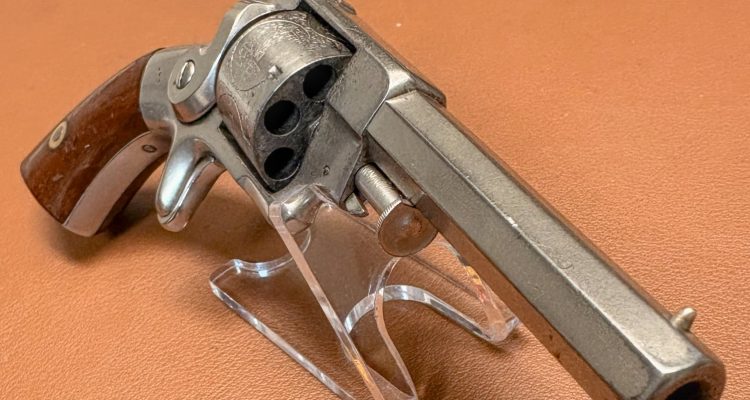
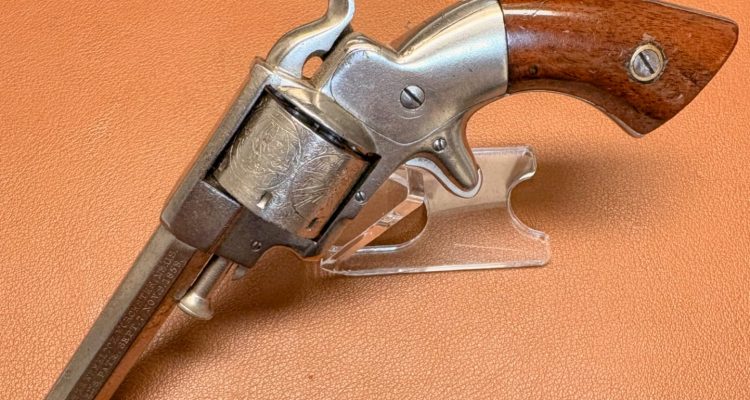
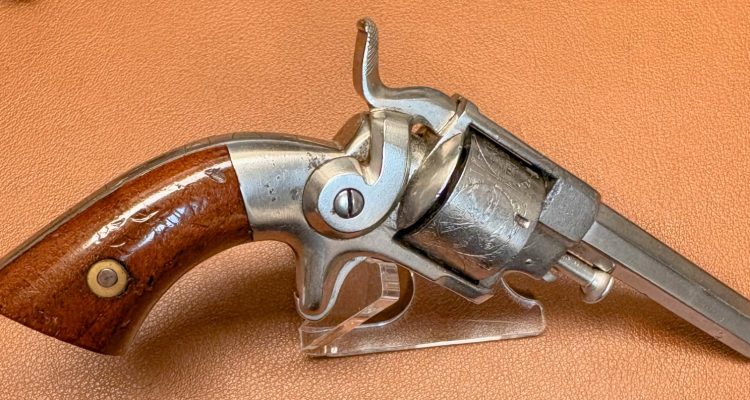
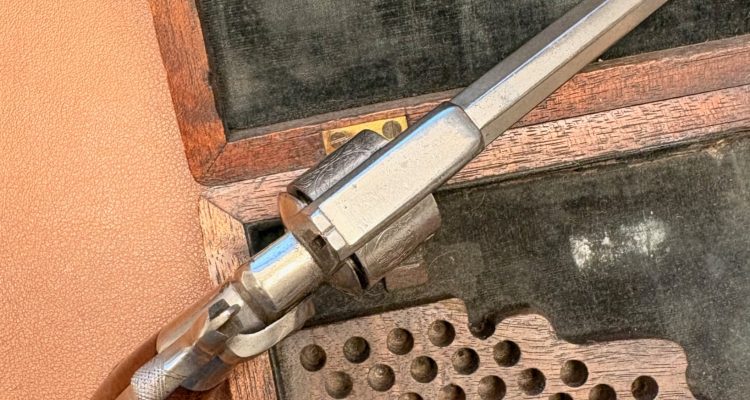
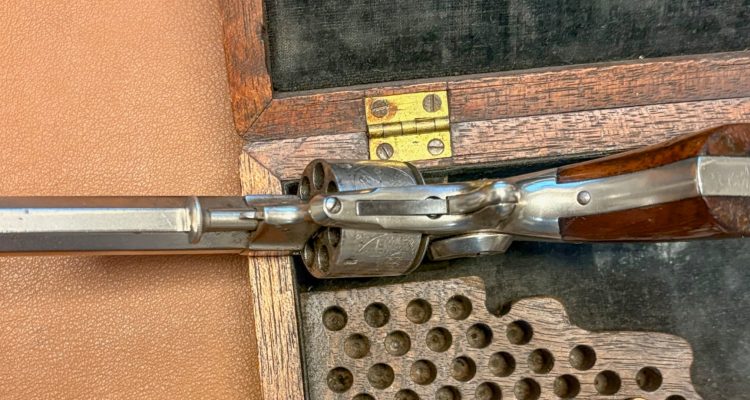
This revolver has the updated frame with Smith & Wesson style grips. It can be identified as a intermediate Fifth Model by its hammer, having a half round and half square hammer face. (earlier Fifth Model examples retained the hammer style of the Fourth Model), but still has an engraved cylinder (on later models the engraving is omitted).
This particular specimen is a relatively rare nickel plated version cased in a wooden box.
Allen & Wheelock 22rf side-hammer revolver - Late Fifth Model
-
Caliber:
22RF Short
-
Serial number
69
-
Length:
Barrel:7,6cm (3"), Total:16cm
-
Weight:
227 gr
-
Barrel marking:
ALLEN & WHEELOCK. WORCHESTER. MS. US / ALLEN'S PAT'S. SEPT.7. NOV.9.1858
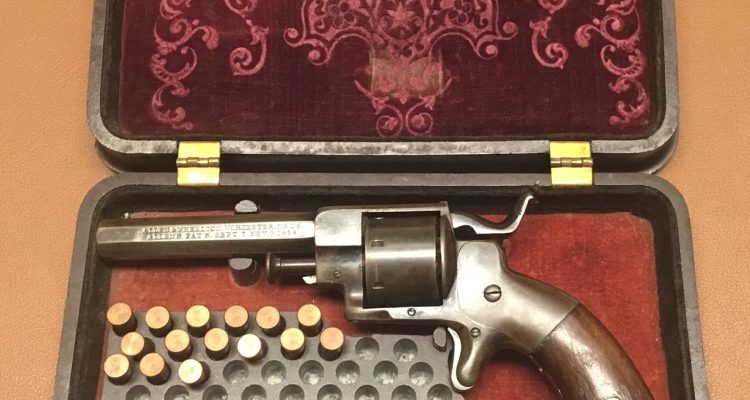
This revolver is also a fifth model but is of later vintage where Allen transitioned to unengraved cylinders.
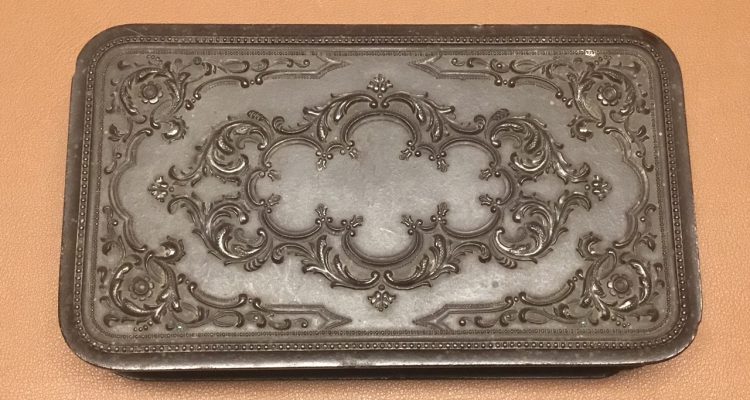
This particular specimen is housed in a beautifully decorated case. These cases are often described as “gutta-percha,” a term that is not technically accurate. These cases were manufactured by Littlefield, Parsons & Co. using a molded thermoplastic compound composed primarily of shellac (a natural resin secreted by lac insects), combined with wood fibers or sawdust and various additives. This formulation enabled a high level of molded detail and structural rigidity; qualities that cannot be achieved with true gutta-percha.
Allen & Wheelock 22rf side-hammer revolver - Sixth Model
-
Caliber:
22RF Short
-
Serial number
180
-
Length:
Barrel:6,35cm (2,5"), Total:14,7cm
-
Weight:
221 gr
-
Barrel marking:
ALLEN & WHEELOCK. WORCHESTER. MS. US / ALLEN'S PAT'S. SEPT.7. NOV.9.1858
This is a Sixth Model revolver, largely identical to the Fifth Model but distinguished by its square hammer face. Allen & Wheelock revolvers chambered in .22 rimfire are typically blued, though some examples—such as this one—were produced with a nickel finish.
Ethan Allen & Co. 22rf side-hammer revolver - Seventh Model
-
Caliber:
22RF Short
-
Serial number
1767
-
Length:
Barrel:6,1cm (2,4"), Total:14,5cm
-
Weight:
215 gr
-
Barrel marking:
ETHAN ALLEN & CO. WORCHESTER. MASS / ALLEN'S PAT'S. SEPT.7. NOV.9.1858 SEPT.24.1861
The Seventh Model is broadly similar to the Sixth Model of the Allen & Wheelock era, but is distinguished by the E. Allen barrel marking, which includes the September 24, 1861 patent date. It also features a blade-shaped front sight, and the grip escutcheons are reduced in diameter.
Ethan Allen & Co. 22rf side-hammer revolver - Eight Model
-
Caliber:
22RF Short
-
Serial number
15543
-
Length:
Barrel:6,1cm (2,4"), Total:13,9cm
-
Weight:
195 gr
-
Barrel marking:
ETHAN ALLEN & CO. WORCHESTER. MASS / ALLEN'S PAT'S. SEPT.7. NOV.9.1858 SEPT.24.1861
The Eighth Model can be readily identified by its bird’s-head grips and the smaller frame side plate. It is also slightly lighter than its predecessors, primarily due to the reduced diameter and length of the cylinder.