Likely only in 1863 and again very limited quantity in 1869
Production quantity:
Very few, estimated at less than 200 in total
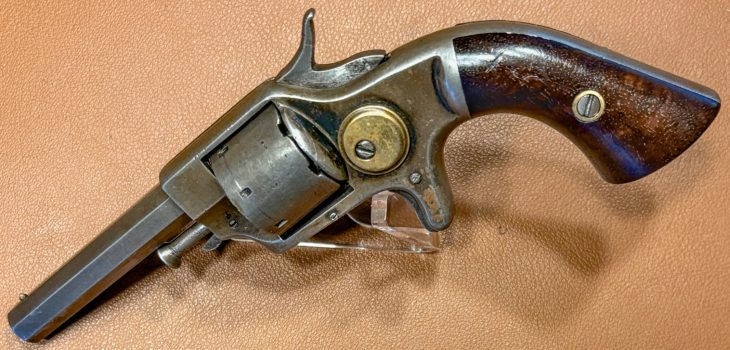
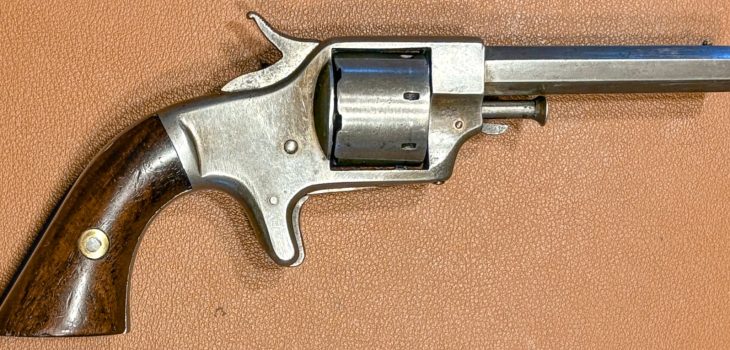
There has long been considerable speculation surrounding this compact, elegantly styled pocket revolver, as it differs markedly from most other firearms produced by Allen. All initially discovered examples were entirely unmarked, leading collectors and historians to question whether the model had actually been manufactured by the Allen factory. That uncertainty was eventually resolved when several surviving specimens were discovered bearing the Allen & Wheelock markings.
Questions have also persisted regarding the revolver’s origins and the circumstances of its introduction. When this model appeared, Smith & Wesson was engaged in patent litigation against Allen. Its unmistakable resemblance to the S&W No. 1 is widely believed to have been intentional rather than coincidental. Many researchers suggest the design represented a deliberate challenge—or even a subtle act of defiance—by Allen toward Smith & Wesson, a theory that may also explain why the vast majority of surviving examples remain unmarked.
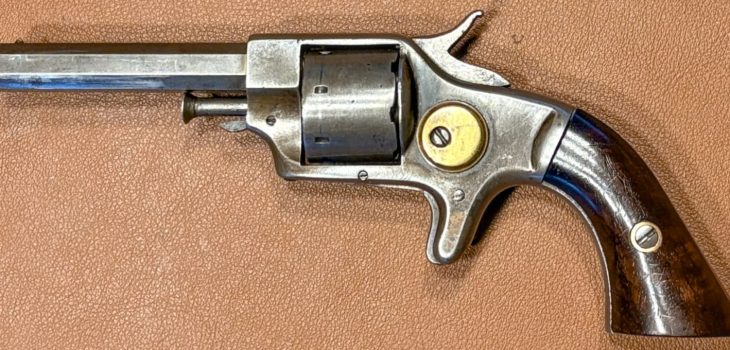
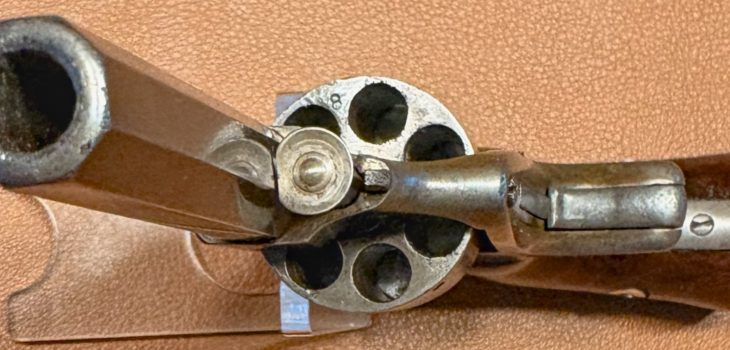
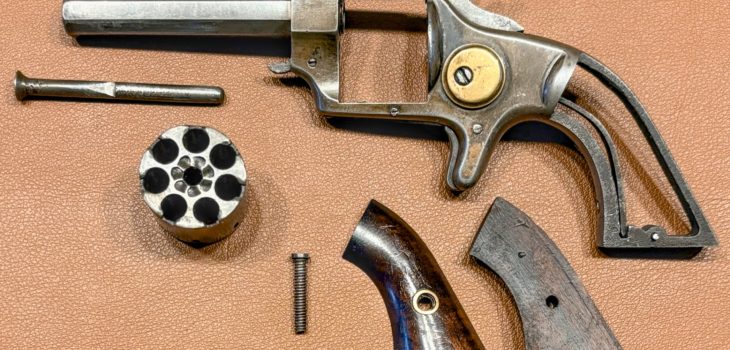
The revolver is built around a seven-shot cylinder chambered for the .25 lipfire cartridge. Despite its innovative and attractive design, its internal mechanism is relatively delicate, raising concerns about durability and long-term reliability.
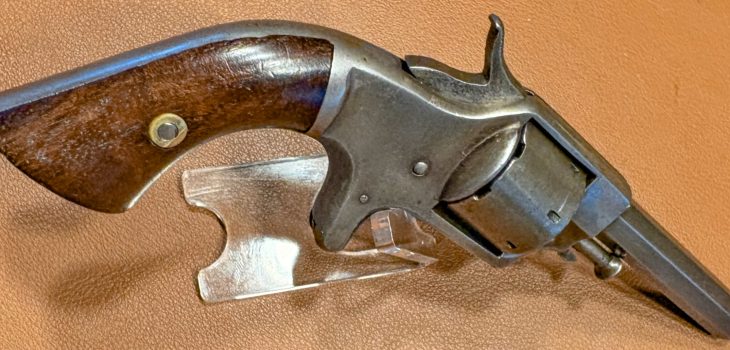
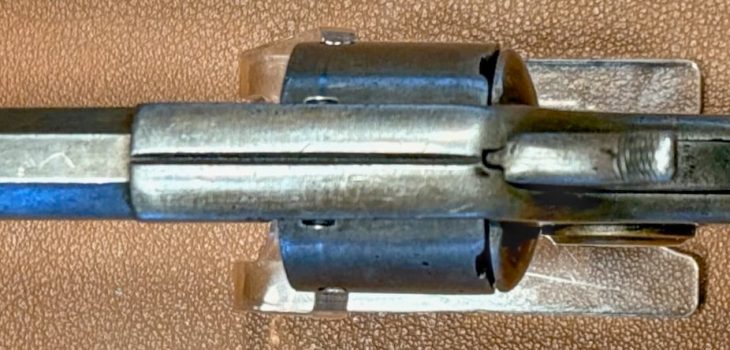
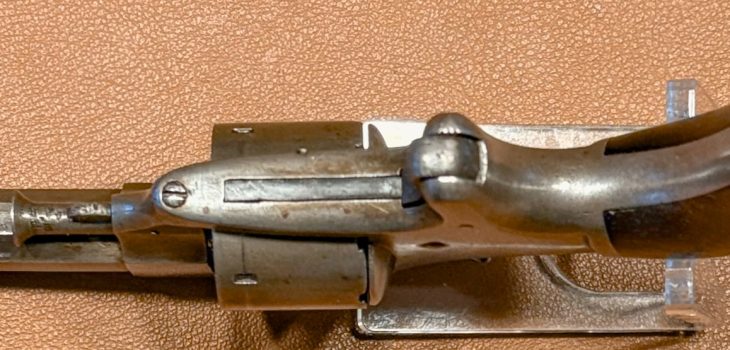
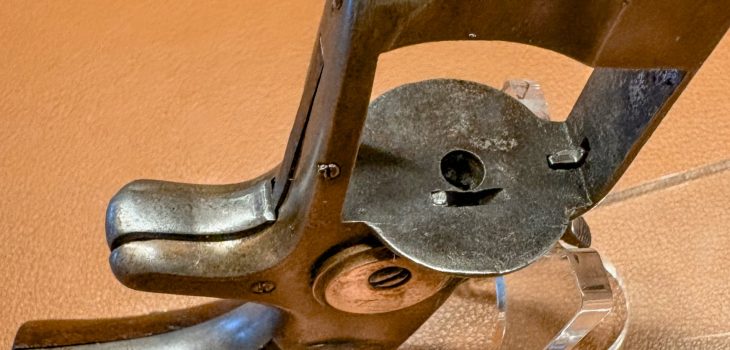
E. Allen & Co era unmarked Lipfire Pocket Revolver
Caliber:
25 Lipfire
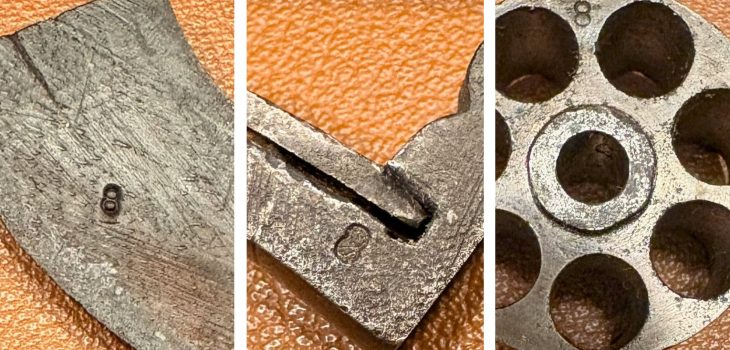
Serial number
8
Length:
Barrel:7,6cm (3"), Total:17,5cm
Weight:
235 gr
Barrel marking:
-
A nicely preserved specimen of the lipfire pocket revolver standard issue. Since this revolver bears characteristics of the E. Allen & Co era (distinct hammer knurling and a smaller grip escussions), we can assume this one has probably been produced in 1869 from left-over stock.